EN
EN

The optimal regrind window for a shearing machine blade is the point where wear has started to reduce cutting performance but the blade still has enough material remaining for effective restoration. Regrinding too early increases unnecessary maintenance costs, while waiting too long can cause excessive edge damage, poor cutting quality, and reduced blade lifespan. Manufacturers can achieve better cutting performance by monitoring blade wear, cutting force changes, edge quality, and production conditions to determine the most economical maintenance timing.
For industrial sheet metal processing, blade condition directly influences production efficiency, dimensional accuracy, and operating costs. A worn cutting edge increases resistance during shearing, places additional stress on the machine, and may create inconsistent finished edges. A professional maintenance strategy helps manufacturers extend blade service life while maintaining stable production quality.
MIHARTING specializes in precision tooling solutions for metal processing industries, providing reliable cutting components and professional recommendations for demanding manufacturing environments. Understanding the relationship between blade wear, grinding cycles, and production requirements allows manufacturers to maximize tooling value and reduce unexpected downtime.
A shearing blade gradually loses its original cutting performance as the edge experiences repeated mechanical stress. The purpose of regrinding is not simply to sharpen a worn blade, but to restore the original cutting geometry before excessive damage occurs.
The ideal regrind window balances three factors: cutting performance, remaining blade material, and maintenance cost. When the blade is maintained at the correct stage, manufacturers can achieve longer total service life because each grinding operation removes only the necessary amount of material.
| Blade Condition | Production Performance | Recommended Maintenance Action |
|---|---|---|
| Initial wear stage | Stable cutting quality with normal machine load | Continue operation and monitor wear development |
| Optimal regrind stage | Slight reduction in cutting quality or increased resistance | Schedule professional grinding |
| Advanced wear stage | Higher burr formation and inconsistent cutting results | Immediate maintenance required |
| Severe damage stage | Edge chipping, deformation, or possible machine stress | Evaluate repair or replacement |
Manufacturers that establish a clear regrinding strategy can avoid two common problems: wasting blade life through unnecessary sharpening and increasing costs through delayed maintenance.
Blade wear should be evaluated through actual cutting performance rather than relying only on operating time. Different materials, production volumes, and machine conditions create different wear patterns, meaning that a fixed grinding interval is rarely suitable for every application.
One of the most noticeable indicators of blade wear is a gradual decline in finished edge quality. A properly maintained blade separates material cleanly, while a worn blade may produce larger burrs, uneven edges, or visible deformation.
For manufacturers producing precision components, these changes can affect later processes such as welding, assembly, and surface finishing. Monitoring the condition of the cut edge provides an effective early warning before major performance losses occur.
As the cutting edge becomes dull, the machine requires additional force to complete the shearing process. Operators may observe increased hydraulic pressure, slower cutting cycles, unusual vibration, or higher energy consumption.
Increasing cutting resistance is an important indicator because it reflects the relationship between blade sharpness and machine workload. If the issue is ignored, excessive force can accelerate wear on both the blade and the shearing equipment.
Regular inspection allows operators to identify early-stage wear before it becomes a serious production problem. Common signs include edge rounding, minor chipping, uneven contact marks, and localized wear caused by incorrect blade clearance.
The service interval of a shearing blade depends on multiple production variables. Two factories using similar machines may require completely different maintenance schedules because their cutting materials and operating conditions are different.
| Factor | Influence on Blade Wear |
|---|---|
| Material hardness | Harder materials create higher stress on the cutting edge |
| Sheet thickness | Thicker materials require greater cutting force |
| Production volume | Higher cutting frequency accelerates wear accumulation |
| Blade material quality | Higher wear resistance extends maintenance intervals |
| Blade clearance adjustment | Incorrect clearance increases edge damage risk |
| Machine alignment | Poor alignment causes uneven blade loading |
A reliable maintenance program should combine production records with physical inspection. Tracking how many cutting cycles a blade completes before performance changes allows manufacturers to create more accurate maintenance schedules.
Blade material selection has a direct impact on durability, cutting stability, and regrinding frequency. Industrial cutting blades must maintain a balance between hardness and toughness because excessive hardness without sufficient toughness may increase the risk of cracking, while insufficient hardness may accelerate edge wear.
Tool steels and alloy steels commonly used for industrial blades are selected according to the application requirements. Important characteristics include wear resistance, impact resistance, heat treatment quality, and the ability to maintain edge geometry during repeated cutting operations.
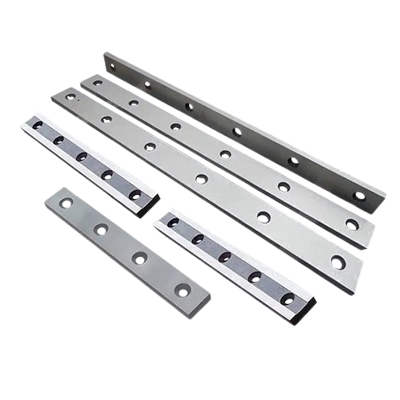
Selecting the correct shearing machine blade helps manufacturers match tooling performance with specific cutting conditions, including material type, thickness range, and production volume.
For example, applications involving stainless steel or high-strength materials generally require blades with stronger wear resistance compared with general mild steel processing. Proper material selection reduces the frequency of grinding operations and improves long-term production consistency.
.jpg "shearing machine blade")
The timing of blade maintenance directly affects overall tooling economics. Both premature and delayed grinding can reduce efficiency in different ways.
Grinding a blade before performance degradation occurs removes usable material that could have supported additional production cycles. Over time, excessive maintenance frequency increases tooling costs and reduces the maximum achievable blade lifespan.
Waiting until the blade has severe wear creates additional problems. A heavily damaged edge requires more aggressive grinding, increases machine stress, and may no longer be able to fully recover its original cutting performance.
| Maintenance Timing | Impact |
|---|---|
| Too early | Higher maintenance frequency and unnecessary material removal |
| Optimal window | Best balance between performance, cost, and blade lifespan |
| Too late | Reduced cutting quality and possible permanent damage |
Professional grinding is a precision restoration process rather than simple sharpening. The objective is to restore the correct cutting geometry while preserving as much usable blade material as possible.
During the grinding process, technicians must control several important factors, including grinding angle, material removal amount, surface condition, and heat generation.
| Grinding Factor | Purpose |
|---|---|
| Correct cutting geometry | Maintains efficient material separation |
| Controlled material removal | Preserves future grinding allowance |
| Temperature control | Prevents changes to blade hardness |
| Accurate edge restoration | Improves cutting consistency |
Understanding proper shearing machine blade grinding practices helps manufacturers avoid unnecessary blade replacement and maintain reliable cutting performance throughout the tooling lifecycle.
A successful blade maintenance program should be based on condition monitoring rather than fixed replacement intervals. Because wear develops differently depending on material type, cutting frequency, and operating environment, manufacturers should use production data and inspection results to determine the most efficient maintenance timing.
A practical maintenance strategy normally includes regular blade inspection, cutting quality evaluation, grinding record management, and performance comparison after maintenance. These steps help manufacturers understand how the blade behaves during actual production and establish a reliable regrinding cycle.
| Maintenance Stage | Recommended Practice |
|---|---|
| Before production | Check blade condition, clearance setting, and machine alignment |
| During operation | Monitor cutting quality, burr formation, and abnormal machine load |
| After production cycles | Record operating conditions and blade performance changes |
| Before regrinding | Evaluate remaining blade condition and grinding allowance |
| After grinding | Verify cutting performance and update maintenance records |
This preventive approach allows manufacturers to move away from emergency repairs and create a more predictable production schedule. By understanding how blades wear under real working conditions, companies can maximize tooling value and reduce unnecessary downtime.
Blade clearance is one of the most important factors affecting cutting quality and blade lifespan. The gap between the upper and lower blades must be correctly adjusted according to the material type and thickness being processed.
When clearance is too small, excessive pressure is concentrated on the cutting edge. This can accelerate wear, increase the risk of edge damage, and create unnecessary machine load. When clearance is too large, the material may deform before separation, resulting in larger burrs and poor edge quality.
Maintaining the correct clearance allows the blade to work under balanced conditions. This reduces stress concentration and helps the cutting edge maintain performance for a longer period.
| Clearance Condition | Possible Result |
|---|---|
| Too small | Higher cutting force, accelerated wear, possible edge damage |
| Correct clearance | Stable cutting quality and optimized blade lifespan |
| Too large | Increased burr formation and material deformation |
Different shearing machine designs create different operating conditions for cutting blades. Hydraulic shearing systems are widely used in industrial applications because they provide stable cutting force and are suitable for processing a wide range of sheet materials.
For heavy-duty applications, selecting suitable hydraulic shear blades helps manufacturers achieve better durability under repeated cutting operations. Blade design, material selection, and heat treatment must match the machine capacity and production requirements.
Hydraulic shearing applications often involve thicker materials, higher production loads, and longer operating cycles. Under these conditions, regular inspection becomes especially important because delayed maintenance can increase stress on both the blade and machine components.
Manufacturers should evaluate blade condition together with machine performance. A well-maintained hydraulic shearing system should maintain consistent cutting accuracy without requiring excessive force compensation or frequent adjustments.
Although blade material and grinding quality are important, daily operating practices also have a significant impact on service life. Small improvements in machine management can prevent unnecessary wear and improve overall cutting efficiency.
Operators should maintain proper blade clearance, keep the cutting area clean, and ensure that materials are correctly positioned before shearing. Uneven material placement can create uneven loading along the blade edge, resulting in localized wear.
Regular cleaning is also essential. Metal particles and contaminants may interfere with blade contact surfaces and accelerate wear if they remain inside the cutting area.
Manufacturers should also avoid continuing production after clear signs of blade deterioration appear. Early maintenance usually requires less grinding and preserves more of the original blade structure.
MIHARTING specializes in precision tooling solutions for metal processing industries, providing reliable cutting components designed for demanding manufacturing environments. The company focuses on combining material expertise, manufacturing precision, and practical application knowledge to support long-term production performance.
For shearing applications, blade performance directly influences cutting accuracy, production efficiency, and maintenance costs. MIHARTING understands that different industries require different blade characteristics depending on material type, machine configuration, and production requirements.
Through professional manufacturing processes and application-focused recommendations, MIHARTING helps customers select suitable tooling solutions for various industrial cutting environments. From material selection to blade geometry, every factor contributes to achieving stable and efficient cutting performance.
A reliable shearing solution is not only determined by blade hardness or initial cutting performance. Long-term results depend on the complete relationship between blade design, machine condition, maintenance planning, and operating practices.
The regrinding interval depends on material hardness, sheet thickness, production volume, blade quality, and operating conditions. Manufacturers should determine the maintenance schedule based on actual blade wear rather than a fixed time period.
Common signs include increased burr formation, higher cutting force, poor edge quality, visible edge wear, and inconsistent cutting results. These indicators usually suggest that the blade is approaching or has reached the optimal regrind window.
Most blades can be restored if sufficient material remains and the damage is not severe. However, blades with excessive cracking, deep chipping, or major deformation may require replacement instead of further grinding.
Frequent unnecessary grinding can reduce total blade lifespan because each grinding operation removes material. The goal is to perform maintenance at the optimal wear stage to maximize usable cutting cycles.
Correct blade clearance ensures balanced cutting force and reduces stress on the cutting edge. Incorrect clearance can accelerate wear, increase burr formation, and reduce finished product quality.
Manufacturers should consider machine model, cutting material, thickness range, production requirements, blade material, hardness, and expected operating conditions before selecting replacement blades.
Identifying the optimal regrind window is one of the most effective ways to improve shearing machine blade performance and reduce long-term operating costs. The ideal maintenance point allows manufacturers to restore cutting accuracy while preserving as much blade material as possible.
A preventive maintenance strategy based on wear monitoring, cutting performance evaluation, and professional grinding practices enables manufacturers to achieve more predictable production results. By managing blade condition proactively, companies can reduce downtime, improve efficiency, and extend tooling service life.
MIHARTING continues to provide precision tooling solutions that support reliable metal processing operations and help manufacturers maintain consistent cutting performance in demanding industrial environments.
 LVD Press Brake Tooling Compatibility Guide: Clamping, Segmentation and Upgrade DecisionsJuly 28, 2026An LVD press brake can remain productive for many years, but tooling decisions become more complicated when a factory adds new materials, inherits mixed tool sets, changes clamping systems or buys rep...view
 Safety First: How Vertical Front-Loading Clamps Protect Operators and Press Brake ToolingSeptember 10, 2026Learn how vertical front-loading press brake clamps, Safety-Click and anti-drop safety pins help reduce tooling-change risks and support safer CE-oriented press brake operation.view
 Bystronic Press Brake Tooling Catalogue: A Practical Selection and Compatibility GuideJuly 28, 2026A tooling catalogue is useful only when it helps an engineer move from a part drawing to a safe, repeatable bending setup. Buyers often start with a machine brand and a familiar tool description, but ...view
 Shearing Machine Blade Selection Guide 2026: Heavy-Duty Shear Blades for High-Strength Steel and Stainless Steel CuttingJune 30, 2026In 2026, the sheet metal cutting landscape has shifted significantly. High-tensile steel, wear-resistant plate, duplex stainless steel, and thicker industrial sheet materials have moved from specialty...view
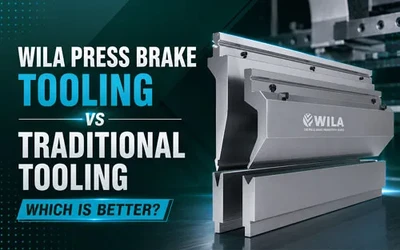 WILA Press Brake Tooling vs Traditional Tooling: Which Is Better?August 26, 2026Choosing press brake tooling is not just a purchasing decision. It affects setup time, bend accuracy, operator safety, scrap rate, machine utilization, and whether your shop can handle short-run jobs profitably.view
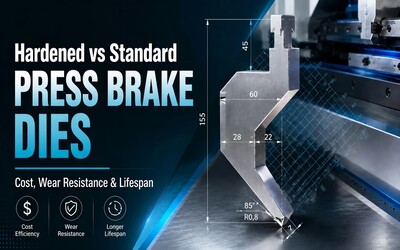 Hardened vs Standard Bystronic Press Brake Dies: Cost, Wear Resistance, and Lifespan ComparisonSeptember 14, 2026Hardened and standard Bystronic press brake dies are designed for different production requirements. Hardened dies are the preferred choice for manufacturers requiring longer tooling lifespan, improve...view