EN
EN

In 2026, the sheet metal cutting landscape has shifted significantly. High-tensile steel, wear-resistant plate, duplex stainless steel, and thicker industrial sheet materials have moved from specialty applications into mainstream fabrication across automotive manufacturing, aerospace components, power generation equipment, heavy machinery, and structural steel processing. For shearing machine operators and production managers, this material shift has exposed a fundamental limitation of standard blade specifications: a shearing machine blade that performs adequately on mild steel may chip, crack, wear rapidly, or produce unacceptable burrs when the same machine is used to cut high-strength or stainless steel — creating downtime, blade replacement costs, and cut quality problems that erode production economics.
Heavy-duty shear blades — designed with high-grade tool steel, precision heat treatment that balances hardness with toughness, wear-resistant edge geometry, and tight dimensional tolerances — are the tooling response to this material challenge. For buyers comparing stainless steel shearing tools, wear-resistant shear knives, and custom industrial blades for demanding cutting applications, the selection decision is not simply about finding the hardest blade available. It is about finding the blade material, heat treatment, edge geometry, and dimensional specification that delivers the right combination of hardness, toughness, wear resistance, and cutting accuracy for the specific material, thickness, machine type, and production volume of the application. Miharting offers shearing machine blades made from materials including T10, 9CrSi, 6CrW2Si, Cr12MoV, H13, and alloy steel, with deep vacuum heat treatment, burr-free cutting precision, wear resistance, impact toughness, and factory-direct cost efficiency — providing the material range and manufacturing quality that demanding cutting applications require.
This guide covers the complete picture for fabrication shop managers, steel service center buyers, production engineers, and tooling procurement teams: why traditional blades fail on high-tensile steel, what makes a shearing machine blade heavy-duty, how vacuum heat treatment balances hardness and toughness for stable cutting performance, how to select the right blade material and specification for specific cutting applications, and what maintenance practices protect blade performance through the cutting tool's service life.
The commercial case for investing in heavy-duty shear blades starts with a clear understanding of the specific failure mechanisms that high-tensile steel and stainless steel create in standard blade specifications — and why the cost of these failures extends far beyond the replacement cost of the blade itself.
Edge chipping from insufficient toughness is the most sudden and commercially disruptive failure mode that high-tensile steel creates in standard shearing machine blades. High-tensile steel requires significantly higher cutting force than mild steel — and this higher cutting force creates higher impact loading on the blade edge at the moment of initial penetration. A blade with adequate hardness for mild steel cutting but insufficient toughness for the impact loading of high-tensile steel will develop micro-chips at the cutting edge — small fractures that progressively worsen with each cut until the edge is too damaged for acceptable cut quality. Edge chipping is particularly damaging because it creates immediate cut quality problems — burrs, rough edges, and dimensional inaccuracy — that may not be detected until parts have been processed downstream, creating rework or scrap costs that far exceed the blade replacement cost.
Accelerated wear from stainless steel work hardening is the failure mechanism that is specific to stainless steel cutting and that makes stainless steel shearing tools a distinct product category from general-purpose shear blades. Austenitic stainless steel work-hardens rapidly during cutting — the material at the cut zone becomes progressively harder as the blade penetrates, creating increasing cutting resistance and abrasive wear on the blade edge. A blade without adequate wear resistance for stainless steel cutting will lose its edge geometry rapidly, producing increasing burr height, deteriorating cut quality, and requiring more frequent sharpening — all of which increase the cost per cut and reduce the productive cutting time between blade changes.
Dimensional inaccuracy from inadequate straightness and parallelism is the failure mode that affects cut quality across the full blade length rather than at a single point. A blade with inadequate straightness or parallelism creates uneven clearance between the upper and lower blades across the cutting width — producing cuts with varying burr height, edge quality, and dimensional accuracy from one end of the sheet to the other. For fabricators cutting precision parts where dimensional consistency is a quality requirement, blade straightness and parallelism are as important as hardness and toughness.
For fabrication shops, steel service centers, and industrial manufacturers, blade failure in high-strength steel cutting creates consequences that compound across the production operation. Unexpected blade chipping stops production while the blade is replaced and the machine is reset. Burrs and rough cut edges require secondary deburring operations that add labor cost and production time. Dimensional inaccuracy from worn or damaged blades creates parts that fail downstream inspection, generating rework or scrap. And the cumulative downtime from frequent blade changes, sharpening cycles, and quality problems reduces machine utilization and increases the cost per cut — eroding the production economics of the cutting operation.
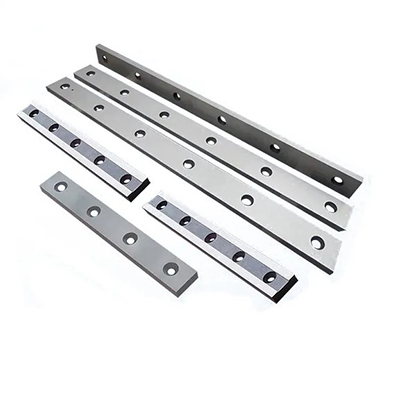
Understanding what distinguishes a heavy-duty shear blade from a standard shearing machine blade — and how the material, heat treatment, edge geometry, and dimensional specification of a heavy-duty blade address the specific failure mechanisms of high-strength steel cutting — is essential for procurement teams evaluating blade specifications for demanding applications.
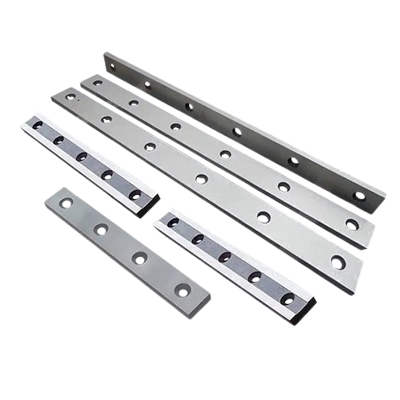
A shearing machine blade is a precision cutting tool installed on a shearing machine to cut sheet metal by applying shearing force between the upper and lower blades. It must maintain a sharp edge, accurate straightness, proper clearance, and stable toughness under repeated cutting loads. Miharting states that shearing machine blades, including guillotine shear blades, can be rectangular, round, serrated, or special-shaped, depending on the application and machine type.
A blade becomes "heavy-duty" when it is designed for higher load, tougher material, longer cutting cycles, and more stable edge retention — through the combination of high-grade tool steel, precision heat treatment, wear-resistant edge geometry, and tight dimensional tolerances that standard blades do not provide.
| Performance Pillar | What It Means | Why It Matters for High-Strength Steel |
|---|---|---|
| Hardness | Resistance to edge deformation and wear | Maintains cutting edge geometry under high cutting loads |
| Toughness | Resistance to chipping and cracking | Absorbs impact loading without brittle failure |
| Wear resistance | Resistance to abrasive edge loss | Extends cutting intervals between sharpening |
| Dimensional accuracy | Straightness, parallelism, and tolerance | Ensures consistent cut quality across full blade length |
The critical insight for heavy-duty blade selection is that hardness and toughness are competing properties in tool steel — increasing hardness through heat treatment typically reduces toughness, and vice versa. The best heavy-duty shear blade is not the hardest blade available — it is the blade with the optimal balance of hardness and toughness for the specific cutting application, achieved through the right combination of blade material and heat treatment process.
The technical mechanism by which vacuum heat treatment achieves the hardness-toughness balance that heavy-duty shear blades require for stable performance on high-strength steel and stainless steel — and why the heat treatment process is the most important manufacturing variable in shearing machine blade quality — is the core metallurgical knowledge that procurement teams need to evaluate blade specifications for demanding cutting applications.
The mechanical properties of a shearing machine blade — its hardness, toughness, wear resistance, and dimensional stability — are determined primarily by the heat treatment process applied after the blade is machined to its final dimensions. The same blade material can produce dramatically different performance outcomes depending on the heat treatment temperature, atmosphere, quench rate, and tempering cycle — making heat treatment quality the most important manufacturing variable in blade production, and the variable that most directly determines whether a blade will perform reliably on high-strength steel or fail prematurely through chipping, cracking, or rapid wear.
Miharting highlights deep vacuum heat treatment as one of the key features of its shearing machine blades — reflecting the manufacturing quality principle that vacuum heat treatment provides superior results compared with conventional atmosphere heat treatment for precision cutting tools.
| Vacuum Heat Treatment Benefit | Mechanism | Performance Impact |
|---|---|---|
| Improved hardness uniformity | Controlled atmosphere prevents surface decarburization | Consistent edge hardness across full blade length |
| Better toughness retention | Precise temperature control prevents overheating | Lower chipping and cracking risk under impact loading |
| Reduced internal stress | Controlled quench rate minimizes thermal gradient | More stable blade performance and longer service life |
| Improved wear resistance | Optimal carbide distribution in tool steel | Longer cutting intervals between sharpening |
| Better dimensional stability | Reduced distortion from controlled heat treatment | Tighter straightness and parallelism after heat treatment |
For high-strength steel cutting, the blade must absorb the impact loading of initial penetration without chipping — requiring adequate toughness — while maintaining the edge hardness that resists wear during the cutting stroke. For stainless steel cutting, the blade must resist the abrasive wear created by work hardening — requiring high wear resistance — while maintaining the edge sharpness that produces clean cuts without excessive burr formation. The optimal hardness-toughness balance differs between these applications, which is why blade material selection and heat treatment specification must be matched to the specific cutting material and application conditions.
| Blade Condition | Cutting Result | Commercial Consequence |
|---|---|---|
| Too soft | Fast wear, burrs, poor cut quality | High sharpening frequency, poor cut quality |
| Too hard and brittle | Chipping, cracking, sudden failure | Unexpected downtime, safety risk |
| Balanced hardness and toughness | Stable cutting, longer life, better ROI | Lower tooling cost per cut, consistent quality |
The selection of the right blade material for a specific cutting application — and the evaluation of custom industrial blade specifications for non-standard machines or special cutting requirements — requires systematic matching of material properties to application conditions.
| Blade Material | Key Properties | Best Application |
|---|---|---|
| T10 | Good hardness, cost-effective | General cutting and cost-sensitive applications |
| 9CrSi | Better wear resistance than T10 | General sheet metal cutting with moderate demands |
| 6CrW2Si | Higher toughness and wear resistance | Heavier cutting loads and thicker sheet |
| Cr12MoV | Strong wear resistance, good toughness | Stainless steel and high-tensile steel cutting |
| H13 | Good hot hardness and toughness | Demanding conditions with thermal loading |
| Alloy steel | Custom performance profile | Application-specific requirements |
Miharting lists T10, 9CrSi, 6CrW2Si, Cr12MoV, H13, and alloy steel among its shearing machine blade material options — providing the material range that covers cutting applications from general mild steel fabrication to demanding stainless steel and high-tensile steel processing.
For stainless steel cutting, the best shearing machine blades are wear-resistant alloy tool steel blades — typically Cr12MoV or H13 — with precision grinding, stable hardness in the range appropriate for the specific stainless steel grade and thickness, strong toughness to resist the impact loading of stainless steel cutting, and proper edge geometry that minimizes the cutting force required to penetrate the work-hardened material at the cut zone. Miharting states that modern manufacturing processes help ensure extremely high dimensional accuracy, with parallelism and straightness errors kept within very small limits — providing the dimensional quality that consistent stainless steel cut quality requires.
For fabricators using non-standard shearing machines, cutting special materials, or requiring blade specifications that differ from standard catalog dimensions, custom industrial blades provide the solution. Custom blade manufacturing can address: non-standard blade length, width, or thickness, custom mounting hole patterns that match specific machine designs, custom edge angles optimized for specific cutting materials, custom hardness ranges for specific application conditions, special alloy steel selections for extreme cutting requirements, and drawing-based manufacturing for OEM replacement or special-purpose applications.
Heavy-duty shear blades deliver the most commercial value for: steel service centers processing high-tensile and wear-resistant plate where blade life directly determines cutting cost per ton, automotive manufacturers cutting high-strength steel for structural components where cut quality affects downstream assembly, aerospace fabricators cutting aluminum alloy and stainless steel where dimensional accuracy is a safety-critical requirement, power generation equipment manufacturers cutting thick plate where cutting force and blade toughness are the primary performance requirements, and any fabrication operation where the shift from mild steel to high-strength or stainless steel has exposed the limitations of standard blade specifications.
Procuring the right shearing machine blade for a specific cutting application requires systematic pre-order confirmation of machine specifications, material requirements, and quality documentation — and a maintenance program that protects blade performance through the cutting tool's service life.
Before requesting a quotation for shearing machine blades, prepare and confirm the following:
Confirm the machine brand, model, and blade mounting specifications — the blade dimensions, mounting hole pattern, and edge angle must match the machine exactly for correct installation and cutting performance
Confirm the primary cutting material — mild steel, stainless steel, high-tensile steel, aluminum, coated sheet, or other — and the maximum sheet thickness, because these parameters determine the required blade material and heat treatment specification
Confirm the current blade failure problem — wear, chipping, cracking, burrs, or dimensional inaccuracy — because the failure mode indicates which blade property needs improvement in the replacement specification
Confirm the required blade material — T10, 9CrSi, 6CrW2Si, Cr12MoV, H13, or alloy steel — based on the cutting material, thickness, and production volume
Confirm the required hardness range — specify the target hardness for the cutting application and verify that the supplier's heat treatment process can consistently achieve this range
Confirm the dimensional tolerances — blade length, width, thickness, straightness, parallelism, and mounting hole position — and verify that the supplier's grinding process can meet the required tolerances
Confirm whether custom industrial blade manufacturing is required — for non-standard machines or special cutting requirements, provide a blade drawing with all dimensions, tolerances, and material specifications
Confirm the quantity and delivery schedule — verify that the supplier's production capacity can meet the required delivery timeline
Confirm the packaging requirement — blades must be packaged to prevent edge damage, corrosion, and dimensional distortion during transport and storage
Set blade clearance correctly for the material thickness being cut — incorrect clearance is the most common cause of premature blade wear, burr formation, and edge chipping
Keep the blade edge clean and free from scale buildup — scale and debris on the blade edge increase cutting resistance and accelerate wear
Avoid cutting material beyond the machine's rated capacity — cutting oversized or overly thick material creates impact loading that exceeds the blade's design toughness and causes chipping
Rotate or flip blades if the design allows multi-edge use — using all available cutting edges before sharpening maximizes the blade's productive cutting life
Sharpen blades before severe dulling occurs — a blade that is sharpened before the edge is severely worn requires less material removal per sharpening cycle and maintains better dimensional accuracy
Inspect edges regularly for micro-chipping — early detection of edge damage allows blade rotation or replacement before the damage progresses to a level that affects cut quality
Store spare blades in protective packaging with rust prevention — blade edges are vulnerable to corrosion and impact damage during storage, and proper storage protects the investment in replacement tooling
In 2026, the fabrication operations that achieve the best cutting economics on high-tensile steel and stainless steel are those that have matched their blade specification to the specific demands of these materials — selecting heavy-duty shear blades with the right combination of hardness, toughness, wear resistance, and dimensional accuracy for the cutting application, and maintaining those blades with the correct clearance settings, sharpening intervals, and handling practices that protect blade performance through the cutting tool's service life. The right shearing machine blade reduces burrs, prevents chipping, improves cut quality, and lowers downtime — delivering a measurable improvement in cutting economics that compounds across every shift of production.
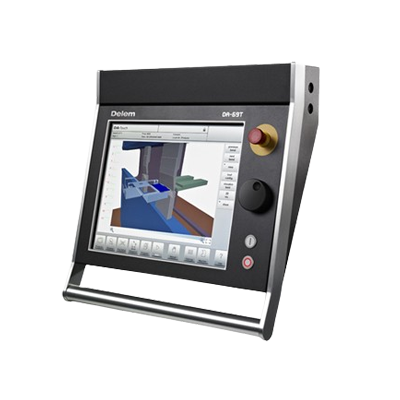
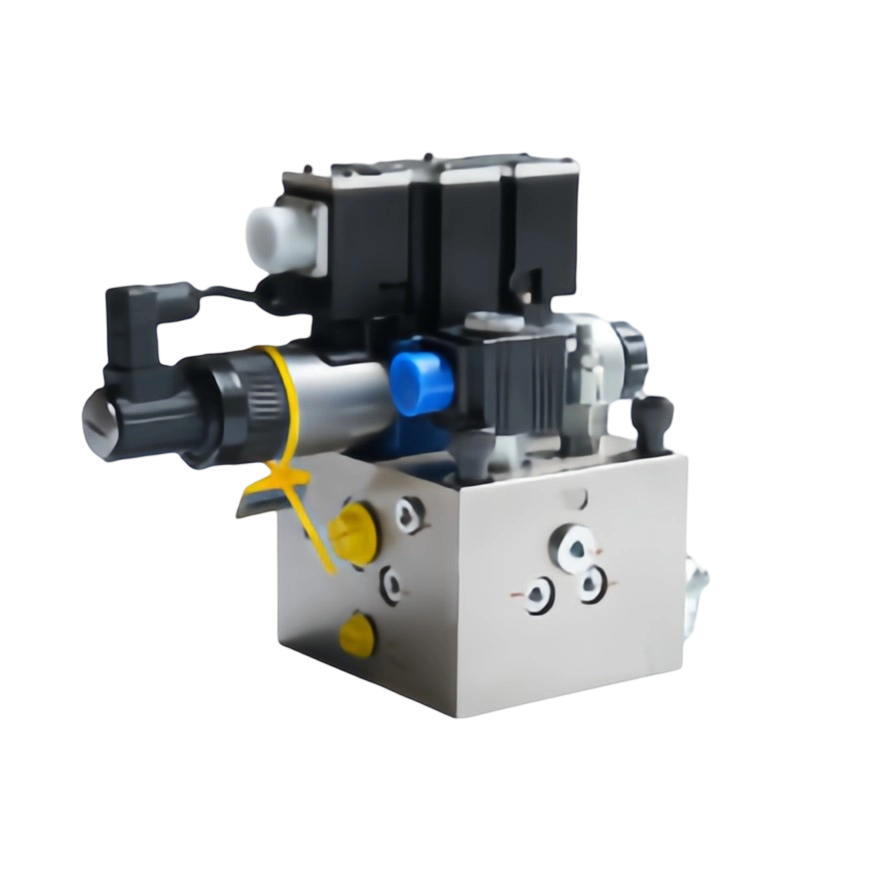
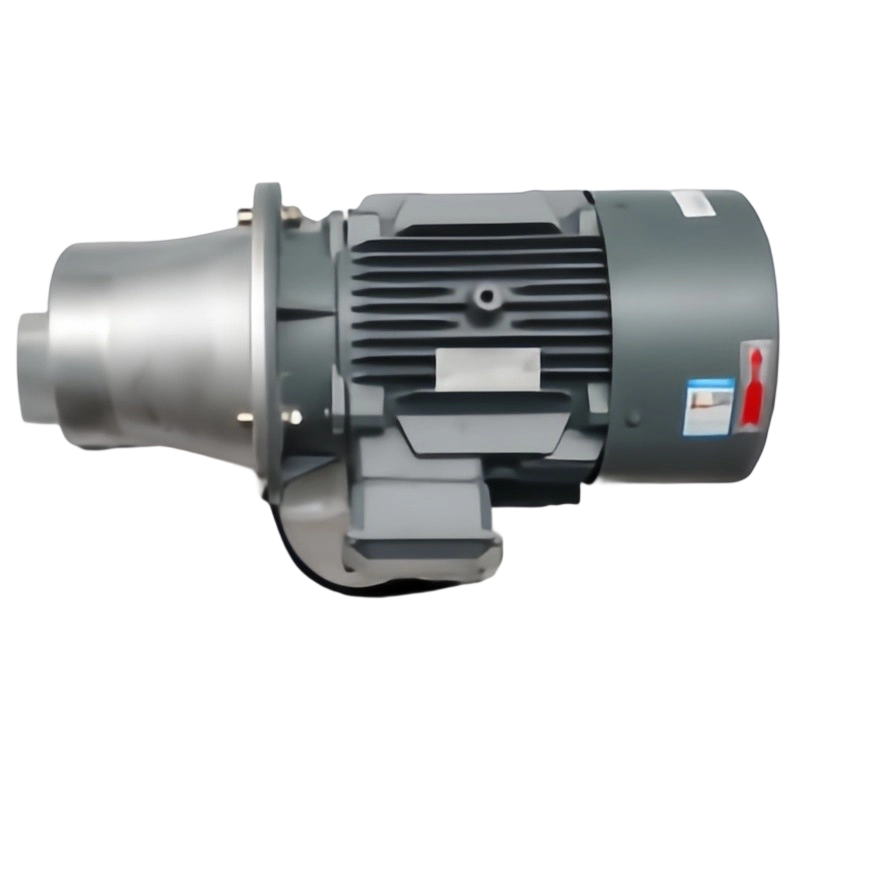
Miharting supplies shearing machine blades manufactured from T10, 9CrSi, 6CrW2Si, Cr12MoV, H13, and alloy steel, with deep vacuum heat treatment, burr-free cutting precision, wear resistance, impact toughness, factory-direct cost efficiency, customized services, and CE and ISO-related support — along with press brake backgauges, quick clamps, mechanical compensation systems, tool storage cabinets, press brake protective film, press brake control systems, proportional valves, and press brake motors for sheet metal manufacturing industries.
Contact Miharting today to share your machine model, blade drawing, cutting material, sheet thickness, hardness requirement, current blade failure problem, and target delivery schedule. Miharting can help evaluate the right shearing machine blade specification for your cutting application and provide the technical support and supply reliability that demanding industrial cutting operations require.
Q1: What is a shearing machine blade and what does it do?
A shearing machine blade is a precision cutting tool installed on a shearing machine to cut sheet metal by applying shearing force between the upper and lower blades. It must maintain a sharp edge, accurate straightness, proper clearance, and stable toughness under repeated cutting loads — and its material, heat treatment, edge geometry, and dimensional accuracy determine the cut quality, blade life, and production economics of the cutting operation.
Q2: What are the best blades for shearing stainless steel?
The best blades for shearing stainless steel are wear-resistant alloy tool steel blades — typically Cr12MoV or H13 — with precision grinding, stable hardness appropriate for the stainless steel grade and thickness, strong toughness to resist impact loading, and proper edge geometry that minimizes cutting force. These materials provide the wear resistance needed to resist stainless steel work hardening and the toughness needed to absorb the impact loading of stainless steel cutting without chipping.
Q3: Why do shear blades chip when cutting high-strength steel?
Chipping occurs when the blade lacks sufficient toughness to absorb the impact loading that high-tensile steel creates during cutting. High-tensile steel requires significantly higher cutting force than mild steel, and a blade with adequate hardness for mild steel but insufficient toughness for high-tensile steel will develop micro-chips at the cutting edge that progressively worsen with each cut. The solution is a heavy-duty shear blade with the right balance of hardness and toughness for the specific high-strength steel being cut.
Q4: Why is vacuum heat treatment important for shearing machine blades?
Vacuum heat treatment improves hardness uniformity by preventing surface decarburization, maintains better toughness by providing precise temperature control, reduces internal stress through controlled quench rates, improves wear resistance through optimal carbide distribution, and provides better dimensional stability through reduced distortion — delivering superior blade performance compared with conventional atmosphere heat treatment for precision cutting tools.
Q5: How do I choose the right heavy-duty shear blade for my application?
Choose based on the primary cutting material — mild steel, stainless steel, high-tensile steel, or aluminum — the maximum sheet thickness, the machine brand and model, the required blade dimensions and mounting hole pattern, the current blade failure problem, and the production volume. For stainless steel and high-tensile steel, Cr12MoV or H13 blades with vacuum heat treatment are commonly recommended. For custom requirements, provide a blade drawing with all dimensions and specifications.
Q6: Can shearing machine blades be customized for non-standard machines?
Yes. Custom industrial blades can be manufactured to non-standard dimensions, custom mounting hole patterns, custom edge angles, custom hardness ranges, and special alloy steel selections based on buyer drawings and specifications. Custom blade manufacturing is available for OEM replacement, special-purpose cutting applications, and non-standard machine designs.
Q7: What maintenance practices extend shearing machine blade service life?
The most important maintenance practices are: setting blade clearance correctly for the material thickness being cut, keeping the blade edge clean and free from scale buildup, avoiding cutting material beyond the machine's rated capacity, rotating or flipping blades to use all available cutting edges before sharpening, sharpening blades before severe dulling occurs, inspecting edges regularly for micro-chipping, and storing spare blades in protective packaging with rust prevention.
 What Special Requirements Do Titanium Alloys and Composite Materials Have for the Design of Bending Machine Molds?June 26, 2025Titanium Alloy:1. Due to the high hardness of titanium alloys, mold design needs to consider the use of specially designed structures and processes to adapt to its bending characteristics. The choice ...view
 Custom Press Brake Dies: What Information Should You Send Before Manufacturing?September 18, 2026Custom Press Brake Dies: What Information Should You Send Before Manufacturing? | MIHARTINGOrdering a custom press brake die often starts with a straightforward request: a customer has a part that can...view
 How Press Brake Quick Clamping Systems Reduce Setup Time by 80%September 7, 2026For many sheet metal manufacturers, press brake setup is an overlooked source of production downtime.A faster clamping system can therefore reduce both labor time and machine downtime.view
 Safety First: How Vertical Front-Loading Clamps Protect Operators and Press Brake ToolingSeptember 10, 2026Learn how vertical front-loading press brake clamps, Safety-Click and anti-drop safety pins help reduce tooling-change risks and support safer CE-oriented press brake operation.view
 Press Brake Tooling Guide 2026: Types, Materials, Selection & Maintenance TipsAugust 10, 2026Press brake tooling plays a critical role in sheet metal bending performance. Although the press brake machine provides the bending force, the tooling determines the final bending accuracy, surface quality, production efficiency, and tool life.view
 Step Bending Dies for Press BrakesAugust 4, 2026Discover Miharting step bending dies for press brakes, including DC01, DC02, and DC03 adjustable solutions. Improve offset bending accuracy, flexibility, and setup efficiency.view