EN
EN

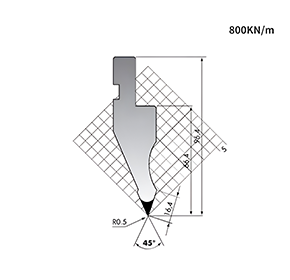
In press brake bending, flexibility is often the key to higher productivity. When working with long flanges, deep boxes, or special profiles, standard straight punches may not provide enough clearance. In these cases, operators often need to use gooseneck punches to avoid collision during bending.
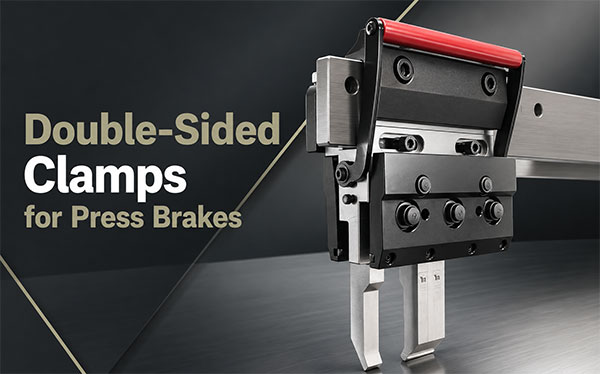
However, some complex parts require the gooseneck punch to be rotated 180 degrees and mounted on the rear side of the clamp. This is exactly where double-sided clamps become essential.
For many press brakes, the standard factory configuration includes single-sided quick clamps. These clamps are convenient for normal front-side tool loading, but they do not allow the punch to be installed from the opposite side. As a result, the machine’s bending capability is limited when special tooling positions are required.
Single-sided quick clamps are widely used because they allow fast tool change and simple operation. For standard bending jobs, they work well.
But they have one clear limitation: the punch can only be clamped on one side.
When a bending process requires rear-side installation, the operator cannot simply rotate the punch and mount it on the back of the clamp. This creates a problem for manufacturers producing complex parts, especially in industries such as:
Stainless steel fabrication
Electrical cabinet production
Elevator component manufacturing
HVAC duct and panel production
Custom sheet metal workshops
Machinery and equipment enclosures
For European manufacturers, where small-batch production, mixed orders, and quick changeovers are common, this limitation can reduce machine flexibility and increase tooling investment.
To solve the rear-side clamping problem, some press brakes are equipped with conventional double-sided clamps. These allow tools to be mounted on both the front and rear sides.
But many traditional double-sided clamps still rely on manual tightening with an Allen key on the rear side. In most designs, two screw holes are reserved in the front pressure plate so the operator can tighten the rear pressure plate manually.
Although this structure allows double-sided clamping, it loses the main advantage of quick clamping.
The result is:
Slower tool change
More manual operation
Higher setup time
Less convenience for frequent production changes
Reduced efficiency in daily workshop use
For companies focused on lean manufacturing and efficient press brake operation, this is not ideal.
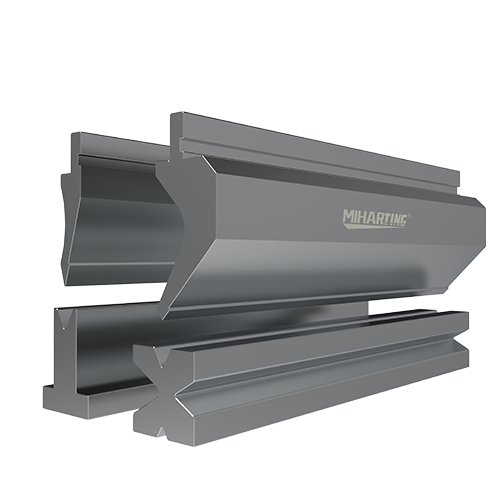
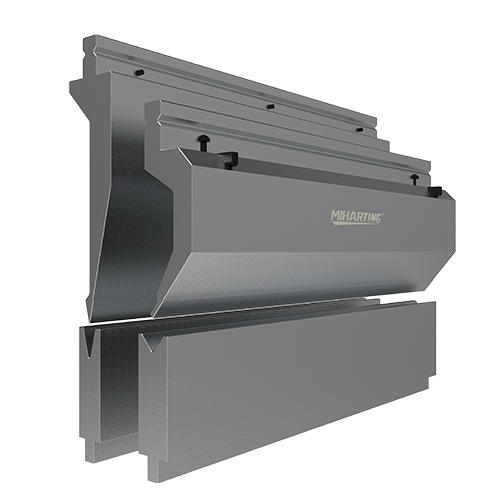
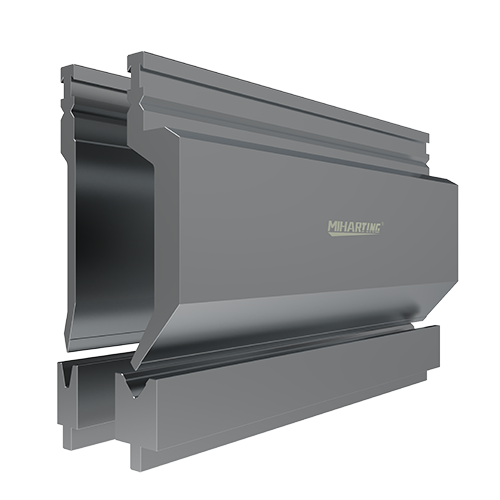
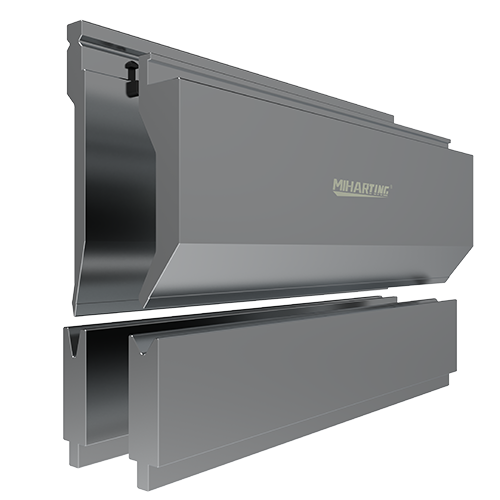
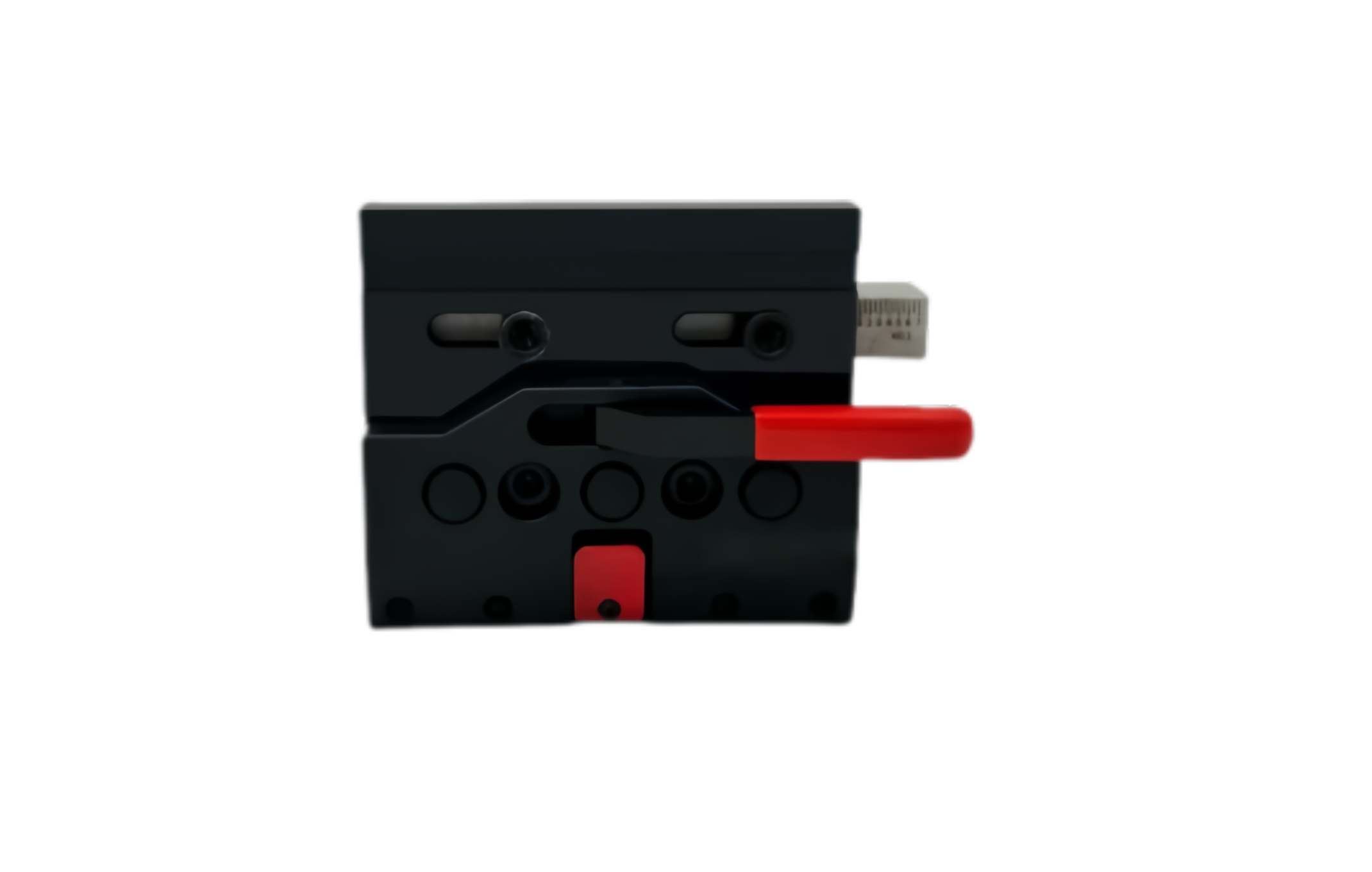
The FAST double-sided clamps are designed to solve this problem properly. They offer true front and rear quick clamping, allowing operators to install tools on either side while keeping the speed and convenience of a quick clamp system.
This means the operator can use the same clamp for more bending applications without losing setup efficiency.
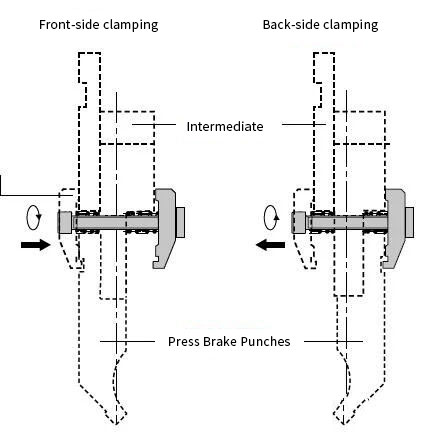
With FAST double-sided clamps, press brake users can rotate compatible punches 180 degrees and mount them on the reverse side when the bending process requires extra clearance or special forming access.
FAST double-sided clamps allow press brake tools to be mounted from both the front and rear sides. This gives operators more options when processing complex parts and helps one set of tooling handle more bending applications.
By increasing tooling flexibility, manufacturers may reduce the need to purchase additional special punches for every new part design.
The “one-push upward” handle design enables quick clamping from both sides. Operators do not need to tighten rear-side screws one by one with a wrench.
This makes tool change faster, easier, and more consistent, especially in workshops where operators frequently switch between different tooling setups.
The handle is designed to stay close to the clamp body after locking. This compact parking position helps reduce interference during bending, especially when working with deep flanges or parts with limited clearance.
For precision sheet metal bending, even small space savings around the tooling area can make a real difference.
FAST double-sided clamps allow tools to be pushed directly upward from below. Operators do not need to slide each punch in from the side one by one.
This is especially useful for long tools, segmented tooling, and frequent tool change operations. It helps save setup time and improves working efficiency.
Both front and rear pressure plates are equipped with elastic tool-holding hooks as standard. These hooks help prevent tools from accidentally falling during installation or adjustment.
For European workshops that value operator safety and CE-oriented machine practices, this is an important detail.
One of the biggest benefits of double-sided clamps is that they help customers make better use of existing press brake tooling.
Instead of buying multiple special tools for different bending directions or clearance requirements, manufacturers can often use the same punch in front or rear clamping positions. This improves the versatility of the tool and reduces overall tooling investment.
For subcontractors and sheet metal manufacturers dealing with changing customer drawings, this flexibility can be a strong competitive advantage.
FAST double-sided clamps are especially suitable for manufacturers who:
Bend complex sheet metal parts
Use gooseneck punches frequently
Need front and rear tool installation
Want faster tool change than manual rear clamping
Produce small and medium batches
Need to reduce press brake setup time
Want to improve tooling flexibility and safety
If your press brake often handles non-standard parts, deep bending, or special clearance requirements, upgrading to double-sided clamps can significantly improve daily production efficiency.
Standard single-sided quick clamps are efficient, but they limit tool installation direction. Traditional double-sided clamps solve the direction problem, but often sacrifice quick clamping convenience.
FAST double-sided clamps combine both advantages: front and rear clamping capability, quick operation, compact handle design, bottom tool loading, and safer tool holding.
For European sheet metal manufacturers looking to increase press brake flexibility, reduce tooling costs, and improve setup efficiency, FAST double-sided clamps offer a practical and valuable upgrade.
Double-sided clamps are press brake clamping systems that allow punches to be installed on both the front and rear sides of the clamp, giving operators more flexibility for complex bending jobs.
Some bending parts require a gooseneck punch to be rotated 180 degrees for better clearance. Double-sided clamps make this rear-side installation possible.
Yes. FAST double-sided clamps are designed for quick clamping on both front and rear sides, avoiding the slow manual tightening process used by many traditional double-sided clamps.
Yes. By allowing one tool to be used in more bending positions, double-sided clamps can help reduce the need for additional special tooling.
 Why an Amada Press Brake Tooling Cabinet is an Investment in Tool Longevity (Not Just Storage)April 22, 2026Many shops spend $50,000 on high-precision Amada or European tooling, only to store them on wooden pallets or steel racks where the ground surfaces rub against each other. A single 0.05mm nick on a pu...view
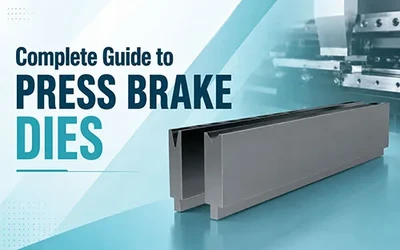 Complete Guide to Press Brake Dies: Types, Materials and ApplicationsAugust 14, 2026A press brake die is one of the most important components in the bending process. While the machine provides the bending force, the die determines how the sheet is supported and formed.view
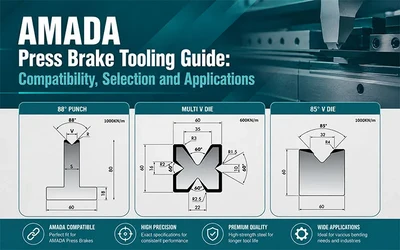 AMADA Press Brake Tooling Guide: Compatibility, Selection and ApplicationsAugust 31, 2026This guide looks at AMADA press brake tooling from a practical production perspective: how to identify the right tooling, how to select it for different applications, and when standard tooling should be replaced by a specialized solution.view
 Retrofitting Your Old Press Brake with Modern Quick-Change Clamping SolutionsSeptember 11, 2026Upgrade an older AMADA, LVD, SAFAN or European press brake with modern quick-change clamping. Compare adapters, mechanical, pneumatic and hydraulic retrofit solutions.view
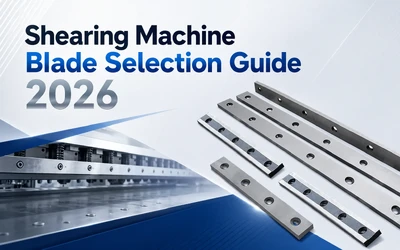 Shearing Machine Blade Selection Guide 2026: Heavy-Duty Shear Blades for High-Strength Steel and Stainless Steel CuttingJune 30, 2026In 2026, the sheet metal cutting landscape has shifted significantly. High-tensile steel, wear-resistant plate, duplex stainless steel, and thicker industrial sheet materials have moved from specialty...view
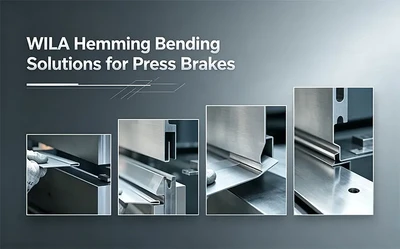 WILA Hemming Bending Solutions for Press BrakesJuly 22, 2026Explore four WILA hemming bending solutions for press brakes, including flat hemming tools, U-shape hemming dies, spring-loaded hemming tools, and hydraulic hemming tables. Learn how to choose the right solution by material, thickness, and production frequency.view