EN
EN

In the sheet metal fabrication industry, tooling has a significant impact on the performance of press brakes. Currently, Amada, Trumpf, and Venla are the three leading brands on the market. Choosing the right press brake tooling can effectively improve your bending accuracy and extend the service life of your machine. In this guide, we will focus on analyzing the advantages of Amada style press brake tooling and compare it with its competitors.
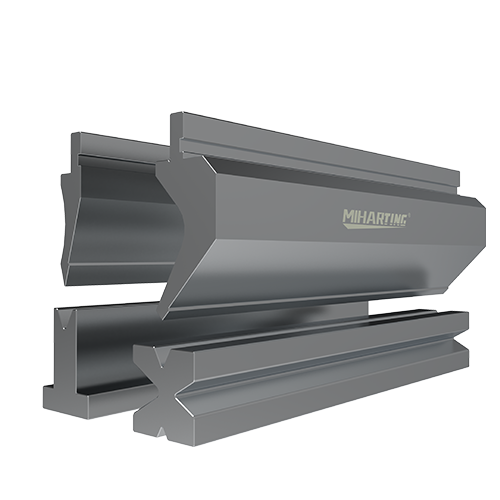
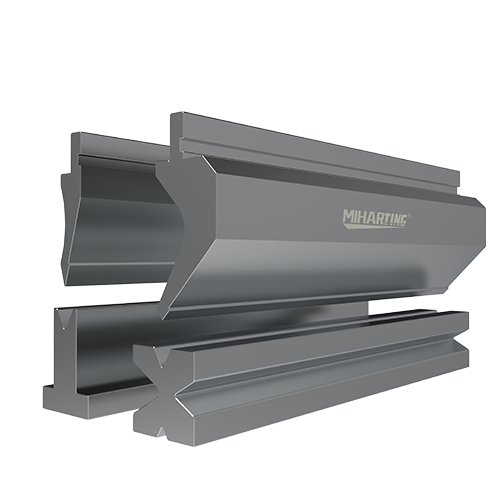
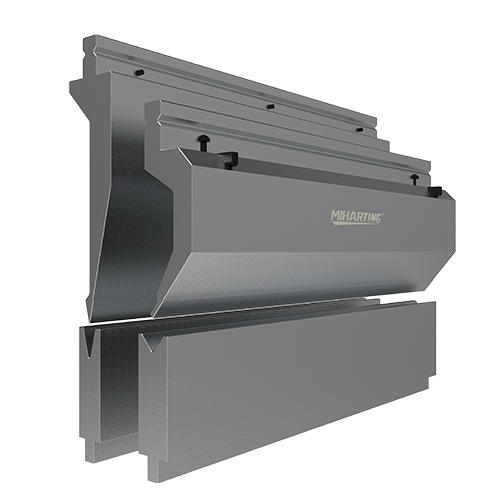
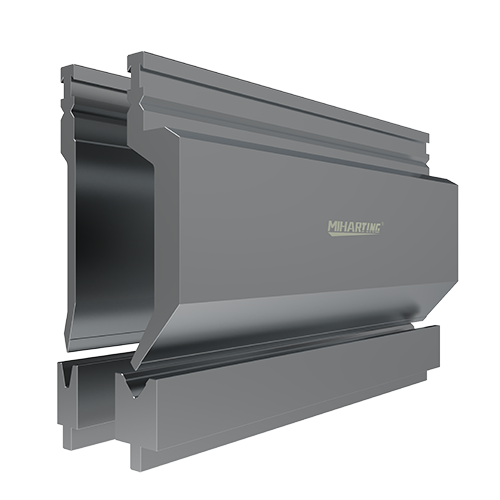
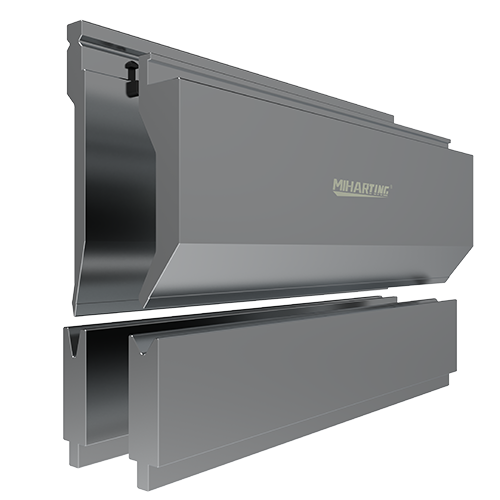
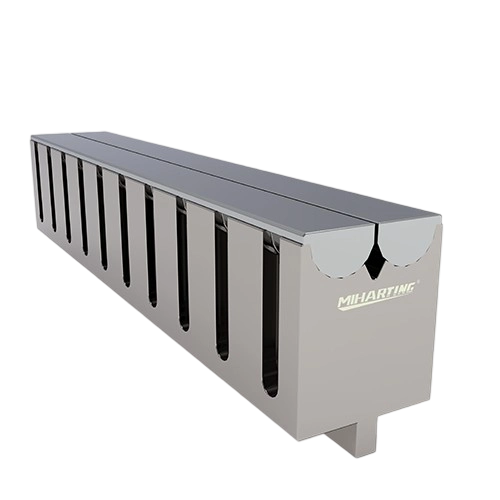
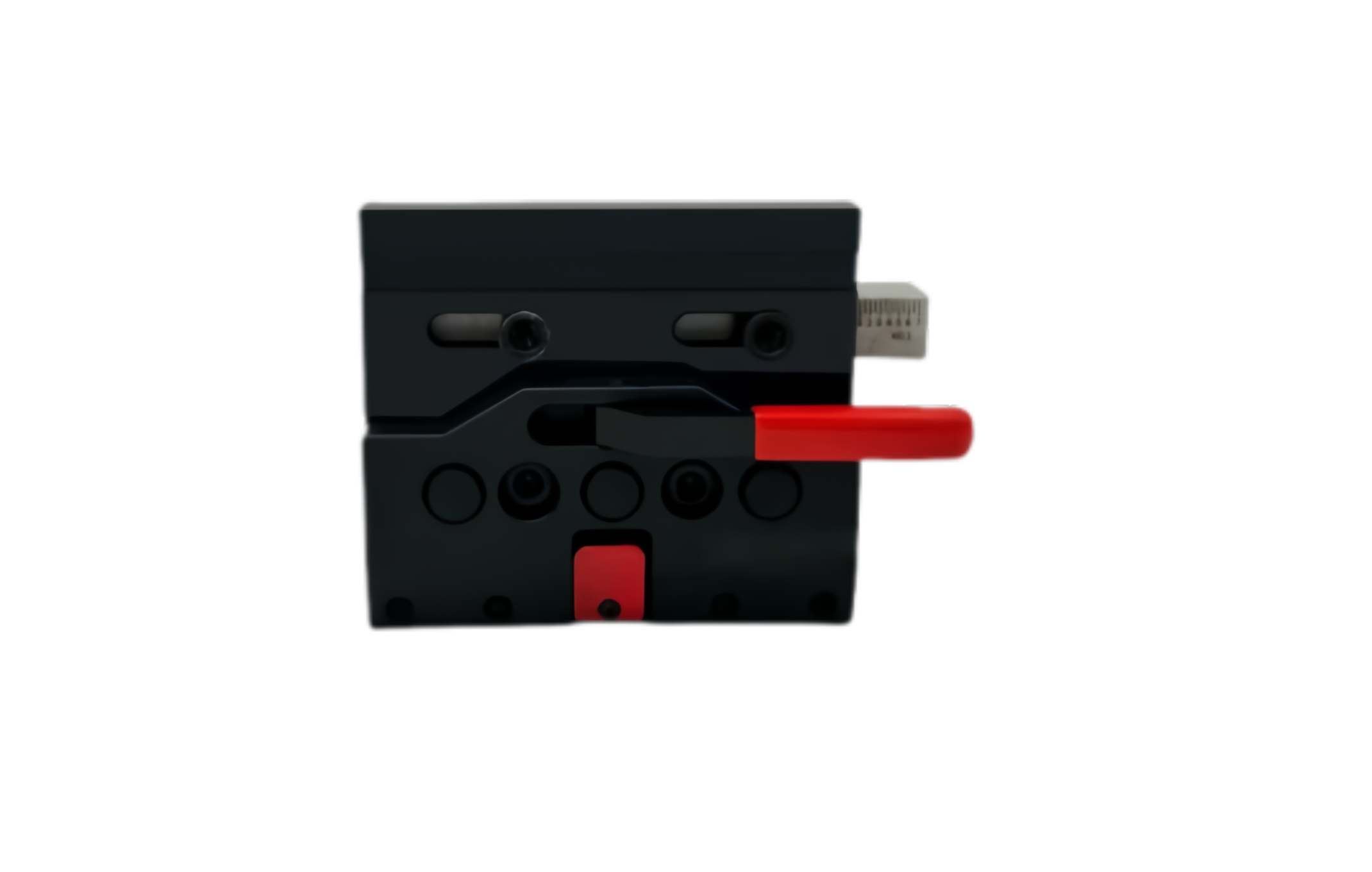
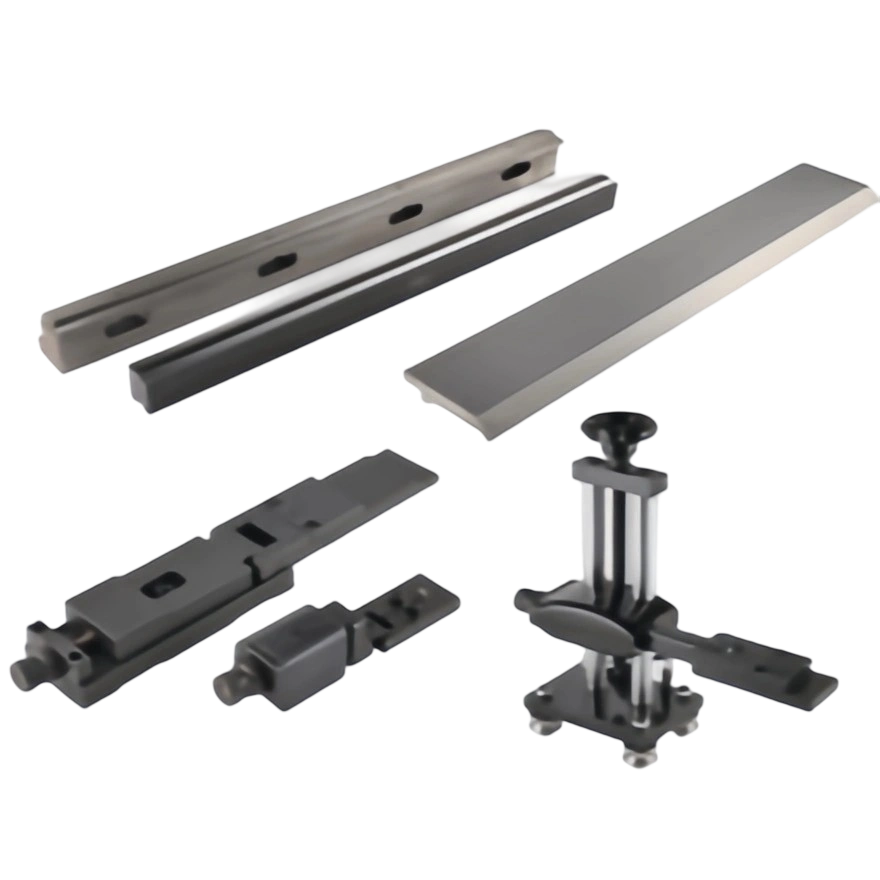
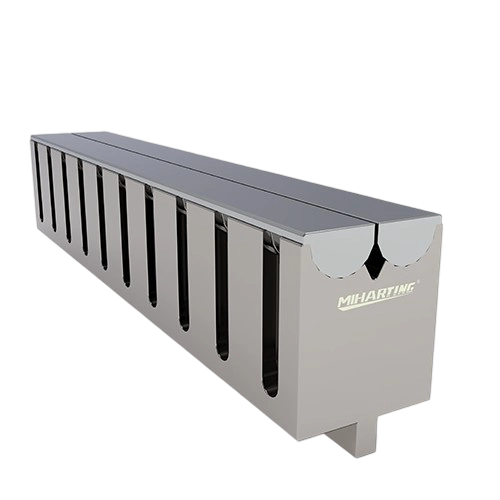
Amada press brake tooling, also known as “European-style” or “Promecam-style,” is the most widely used tooling system globally, characterized by its simple structure and versatility.
· Standard 20mm shank: Equipped with a safety groove or “safety clip” to prevent the tool from falling out during installation.
· High versatility: Compatible with most machine brands from China, Europe, and the United States.
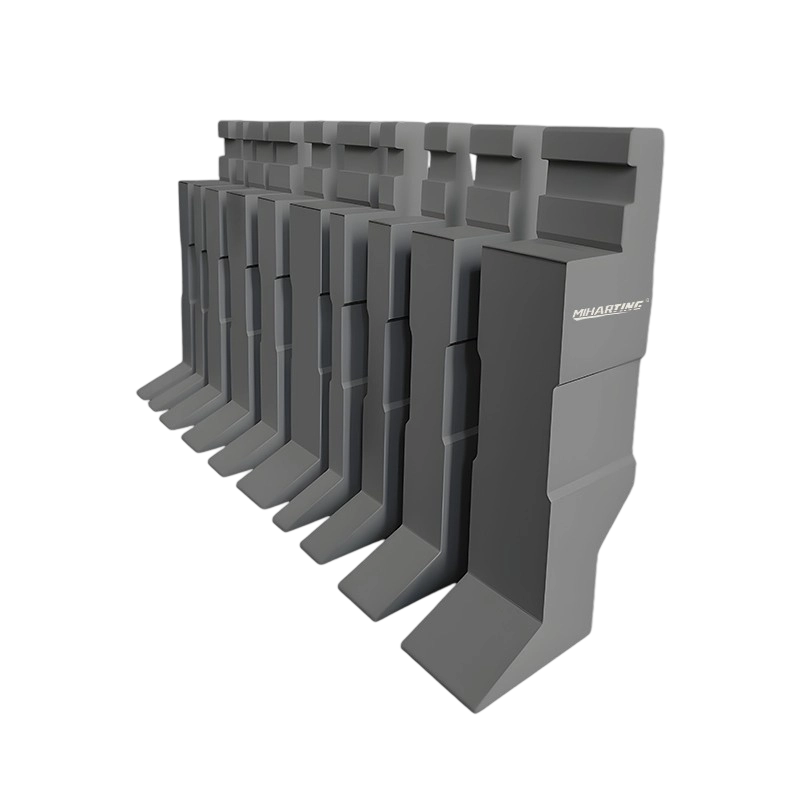
· Modular tools: Featuring a modular design, operators can easily “assemble” the required length to meet box bending needs.
Advantages: 42CrMo material + full-body hardening, offering wear resistance and resistance to deformation; wide variety of options, easy to replace.
Applications: General-purpose workshops, standard metal cabinets, and light-to-medium-gauge bending operations.
Clamping: Typically uses manual or pneumatic clamping plates.
Advantages: High precision, high load-bearing capacity, and typically equipped with a dedicated “head-loading” system.
Applications: High-end German equipment requiring absolute sub-millimeter precision
Clamping: Typically uses a dedicated hydraulic clamping system to ensure perfect alignment every time.
Advantages: Wila tooling is hailed as the “new standard,” featuring automatic centering, vertical clamping, and exceptional durability.
Applications: High-speed CNC bending units and heavy-duty applications.
Clamping: The machine features the “New Standard” hydraulic clamping system, which is widely recognized as the fastest and most precise system available on the market today.
| Feature | Amada Style | Trumpf Style | Wila Style |
| Accuracy | High | Very High | Ultra-High |
| Tool Change Speed | Moderate | Fast | Fastest (Vertical Load) |
| Initial Cost | Economic | Premium | Premium |
| Compatibility | Universal (Most brands) | Specific (Trumpf/Bystronic) | Wila/New Standard Machines |
| Load Bearing | Center Loading | Head Loading | Head Loading |
Regardless of the style you choose, the material defines the life of the tool. Many budget suppliers use 45# carbon steel, which loses its precision after only a few thousand cycles.
At MIHARTING, we manufacture our Amada Style Press Brake Tooling using 42CrMo (Chromium-Molybdenum) alloy steel.
Hardness: Vacuum heat-treated to HRC 47-52.
Durability: High resistance to deformation and wear.
Precision: CNC ground to a tolerance of +/- 0.01mm.
Using high-quality 42CrMo ensures that the "V" opening and the punch tip maintain their geometry, preventing "angle drift" over long production runs.
To choose the right bending machine die for your needs, you must first determine what type of clamping system your machine uses. Is it a standard European clamping system, or a specialized hydraulic system? What is the required minimum radius? This determines the radius of the punch tip.
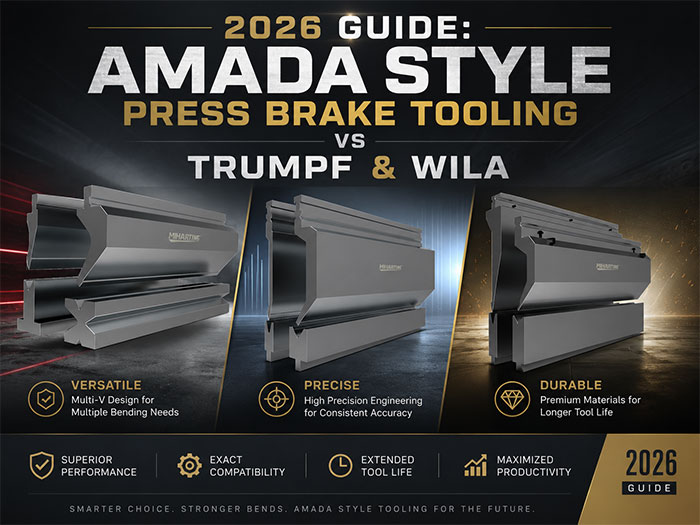
Overall, Amada dies offer the best value for money, while ensuring precision and reliable after-sales service, making them the top choice for press brake dies in 2026. If you are looking for high-quality dies, we invite you to follow MIHARTING. Our dies are crafted from precision 42CrMo steel and are compatible with Amada, Promecam, and all major European press brakes.
[Browse our Amada Style Tooling Catalog]
[Request a Custom Tooling Quote]
 42CrMo vs Cr12MoV: Which Material Is Better for Press Brake Tooling?September 2, 2026For press brake punches and dies, the right material needs to balance hardness, toughness, wear resistance and application requirements. A material that performs well in high-volume production may be unnecessary for a general sheet metal workshop.view
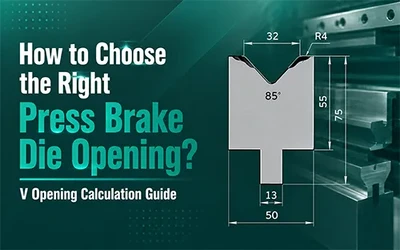 How to Choose the Right Press Brake Die Opening?August 25, 2026Selecting the correct press brake die opening is crucial; the size of the V-opening affects bending accuracy, the inner bend radius, bending force, surface quality, and more.view
 Why Global Fabricators are Shifting to High-End China Press Brake Tooling: Quality vs. Cost AnalysisApril 22, 2026For decades, the global metal fabrication industry looked to Europe and Japan for precision. However, the last five years have seen a tectonic shift. China press brake tooling, led by specialized manu...view
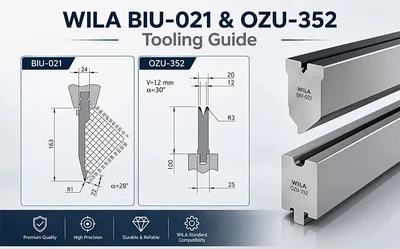 WILA BIU-021 & OZU-352 Tooling Guide: A Reliable Combination for Versatile Sheet Metal BendingJuly 6, 2026Discover why WILA BIU-021 upper tool and OZU-352 lower die are a reliable press brake tooling combination for accurate, durable, and versatile sheet metal bending.view
 How Press Brake Quick Clamping Systems Reduce Setup Time by 80%September 7, 2026For many sheet metal manufacturers, press brake setup is an overlooked source of production downtime.A faster clamping system can therefore reduce both labor time and machine downtime.view
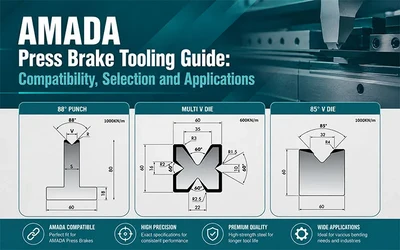 AMADA Press Brake Tooling Guide: Compatibility, Selection and ApplicationsAugust 31, 2026This guide looks at AMADA press brake tooling from a practical production perspective: how to identify the right tooling, how to select it for different applications, and when standard tooling should be replaced by a specialized solution.view