EN
EN

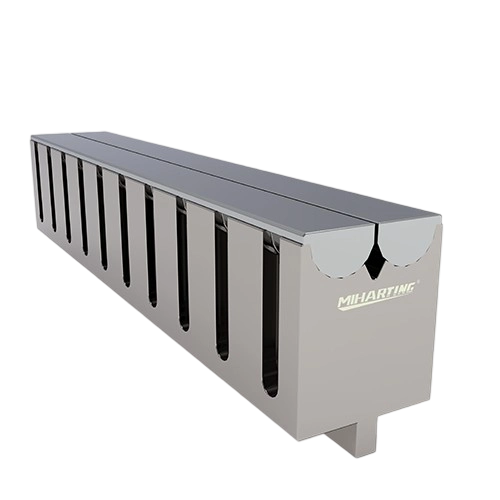
In press brake bending, the punch is more than just a tool that applies force. It directly affects bending accuracy, forming efficiency, clearance, and the final quality of the part. Choosing the right punch type helps improve production stability, reduce interference, and lower setup time.
This guide introduces four common press brake punch types: straight punch, gooseneck punch, acute punch, and offset punch. Each type serves a different purpose, and understanding their features will help you choose the most suitable one for your application.
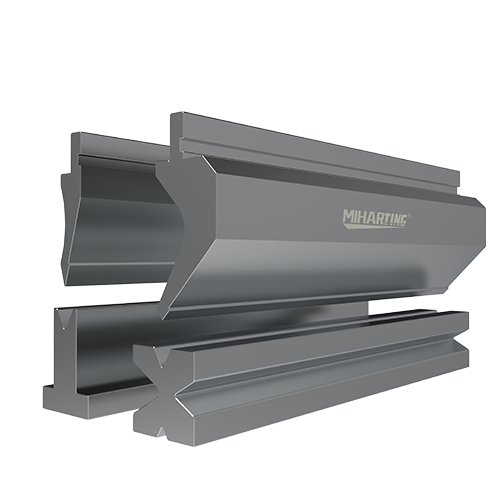
The straight punch is the most common and versatile punch type. With a simple structure and stable performance, it is widely used in standard bending operations.
Best for:
General sheet metal bending
Standard angle forming
Routine fabrication jobs
Parts without clearance restrictions
Key advantages:
Simple and durable structure
Wide application range
Cost-effective for general use
If your workpiece does not require special clearance or complex forming, the straight punch is often the first choice.
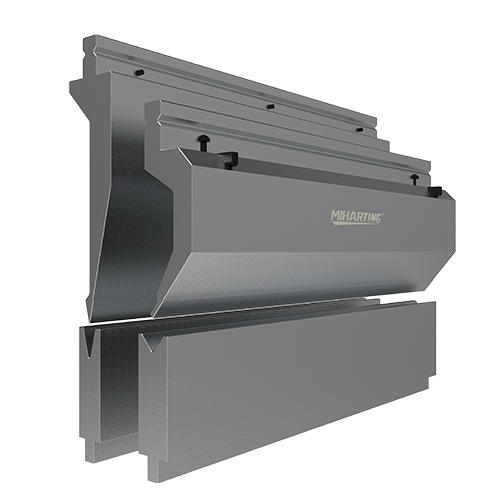
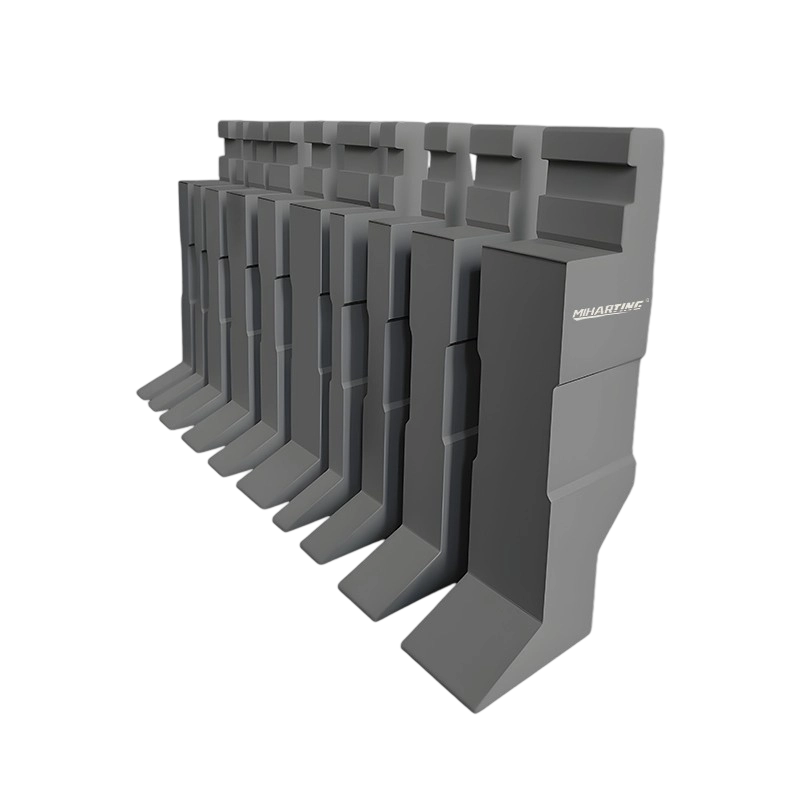
The gooseneck punch is designed with a curved neck shape to provide extra clearance during bending. It is especially useful when the workpiece has pre-formed flanges or upturned edges that may interfere with the punch body.
Best for:
Boxes and enclosures
Parts with return flanges
Deep or complex profiles
Secondary bending operations
Key advantages:
Excellent clearance for formed parts
Prevents interference during bending
Ideal for complex workpiece geometries
When the part shape creates interference during bending, the gooseneck punch offers the space needed to complete the job smoothly.
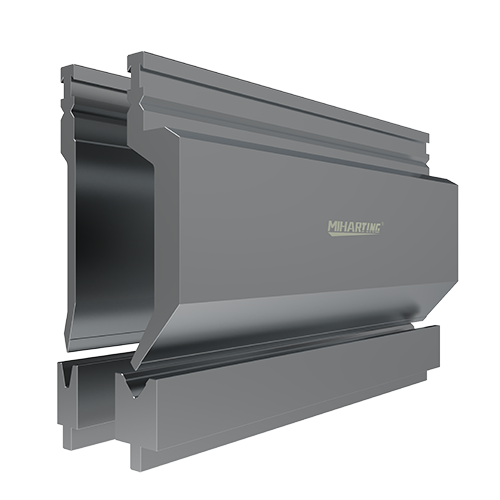
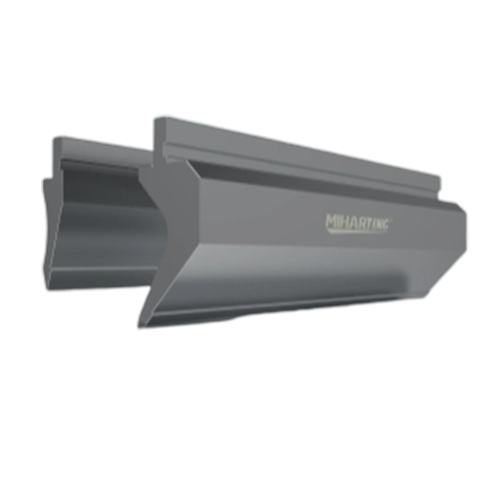
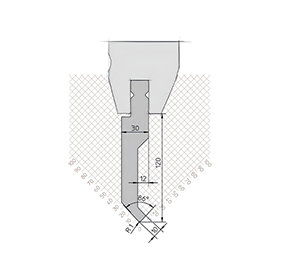
The acute punch is used for sharper bending angles and more demanding forming requirements. Its design makes it suitable for applications where a tighter angle or more precise angle control is needed.
Best for:
Acute-angle bending
Special forming processes
High-precision angle work
Springback compensation applications
Key advantages:
Suitable for sharp-angle forming
Helps achieve better angle accuracy
Reliable for specific technical requirements
If your part requires a small included angle or a more precise bend geometry, the acute punch is a strong option.
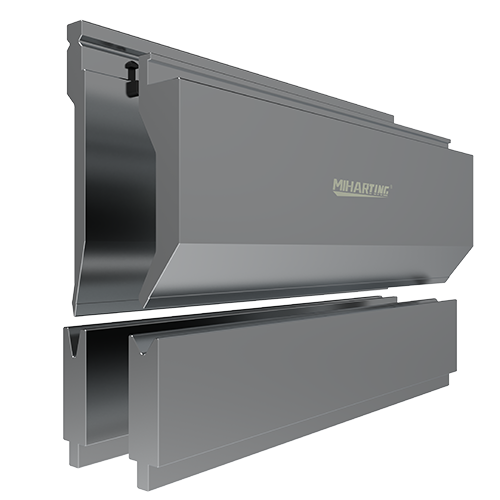
The offset punch is commonly used to create Z-bends or step bends. It allows the operator to form an offset profile efficiently, often with fewer operations and less repositioning.
Best for:
Z-shaped bends
Step bends
Offset profiles
High-efficiency batch production
Key advantages:
Improves production efficiency
Reduces the number of forming steps
Suitable for repetitive manufacturing
For parts that require height differences or offset structures, the offset punch can significantly simplify the process.
Selecting the right punch depends on the part design, bending angle, material thickness, and production goal. Here are a few practical points to consider:
Part geometry: Does the part have flanges, offsets, or formed edges?
Bending angle: Is it a standard bend or a sharp-angle bend?
Clearance requirement: Will the punch interfere with the workpiece?
Production volume: Is it for prototype work or mass production?
Forming accuracy: How strict are the angle and appearance requirements?
Standard bending: Straight punch
Clearance needed: Gooseneck punch
Sharp-angle forming: Acute punch
Offset or Z-bend: Offset punch
Each press brake punch type has its own purpose. The best choice depends on your part structure, bending requirements, and production conditions. A suitable punch not only improves forming quality, but also helps reduce tooling changes, avoid interference, and increase overall efficiency.
Whether you are producing standard sheet metal parts or complex formed components, understanding these four punch types is the first step toward better bending results.
 Press Brake Hemming Die Solution for Safer and Stronger Sheet Metal EdgesAugust 17, 2026A press brake hemming die, also known as a sheet metal hemming die or flattening die, is an effective tooling solution for this problem. By folding and flattening the edge of the sheet metal, the die helps create a smooth, safe, and reinforced edge. This process is widely used for electrical cabinets, machine covers, enclosures, doors, panels, trays, home appliance parts, elevator components, and other precision sheet metal products.view
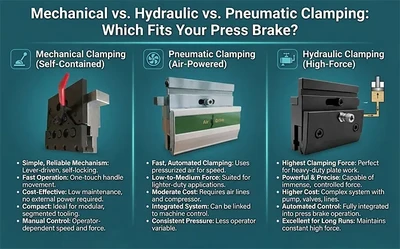 Mechanical vs. Hydraulic vs. Pneumatic Clamping: Which Fits Your Press Brake?September 8, 2026Choosing a press brake quick clamping system is not simply about finding the fastest option.Mechanical, pneumatic and hydraulic clamping systems each have different advantages.The right choice depends on your tooling, production volume, tool-change frequency and machine configuration.view
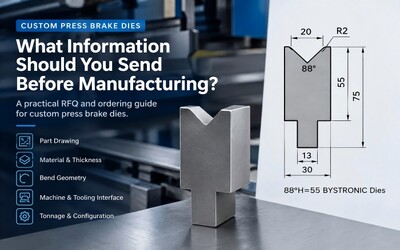 Custom Press Brake Dies: What Information Should You Send Before Manufacturing?September 18, 2026Custom Press Brake Dies: What Information Should You Send Before Manufacturing? | MIHARTINGOrdering a custom press brake die often starts with a straightforward request: a customer has a part that can...view
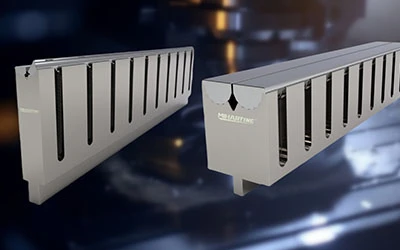 The Sheet Metal Maestro's Playbook: A Definitive Guide to Press Brake ToolingJuly 25, 2025When Metal Meets Its Match: The Science Behind Press BrakesPress brakes don't bend metal—they persuade it.view
 Press Brake Tooling Maintenance: How to Extend Tool LifeJune 8, 2026Learn practical press brake tooling maintenance tips to extend tool life, reduce bending defects, improve accuracy, and lower tooling replacement costs.view
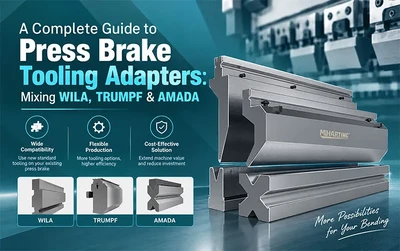 A Complete Guide to Press Brake Tooling Adapters: Mixing WILA, TRUMPF & AMADASeptember 9, 2026Many European fabrication shops have press brakes that are 10, 15 or even 20+ years old but still mechanically reliable.This is where a press brake tooling adapter can become a practical solution.view