EN
EN

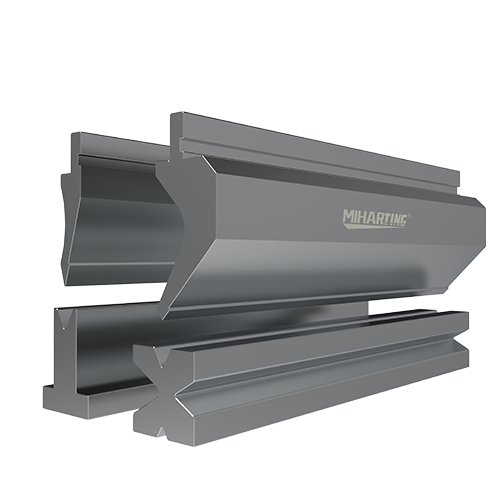
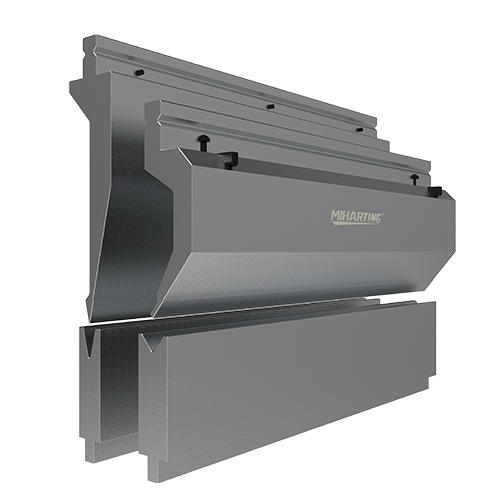
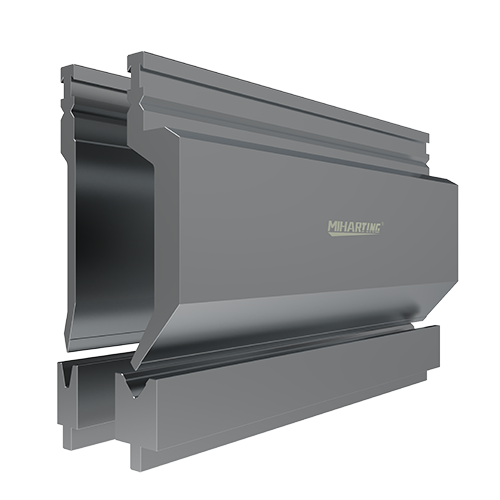
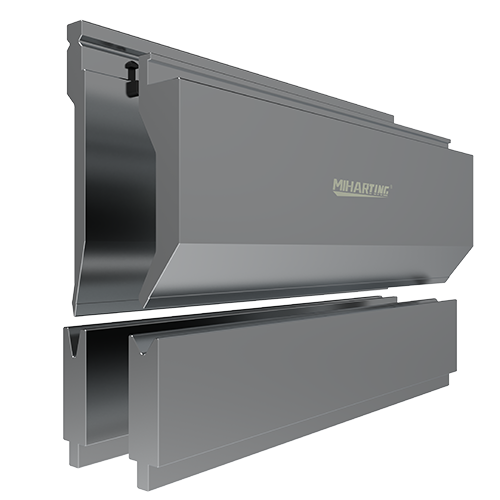
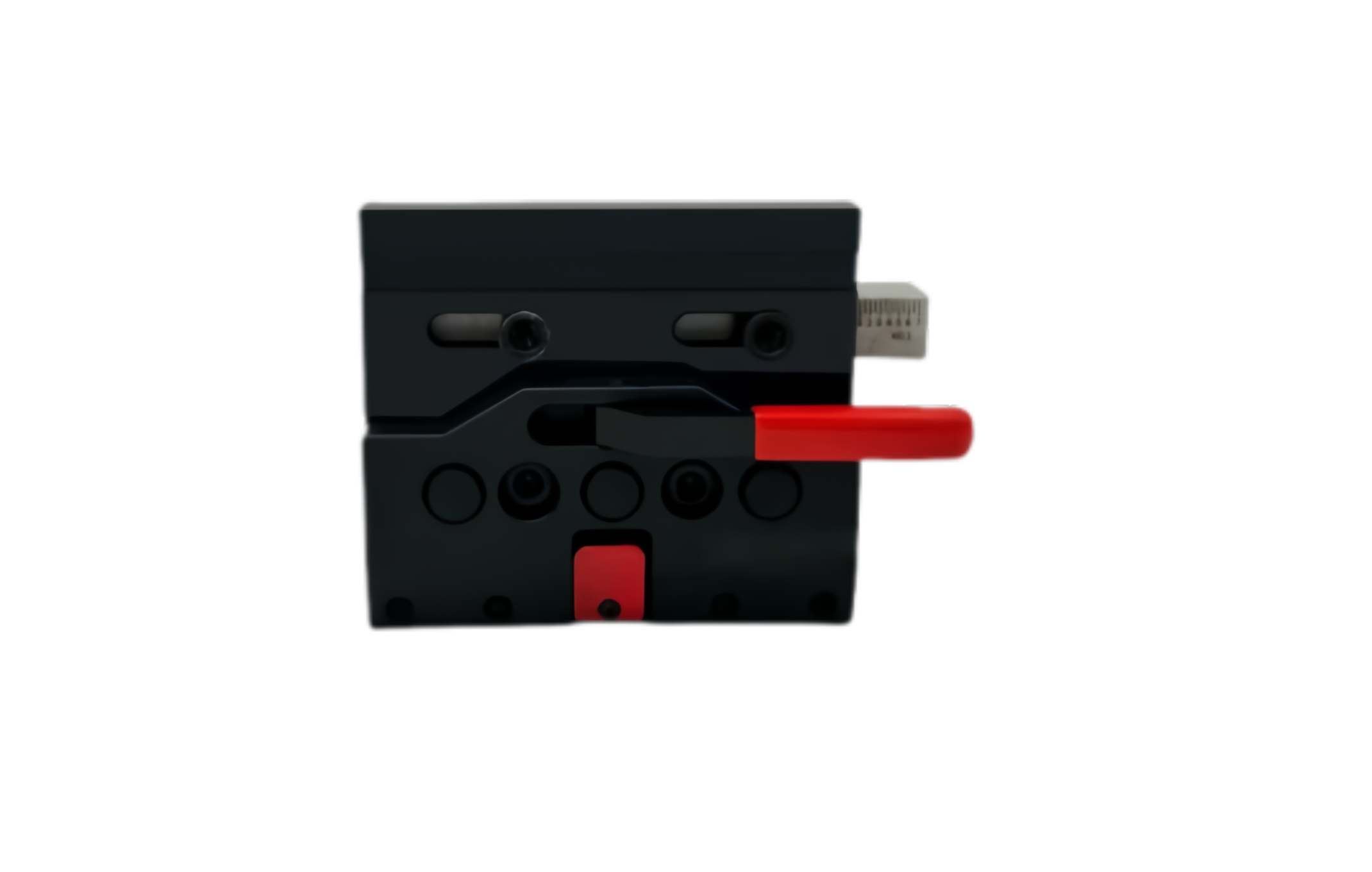
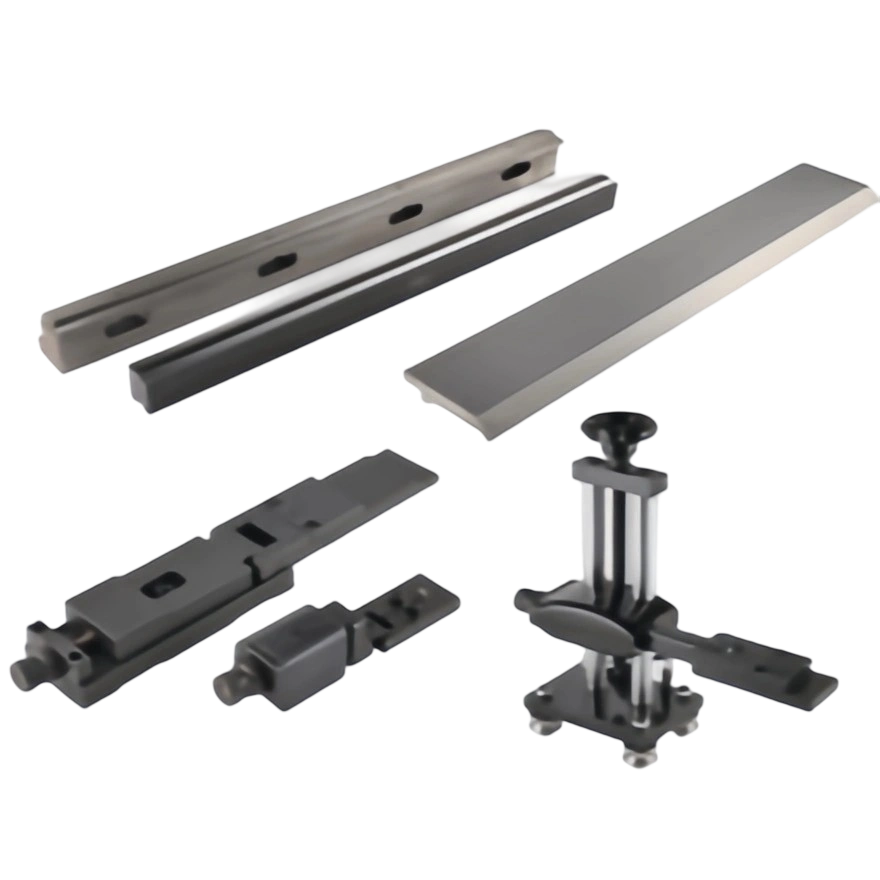
A tooling adapter is installed between the press brake's upper clamping/tool holder and the punch.
Its purpose is simple:
Machine's existing clamping → Adapter → Different tooling interface
WILA officially describes adapters as accessories used to transition from one tooling system to another. Its adapter range, for example, includes solutions for transitions between New Standard and European/American-style tooling.
This can allow a workshop to expand its tooling options without immediately replacing the complete press brake.
Consider a fabrication shop with several older press brakes.
The machines still provide acceptable accuracy, but the factory faces problems such as:
Slow manual tool changes
Limited availability of old tooling
Different tooling standards across machines
High replacement-tool costs
Too much tooling inventory
Difficulty sharing tools between press brakes
Buying another complete tooling library for every machine is expensive.
An adapter can help create a bridge between the existing machine interface and a newer tooling standard.
Keep Existing Press Brake
→ Add Adapter / Tool Holder
→ Use More Standardized Tooling
→ Reduce Tooling Duplication
→ Extend Machine Service Life
WILA similarly promotes retrofit solutions as a way to upgrade existing machines for faster tool changes and higher productivity rather than replacing an otherwise usable press brake.
Yes—but not directly in every case.
This is one of the most important points when purchasing an adapter.
Different tooling systems use different:
Tool tang profiles
Clamping interfaces
Safety mechanisms
Tool heights
Alignment methods
Load ratings
WILA notes that the tooling type a press brake can accept is determined by its clamping system, and the tang geometry is a key identifier of the tooling standard.
Therefore:
Never order an adapter based only on the machine brand.
“AMADA press brake” or “TRUMPF press brake” alone is not enough information.
| Existing System | Desired Tooling | Possible Solution |
|---|---|---|
| European / Promecam | WILA New Standard | Adapter or clamping retrofit |
| WILA New Standard | European-style tooling | Tooling adapter |
| Older machine interface | Modern tooling | Custom adapter / retrofit |
| Different tool heights | Existing tooling | Adapter / extender |
| Multiple press brakes | Common tooling library | Standardized adapter solution |
WILA, for example, offers custom holder adapters that can allow other tooling styles to be used in WILA holders, or WILA tools to be integrated with existing holders.
Important: Compatibility must always be verified for the specific machine and tooling combination.
This is where many buyers make the wrong decision.
✓ The existing clamping system is still in good condition
✓ You only need to use certain tools from another standard
✓ Tool changes are not extremely frequent
✓ You want a lower-cost conversion
✓ You need flexibility between tooling families
An adapter is usually the simpler solution.
✓ Tool changes happen many times per shift
✓ Setup time has become a production bottleneck
✓ You want hydraulic or pneumatic quick clamping
✓ You want to standardize tooling across several machines
✓ Your existing clamping system is worn or outdated
WILA's Universal Press Brake concept, for example, is designed to retrofit New Standard clamping and tooling technology onto existing press brakes.
Adapter = tooling flexibility
Retrofit = tooling-system modernization
That distinction can prevent unnecessary investment.
The adapter must correctly match both the machine-side interface and the new punch tang.
Do not rely only on catalog names.
An adapter adds height between the ram and punch.
This changes the overall tooling configuration and may affect:
Daylight
Stroke requirement
Maximum part height
Bending setup
Always calculate the final working height before ordering.
Every adapter has a rated load.
For example, WILA's TSU-020 New Standard adapter lists a maximum load of 100 ton/m. That figure applies to that specific product—not to adapters generally.
Your adapter must be rated for the intended bending application.
Never assume the adapter can handle the full tonnage of the press brake.
Adding another component between the ram and punch creates additional interfaces.
Poorly manufactured adapters can introduce:
Height variation
Alignment errors
Tool tilt
Inconsistent bend angles
Precision matters especially on long bending lengths.
WILA notes that its adapters are precision-manufactured to maintain interchangeability.
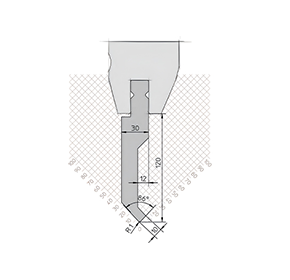
Heavy segmented punches require safe loading and retention.
Check:
Safety pins
Safety grooves
Vertical loading method
Horizontal loading method
Tool weight
Locking mechanism
Compatibility is not only about whether the tool physically fits—it must also be safe to load and clamp.
To avoid ordering the wrong adapter, don't simply send:
“I need an AMADA-to-WILA adapter.”
Instead, provide:
Machine Information
Brand
Model
Tonnage
Bending length
Existing Clamping
Front photo
Side photo
Interface dimensions
Existing Tooling
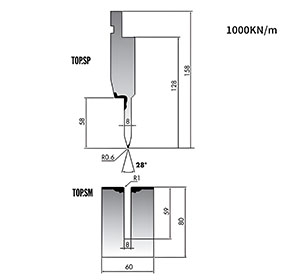
Punch cross-section
Tang dimensions
Tool height
New Tooling
WILA / TRUMPF / AMADA style
Tool drawing
Required length
Maximum bending load
A dimensioned cross-section drawing is much more useful than a machine name alone.
This is especially important for older European machines that may have been modified during their service life.
In the right application, yes.
Imagine that the press brake itself still performs well, but the tooling system limits productivity.
There are three possible investments:
| Option | Investment | Flexibility | Best Situation |
|---|---|---|---|
| New machine | Very High | Very High | Machine itself is outdated |
| Complete clamping retrofit | Medium–High | High | Frequent tool changes |
| Tooling adapter | Low–Medium | Medium–High | Machine is good, tooling interface is the problem |
For many European workshops, an adapter can therefore be a machine-life-extension strategy, not simply another accessory.
This is another common purchasing mistake.
A universal-looking adapter does not automatically make every tooling family interchangeable.
You still need to consider:
Interface + Height + Load + Alignment + Safety + Application
For factories operating multiple press brakes, it may be better to develop a tooling standardization plan:
Existing Machines
↓
Identify Interfaces
↓
Select Main Tooling Standard
↓
Design Adapters Where Necessary
↓
Gradually Standardize Tool Inventory
This can be much more economical than replacing every existing tool at once.
If your older press brake still bends accurately, don't replace it simply because you want access to newer tooling.
First determine whether the problem can be solved with a tooling adapter or clamping retrofit.
A properly engineered adapter can help you:
✓ Keep existing machines in production
✓ Access newer tooling systems
✓ Reduce duplicate tooling inventory
✓ Standardize tooling across machines
✓ Avoid unnecessary capital investment
But the adapter must be selected by interface dimensions and application requirements—not brand name alone.
For European manufacturers running a mixture of older and newer press brakes, this can be one of the most practical ways to modernize tooling without modernizing the entire machine.
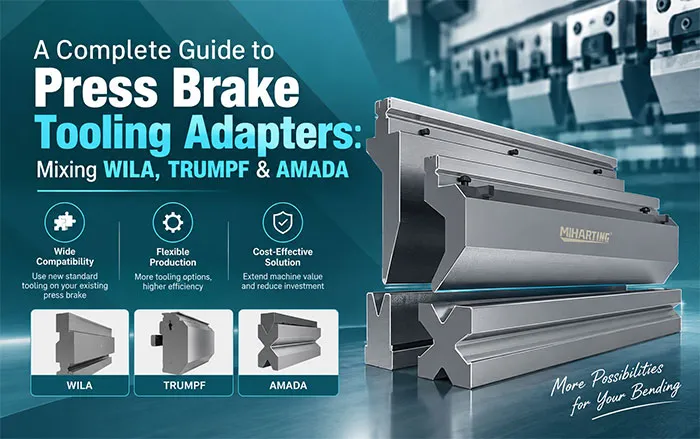
Miharting can evaluate your existing press brake interface and develop tooling, clamping and adapter solutions for different press brake configurations.
For evaluation, send:
Machine Model + Clamping Photos + Tooling Cross-Section + Dimensions + Required Tooling Standard
This gives the engineering team enough information to determine whether you need a simple adapter, custom tool holder or complete quick-clamping retrofit.
 What Is a Proportional Valve? Definition, Function and Working PrincipleJanuary 8, 2026A proportional valve is an electrically controlled valve that continuously regulates fluid flow, pressure, or direction according to a variable command signal. Unlike a conventional on/off valve, whic...view
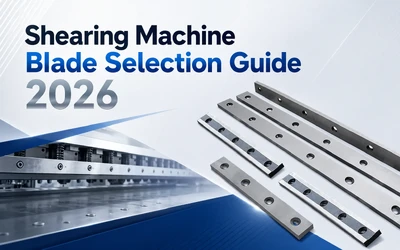 Shearing Machine Blade Selection Guide 2026: Heavy-Duty Shear Blades for High-Strength Steel and Stainless Steel CuttingJune 30, 2026In 2026, the sheet metal cutting landscape has shifted significantly. High-tensile steel, wear-resistant plate, duplex stainless steel, and thicker industrial sheet materials have moved from specialty...view
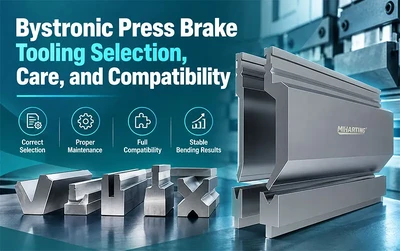 Bystronic Press Brake Tooling Selection, Care, and CompatibilitySeptember 24, 2026Buying Bystronic press brake tooling requires more than matching the machine brand. You need the correct interface, tooling geometry, load capacity, and bending specifications for reliable production.view
 Safety First: How Vertical Front-Loading Clamps Protect Operators and Press Brake ToolingSeptember 10, 2026Learn how vertical front-loading press brake clamps, Safety-Click and anti-drop safety pins help reduce tooling-change risks and support safer CE-oriented press brake operation.view
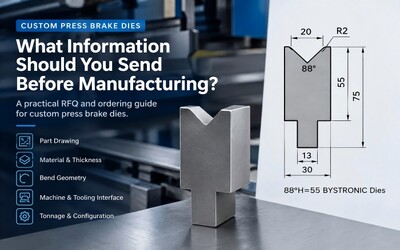 Custom Press Brake Dies: What Information Should You Send Before Manufacturing?September 18, 2026Custom Press Brake Dies: What Information Should You Send Before Manufacturing? | MIHARTINGOrdering a custom press brake die often starts with a straightforward request: a customer has a part that can...view
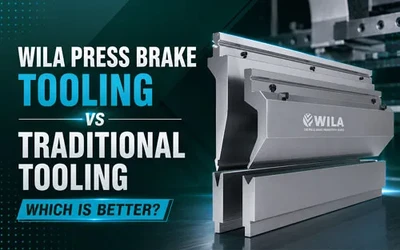 WILA Press Brake Tooling vs Traditional Tooling: Which Is Better?August 26, 2026Choosing press brake tooling is not just a purchasing decision. It affects setup time, bend accuracy, operator safety, scrap rate, machine utilization, and whether your shop can handle short-run jobs profitably.view