EN
EN

Changing press brake tooling looks like a routine operation—but it is also a moment when operators handle heavy steel tools close to their hands, feet and expensive machine components.
Traditional systems may require punches to be inserted from the side and moved horizontally along the beam. For frequent tool changes, this can increase handling effort and setup time.
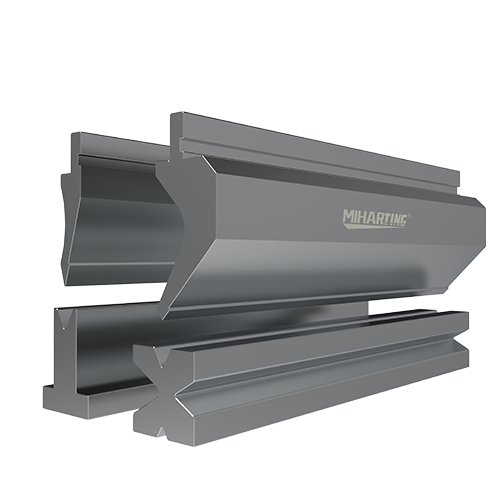
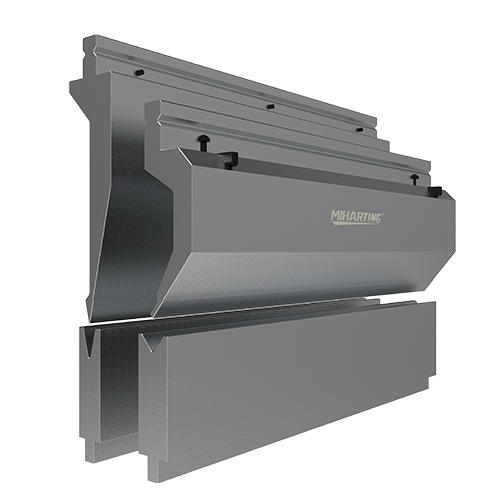
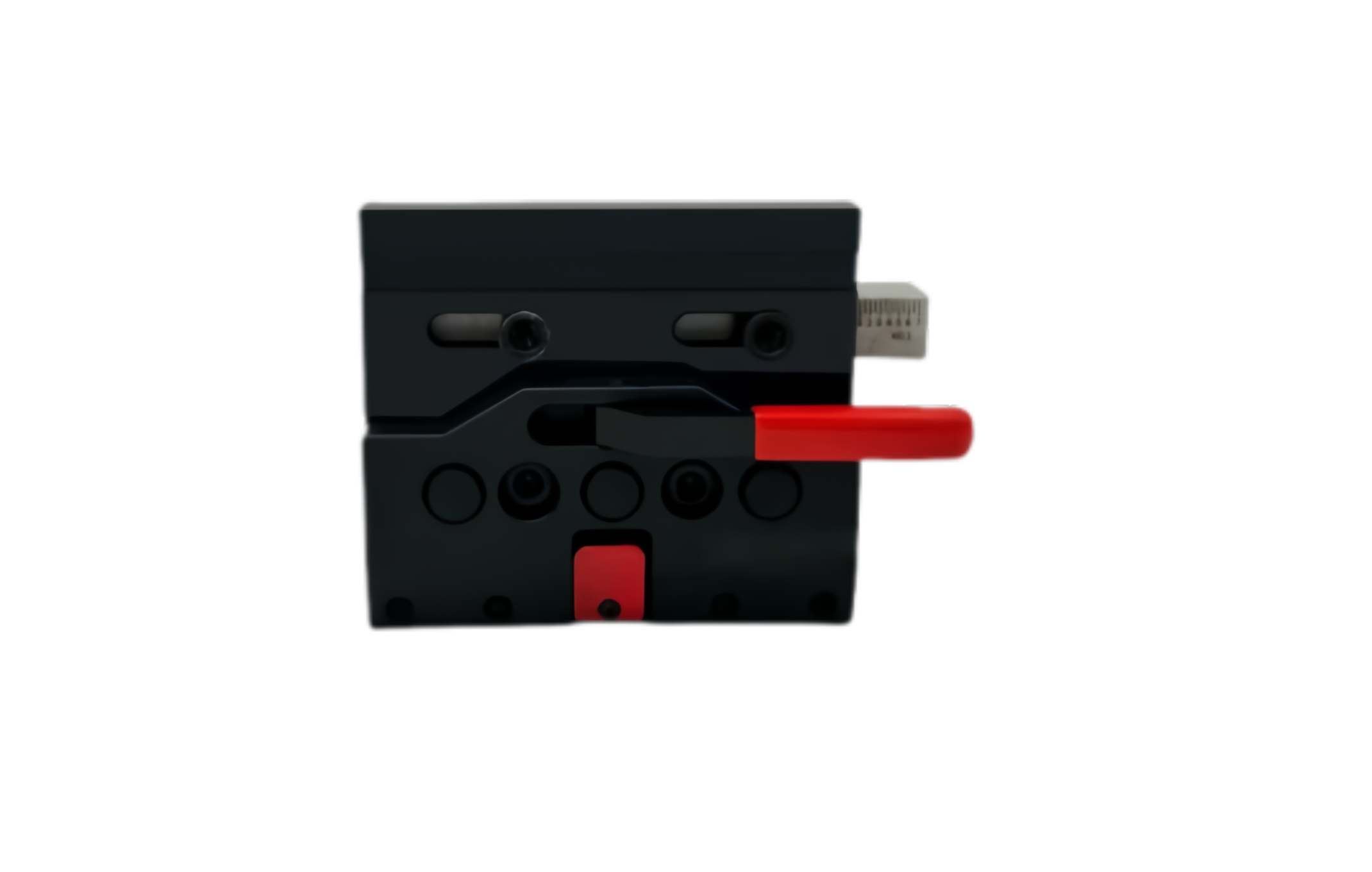
Modern vertical front-loading clamping systems provide another approach: selected tool segments can be inserted directly into the clamp from the operator side while suitable retention mechanisms help prevent an unsecured punch from simply dropping out.
For European fabrication shops, this is not only about faster setup. It is about making tooling changes safer, more controlled and more ergonomic.
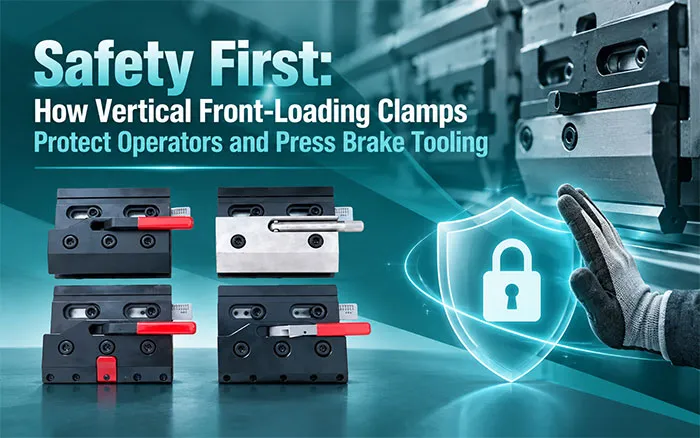
A press brake punch is a precision component—but it can also be a heavy piece of hardened steel.
During manual tool changes, operators may need to:
Support the punch while releasing the clamp
Slide long tools from the end of the machine
Handle several heavy segmented tools
Work close to the upper tool holder
Prevent released tooling from falling or tipping
The risk becomes more relevant when tooling is changed repeatedly during high-mix, low-volume production.
WILA specifically notes that frequent handling of heavy press brake tools can place physical stress on operators, and positions its tool-change technologies as a way to improve ergonomics and reduce handling risks.
Instead of sliding every punch along the full length of the machine, a compatible segmented punch can be positioned at the required location and loaded vertically into the upper clamp.
The basic process is:
Position Tool → Insert Vertically → Safety Retention Engages → Clamp Tool → Start Setup
The major advantage is accessibility.
Operators can install individual tooling segments closer to where they will actually be used, reducing unnecessary horizontal movement.
WILA New Standard tool holders, for example, support both horizontal and vertical tool changes when used with the appropriate tooling and safety features.
Shorter handling path
Less need to move tooling across the entire beam.
Better ergonomics
Operators can work closer to the required tooling position.
Faster segmented setup
Useful when frequently changing short punch sections.
More controlled tool handling
Compatible retention systems can help keep the tool secured during loading and unloading.
Vertical loading would create an obvious problem if the punch could simply fall when the clamp was released.
That is why a properly designed system requires a mechanical retention or anti-drop mechanism appropriate to the tooling.
One example is WILA's Safety-Click® system. For specified New Standard top tools up to 12.5 kg, the integrated mechanism allows the tool to be clicked vertically into and out of the holder. Heavier WILA tools use different handling arrangements; its documentation specifies fixed Safety-Pins for certain tools over 12.5 kg and E2M® roller systems as another option for heavy-tool handling.
TRUMPF uses a similar Safety-Click principle on specified punches. Its current tooling documentation describes a spring-loaded safety mechanism that enables vertical tool changes within defined tool-weight and dimensional limits; heavier tools use fixed locking pins and horizontal loading instead.
Safety retention is not the same as clamping force.
The safety mechanism helps retain the tool during handling. The clamping system provides the force and positioning required for bending.
Both functions must work correctly.
Feature | Safety-Click Type | Fixed Safety-Pin Type |
Main purpose | Retention during tool change | Retention of heavier tooling |
Typical loading | Vertical | Often horizontal |
Tool change | Fast | More controlled for heavier tools |
Typical application | Lighter segmented punches | Heavier tooling |
Key benefit | Quick vertical insertion/removal | Anti-drop protection for heavier tools |
The exact permitted tool weight and loading method must always follow the tooling and clamp manufacturer's specifications.
For example, WILA specifies Safety-Click for compatible top tools up to 12.5 kg, while heavier tools use other safety and handling solutions.
For European buyers, “CE” should not be treated as a sticker on a component.
EN 12622 addresses technical safety requirements and protective measures for hydraulic press brakes, considering hazards to operators and other exposed persons.
A safer tooling-change strategy therefore fits into the broader machine risk-reduction approach.
But installing a vertical-loading clamp alone does not automatically make an old press brake CE compliant.
A complete machine assessment may also need to consider:
Front/rear guarding
Safety laser or protective device
Emergency stop
Electrical safety
Hydraulic safety
Control system
Machine stopping performance
Tooling and workpiece hazards
Instructions and operator training
CE compliance must be evaluated at machine/system level—not from the clamping device alone.
This distinction is especially important when retrofitting older European press brakes.
The business case becomes stronger when a factory produces:
Small batches + many part numbers + frequent tool changes.
Typical applications include:
Electrical cabinets
HVAC enclosures
Stainless-steel equipment
Elevator components
Automotive parts
General subcontract sheet-metal fabrication
For these factories, every setup involves both time and operator handling.
A better clamping system can therefore improve safety and productivity at the same time.
Vertical loading is not always the correct solution.
Large gooseneck punches, long sections and heavy special tooling may require horizontal loading, lifting assistance or roller-based handling.
WILA, for example, offers its E2M® roller-bearing solution for easier horizontal movement of heavier tools and specifies different safety mechanisms according to tool weight.
Before converting an existing press brake to vertical front-loading quick clamps, confirm:
Check | Why It Matters |
Tooling interface | Clamp and punch tang must match |
Tool weight | Determines suitable loading/retention method |
Safety retention | Helps prevent accidental tool drop |
Clamping force | Must suit bending requirements |
Tool alignment | Affects bending accuracy |
Existing ram interface | Determines retrofit compatibility |
Machine risk assessment | Retrofit may affect overall machine safety |
Never select a quick clamp based only on the press brake brand.
For older machines, send the supplier machine model + ram/clamp photos + tooling cross-section + dimensions before ordering.
An older press brake does not always need to be replaced simply because its tooling-change system is outdated.
Depending on the machine condition and interface, upgrading to a modern manual, pneumatic or hydraulic quick-clamping system may provide:
Faster tool changes → Less manual handling → Better tool retention → More consistent setup
For factories already using WILA-style or other compatible segmented tooling, vertical front loading can be particularly valuable when operators change tools several times per shift.
The goal should not be speed alone.
A well-designed tooling system should make every changeover faster, easier to control and safer for both the operator and the tooling.
 Retrofitting Your Old Press Brake with Modern Quick-Change Clamping SolutionsSeptember 11, 2026Upgrade an older AMADA, LVD, SAFAN or European press brake with modern quick-change clamping. Compare adapters, mechanical, pneumatic and hydraulic retrofit solutions.view
 How Amada AFH Tooling Revolutionizes Setup Times in Precision Sheet Metal BendingApril 22, 2026In a world of “Just-in-Time” manufacturing, the longest part of the bending process is no longer the bend itself—it’s the setup. Amada AFH (Amada Fixed Height) tooling was designed to solve this. ...view
 How to Measure Press Brake Tooling Dimensions Before Ordering Replacement ToolingSeptember 18, 2026Ordering replacement tooling for an older press brake is rarely as simple as identifying the machine brand and sending a photograph of the existing punch. In many fabrication shops, the original tooli...view
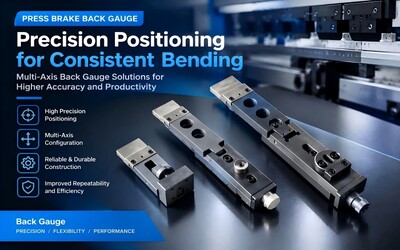 Press Brake Back Gauge Calibration: 7 Signs Your Positioning System Needs AdjustmentSeptember 18, 2026A press brake may produce the correct bend angle while still delivering inconsistent flange dimensions from one part to the next. In many cases, the problem is not the bending force or the tooling its...view
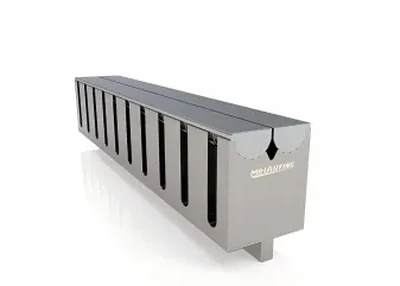 Rolla-V Tooling: The Ultimate Solution for Mark-Free Bending and Short Flange ChallengesApril 22, 2026In the traditional air bending process, the sheet metal slides over the shoulders of a static V-die. This movement creates friction, resulting in “die marks” or “witness marks” on the underside of...view
 What Special Requirements Do Titanium Alloys and Composite Materials Have for the Design of Bending Machine Molds?June 26, 2025Titanium Alloy:1. Due to the high hardness of titanium alloys, mold design needs to consider the use of specially designed structures and processes to adapt to its bending characteristics. The choice ...view