EN
EN

Your press brake may still bend accurately after 10 or 15 years, but its tooling system can become a production bottleneck.
This is common in European fabrication shops operating older machines with traditional European/Promecam or manufacturer-specific tooling interfaces.
When you want to use newer tooling, there are usually two options:
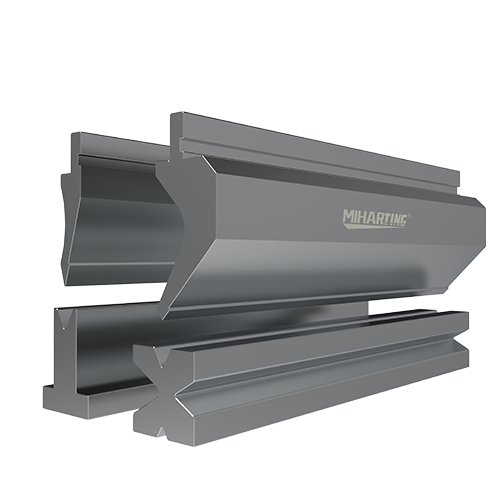
Option A — Add a tooling adapter
or
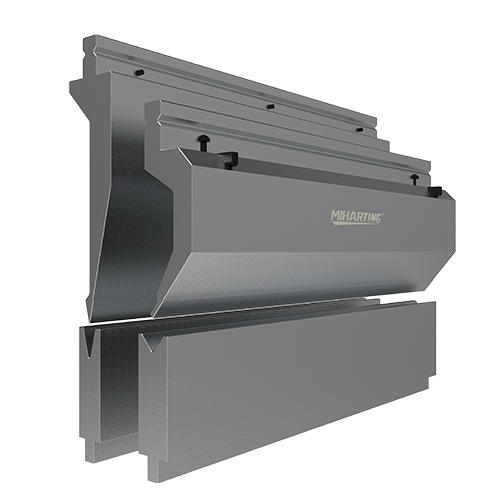
Option B — Retrofit the press brake with a modern clamping system
Both can extend the useful life of an existing machine—but they solve different problems.
WILA defines adapters as components installed between the upper clamping/tool holder and top tool to transition from one tooling system to another. A retrofit goes further by replacing or upgrading the clamping system itself.
Factor | Tooling Adapter | Full Clamping Retrofit |
Initial investment | Low | Medium–High |
Installation complexity | Low | Medium |
Tooling compatibility | Flexible | High after standardization |
Tool change speed | Moderate | Very fast |
Automatic tool seating | Depends on system | Available with suitable system |
Added working height | Yes | Usually less impact |
Best for | Occasional tool changes | Frequent tool changes |
Long-term productivity | Medium | High |
Ideal objective | Use another tool type | Modernize the tooling system |
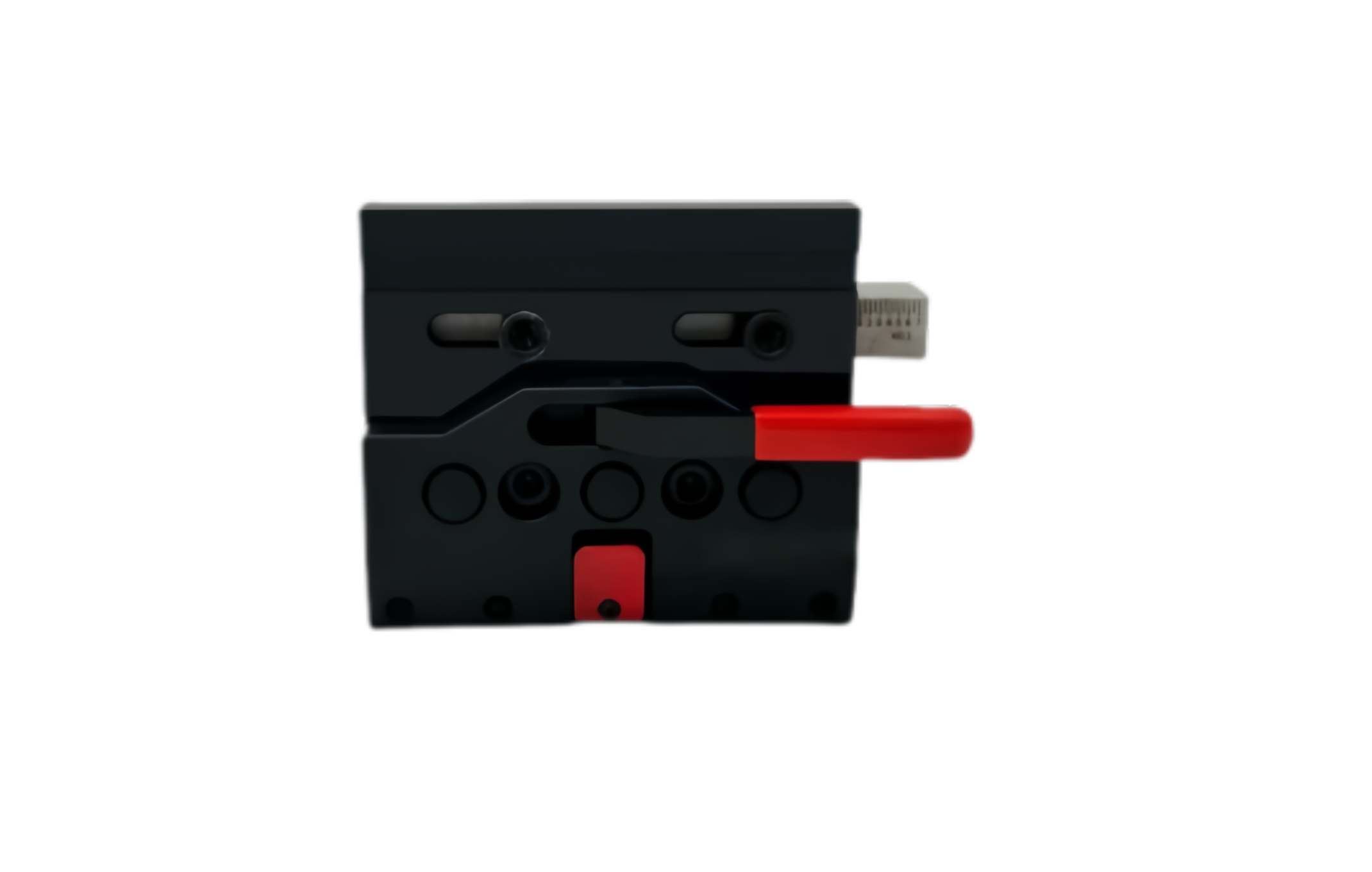
A tooling adapter is usually the most economical solution when the machine is working well and the main problem is tooling compatibility.
For example:
Existing European-style clamping
↓
Adapter
↓
Different tooling interface
This avoids replacing the complete clamping system.
✓ Tool changes are relatively infrequent
✓ Your existing clamp is still in good condition
✓ You only need several tools from another system
✓ Budget is limited
✓ Production volume is moderate
✓ You want to keep your existing tooling library
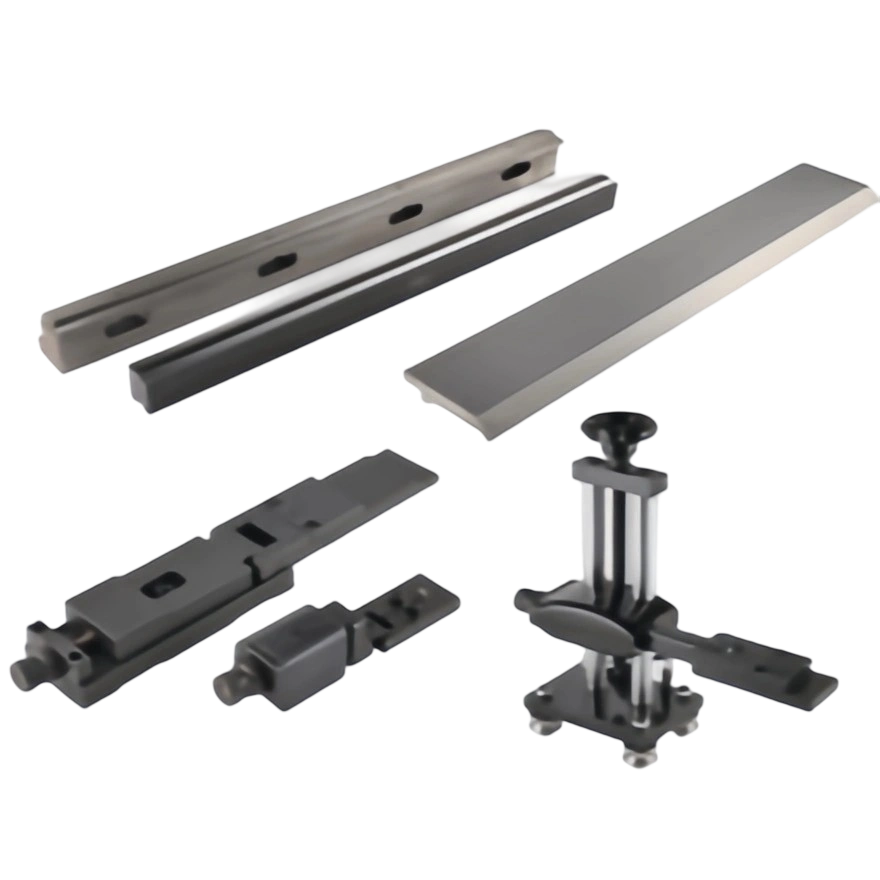
Adapters can also help a workshop operate different tooling standards without immediately replacing all existing punches and dies. WILA, for example, offers adapters specifically designed to transition between tooling systems.
An adapter solves an interface problem, but it does not necessarily solve a productivity problem.
If operators still manually tighten multiple clamps every time tooling changes, setup time remains.
A retrofit is different.
Instead of adapting individual tooling interfaces, you modernize the press brake's tool-holding system.
For example:
Old European Clamping
↓
Remove / Upgrade Existing Holder
↓
Install Modern Quick Clamping
↓
Standardize Tooling
Modern clamping systems can use manual, pneumatic or hydraulic operation. WILA's New Standard holders, for example, are offered with all three clamping methods, while its Universal Press Brake concept is designed to allow New Standard clamping systems to be installed on existing machines.
✓ Tools are changed several times per shift
✓ Setup time is affecting machine utilization
✓ You want hydraulic or pneumatic quick clamping
✓ You are standardizing tooling across multiple machines
✓ Existing clamps are worn or outdated
✓ You plan to keep the press brake for several more years
For high-mix European production, the productivity gain can outweigh the higher initial investment.
One issue buyers often overlook is added height.
Because the adapter sits between the ram/tool holder and punch, it changes the overall tooling configuration.
This may reduce available:
Open height
Stroke
Part clearance
Deep-box bending capacity
Before purchasing an adapter, calculate:
Existing Holder + Adapter + Punch + Die + Workpiece Clearance
If the resulting stack is too tall, the low-cost adapter may create a new production limitation.
Every additional mechanical interface introduces another opportunity for tolerance stack-up.
The important question is therefore not simply:
“Does the punch fit?”
It is:
“Will it remain correctly positioned and aligned across the bending length?”
WILA notes that its adapters are precision-manufactured for interchangeability, while its New Standard tooling system is designed around accurate positioning and alignment.
For demanding long-part production, electrical cabinets or stainless-steel panels, this can make a full retrofit more attractive.
Suppose an adapter solution costs less than a full retrofit.
The adapter looks like the obvious winner.
But consider:
Annual Upgrade Cost = Initial Investment + Setup Labor + Maintenance + Downtime
Imagine your current setup takes 15 minutes, while a modern quick-clamping system reduces it to 5 minutes.
With 5 tool changes per day:
10 min saved × 5 = 50 min/day
At 250 working days:
208 hours/year recovered
At an illustrative labor cost of €35/hour:
208 × €35 = approximately €7,280/year
And that still excludes the value of additional machine capacity.
For a machine with frequent tool changes, the higher-cost retrofit may therefore have the lower long-term cost.
Your problem is compatibility.
You want to use another tooling standard without making a major machine modification.
Your problem is productivity.
You want faster setup, easier tooling changes, standardized tooling and higher machine utilization.
The problems go beyond tooling and clamping—for example, poor ram repeatability, excessive mechanical wear, insufficient capacity or obsolete controls.
A new clamping system cannot repair fundamental machine problems.
Before ordering either solution, evaluate:
Machine condition
Is the press brake accurate enough to justify upgrading?
Remaining machine life
Will you operate it for another 3–5+ years?
Tool changes per day
One change per day and eight changes per day require very different solutions.
Existing tooling inventory
How much tooling would become obsolete?
Future tooling standard
WILA New Standard? European/Promecam? TRUMPF-style? AMADA?
Working height
Can the machine accommodate an adapter?
Required load
The adapter and clamping system must be rated for the intended application.
There is no universal winner.
Low setup frequency + compatibility problem → Adapter
High setup frequency + productivity problem → Full Retrofit
Worn or obsolete machine → Evaluate machine replacement
For many European workshops, the most economical strategy is to keep a mechanically sound press brake and upgrade only the part that limits production.
If your existing machine still produces accurate parts, an adapter can extend tooling flexibility at relatively low cost.
If setup time has become the bottleneck, however, investing in a modern quick-clamping retrofit can deliver much greater long-term value. WILA similarly positions retrofit technology as a way to increase tool-change speed and output on existing press brakes without immediately purchasing a new machine.
Send Miharting:
Press Brake Brand + Model + Tonnage + Bending Length + Existing Clamp Photos + Tooling Cross-Section + Tool Changes per Day
Based on this information, the appropriate solution can be evaluated as:
Tooling Adapter / Custom Tool Holder / Mechanical Quick Clamp / Pneumatic Clamping / Hydraulic Clamping Retrofit
 How to Choose a Press Brake Sheet Follower for Your WorkshopOctober 9, 2026Large panels can become difficult to support as they rise during bending. Choose a press brake sheet follower around your parts, load distribution, working height, and machine compatibility.view
 Mark-Free Bending Solutions for Sheet MetalJuly 27, 2026Learn three mark-free bending solutions for sheet metal: roller lower dies, urethane lower dies, and folding lower dies, including their best applications.view
 Press Brake Hemming Die Solution for Safer and Stronger Sheet Metal EdgesAugust 17, 2026A press brake hemming die, also known as a sheet metal hemming die or flattening die, is an effective tooling solution for this problem. By folding and flattening the edge of the sheet metal, the die helps create a smooth, safe, and reinforced edge. This process is widely used for electrical cabinets, machine covers, enclosures, doors, panels, trays, home appliance parts, elevator components, and other precision sheet metal products.view
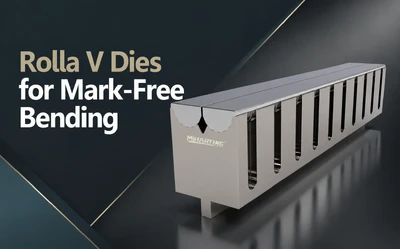 Rolla V Dies for Mark-Free Bending: How to Bend Stainless Steel without MarksJune 30, 2026For stainless steel fabricators producing elevator panels, kitchen equipment, architectural decoration, medical device covers, appliance panels, and premium metal enclosures, the surface quality of th...view
 What Is Press Brake Tooling and How Does It Work?January 8, 2026In the world of metal fabrication, press brake tooling stands as a cornerstone of efficiency and precision, crucial for bending operations in various industries. Understanding the complex orchestratio...view
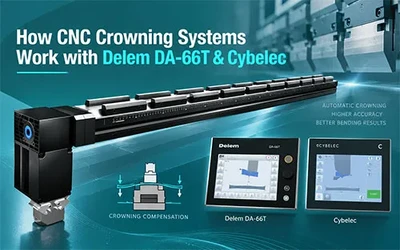 How CNC Crowning Systems Work with Delem DA-66T & CybelecSeptember 21, 2026Learn how CNC press brake crowning systems integrate with Delem DA-66T and Cybelec controllers to automatically compensate machine deflection and improve bend angle accuracy.view