EN
EN

Many European fabrication shops still operate press brakes that are 10, 15 or even 20+ years old.
The machine frame, hydraulic system and ram may still perform reliably, but one part of the machine belongs to another production era:
Operators may still need to:
Loosen multiple bolts manually
Slide punches in from the side
Align individual tool segments
Re-tighten clamps one by one
Check tool seating before every new job
For high-mix production, the press brake may spend too much time being set up instead of bending parts.
A modern quick-change clamping retrofit can solve this bottleneck without automatically requiring investment in a completely new press brake.
WILA similarly positions retrofit technology as a way to bring modern clamping and tooling systems to existing machines and states that its Universal Press Brake concept can accommodate different press brake types, new or used.

Older AMADA, LVD, SAFAN and other European-style press brakes may be candidates, but machine brand alone does not determine compatibility.
The first question should be:
Is the machine mechanically accurate enough to justify the upgrade?
Before planning a retrofit, check:
Check Point | Why It Matters |
Ram condition & repeatability | Retrofit cannot correct a worn machine |
Existing upper beam interface | Determines how new holders are mounted |
Tooling standard | Determines adapter/clamp configuration |
Open height | New holders may change tooling stack height |
Bending length | Determines holder length and segmentation |
Required tonnage | Clamp and tooling must support the application |
Existing tooling inventory | Determines whether tools can be retained |
Machine safety | Retrofit must not compromise guarding or safety functions |
Open height is particularly important. WILA's own retrofit assessment includes a Stack-Up Calculator specifically to determine remaining available open height after the new tooling/clamping configuration is installed.
There is no single retrofit solution for every machine.
If the existing clamp is still reliable and the main problem is tooling compatibility, an adapter may be sufficient.
Existing Clamp → Adapter → New Tooling Standard
Best for:
✓ Low tool-change frequency
✓ Limited retrofit budget
✓ Existing clamps in good condition
✓ Using selected tools from another tooling family
The limitation is that an adapter changes the tooling interface but may not eliminate slow manual clamping.
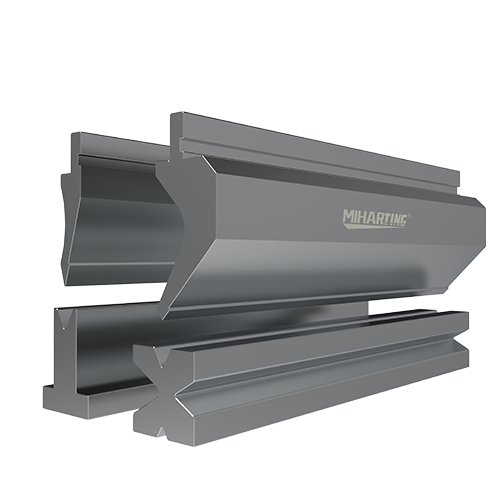
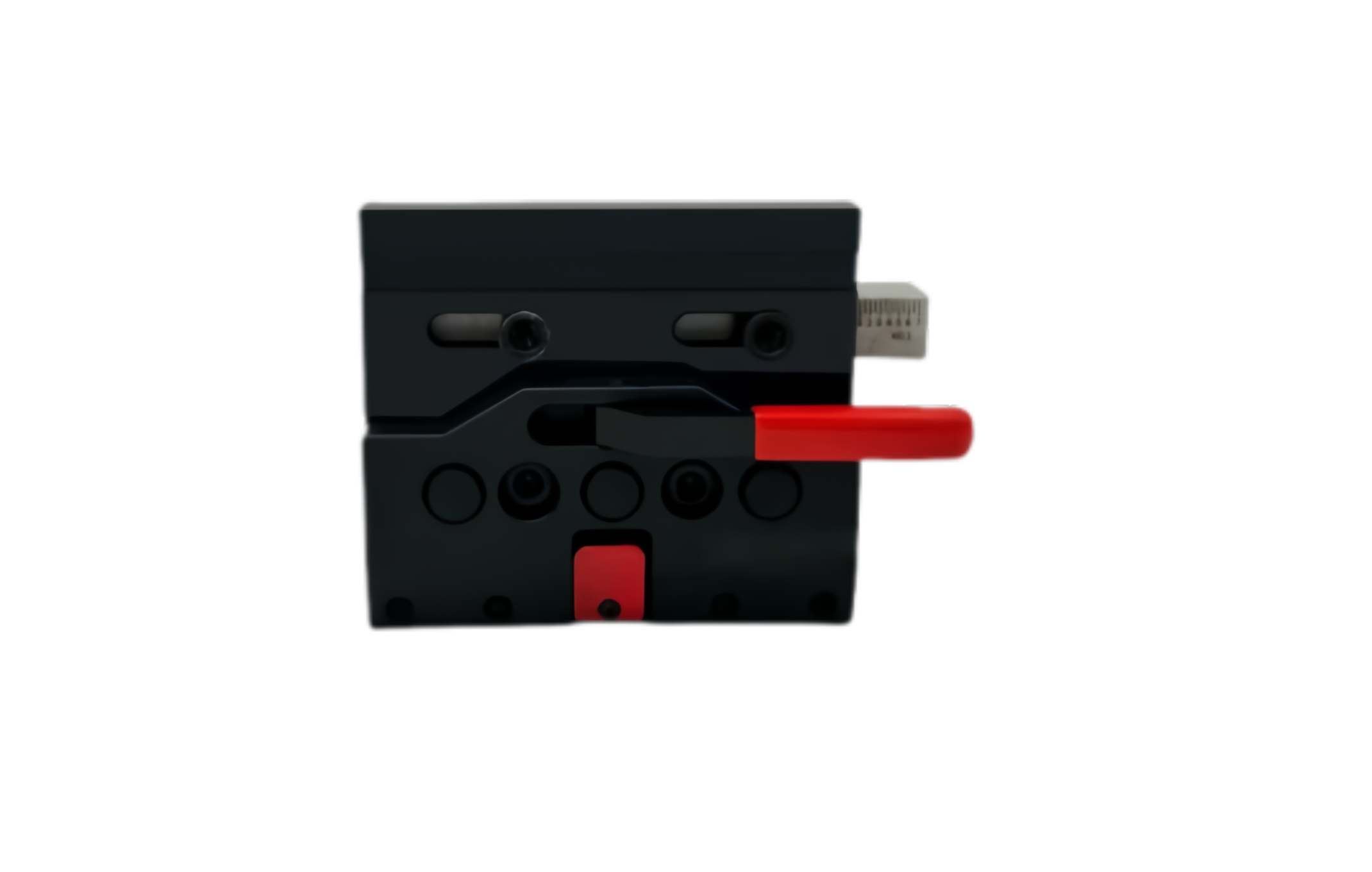
A mechanical quick clamp replaces slow bolt-by-bolt tightening with a faster locking mechanism.
Best for:
✓ Small and medium workshops
✓ Moderate tool-change frequency
✓ Older machines with limited retrofit budget
✓ Factories that do not require pneumatic/hydraulic infrastructure
This is often a practical first step from traditional manual clamping to quick-change tooling.
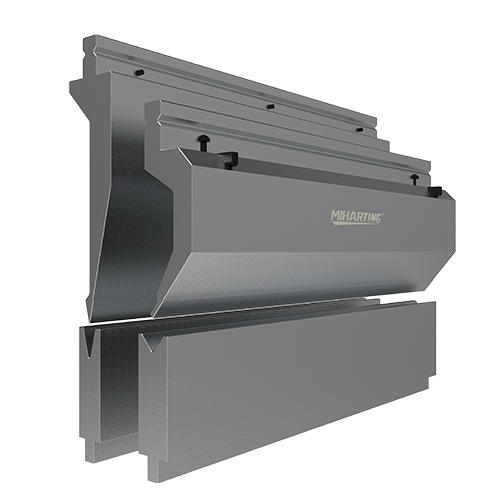
Pneumatic systems use compressed air to activate the clamping mechanism.
They can be attractive when the factory already has a stable compressed-air supply and changes tooling frequently.
Best for:
✓ High-mix / low-volume production
✓ Frequent daily setups
✓ Segmented tooling
✓ Workshops seeking faster operation with moderate retrofit complexity
Maintenance should include air quality, seals, tubing and pressure stability.
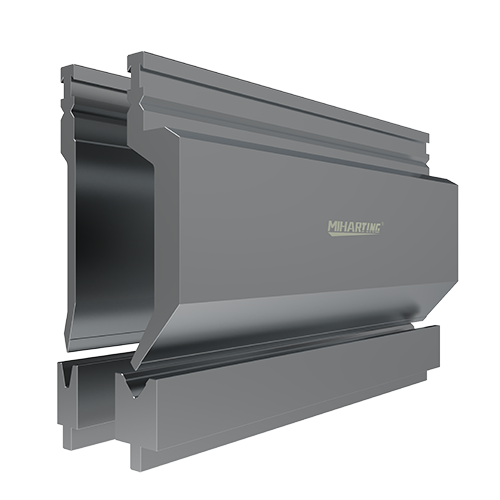
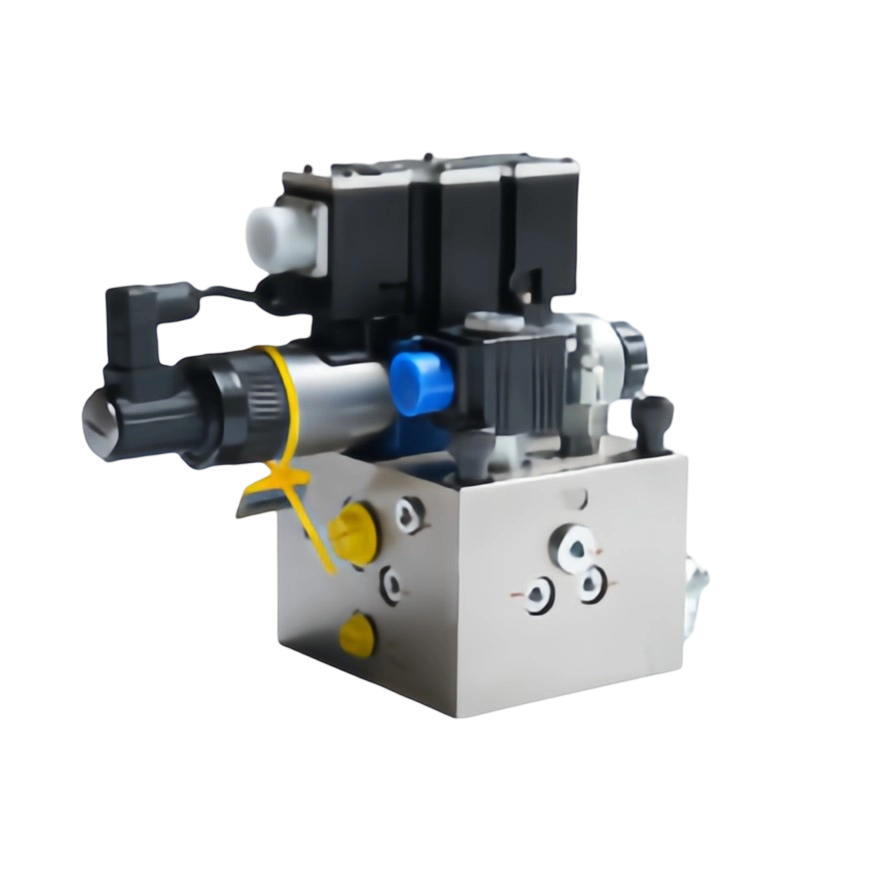
For production environments where tools may be changed many times per shift, hydraulic clamping offers a higher level of automation and consistent clamping.
Load Tool → Activate Clamp → Tool Seated & Secured
Modern systems can significantly reduce the repetitive manual work associated with traditional bolt clamps.
WILA specifically describes retrofitting an existing machine from manual clamping to hydraulic clamping as one of its retrofit options.
LVD's current automated bending technology also illustrates the productivity direction of modern tooling systems: its ToolCell uses hydraulic clamping and automatic tool changing to minimize manual setup time.
IMAGE 2 — Retrofit Options
Adapter → Mechanical → Pneumatic → Hydraulic
Alt: press brake quick clamping retrofit options
An older AMADA machine may still produce accurate parts but use an earlier tooling/clamping arrangement.
The retrofit objective might be:
Old Clamping
↓
New Quick-Change Holder
↓
European / AMADA-Compatible Segmented Tooling
↓
Faster Setup
AMADA itself recognizes this retrofit demand. Its SGRIP punch holder is promoted as an upgrade for existing holders and can accept European-style tooling as well as AMADA One Touch AFH tooling. AMADA states that this system can reduce setup time on an existing brake by more than 50% in its intended applications.
This is a good example of why replacing the entire machine is not always the first option.
The principle is similar, but the interface must be measured rather than assumed.
LVD currently offers multiple tooling configurations, including standard and vertically removable tooling, so an older LVD machine's existing tooling and holder configuration should be identified before selecting a retrofit.
For an older SAFAN or another European press brake, the same rule applies:
Never order a retrofit system based only on “AMADA”, “LVD” or “SAFAN”.
Machines of the same brand can use different interfaces depending on model, age, configuration and previous modifications.
In many suitable retrofit applications, this is one of the most attractive options.
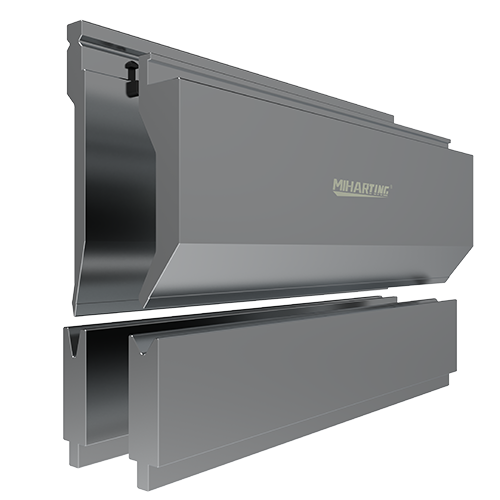
WILA's Universal Press Brake concept is specifically designed to install New Standard Premium, New Standard Pro or American Style clamping and tooling systems on existing press brakes. WILA also describes conversions such as European Style → New Standard as part of its retrofit approach.
This can be valuable when a European workshop wants to standardize several different machines around one modern tooling family.
For example:
Old AMADA ─┐
Old LVD ───┼→ Compatible Retrofit Interfaces → Standardized Tooling System
Other Brake ─┘
The objective is not merely faster clamping.
It is also to reduce the number of incompatible tooling libraries that the factory needs to manage.
The answer depends on the existing system and number of tool changes.
Consider an illustrative example:
Old manual setup: 18 minutes
New quick-clamping setup: 6 minutes
Time saved: 12 minutes
If the factory performs five setups per day:
12 × 5 = 60 minutes/day
At 250 production days:
≈250 machine hours recovered per year
The real financial value is not only operator wages.
A better calculation is:
Annual Retrofit Value = Setup Hours Saved × Value of Available Press Brake Time
If recovered machine time allows additional production, the economic value can be substantially greater than labor savings alone.
Actual savings should always be calculated from your own setup records rather than assuming a universal percentage.
| Production Situation | Better Starting Point |
|---|---|
| Need another tooling standard only | Adapter |
| Few tool changes per day | Mechanical quick clamp |
| Frequent high-mix production | Pneumatic clamping |
| Very frequent tool changes | Hydraulic clamping |
| Multiple old machines | Standardized retrofit strategy |
| Machine itself is worn/inaccurate | Evaluate replacement instead |
This distinction is important:
Adapter solves compatibility.
Quick clamping solves setup efficiency.
Full retrofit solves tooling-system modernization.
Not every old press brake deserves another investment.
A retrofit should be reconsidered if the machine has:
Poor ram repeatability
Excessive guide wear
Serious hydraulic problems
Insufficient tonnage or bending length
Major safety deficiencies
Insufficient open height after retrofit
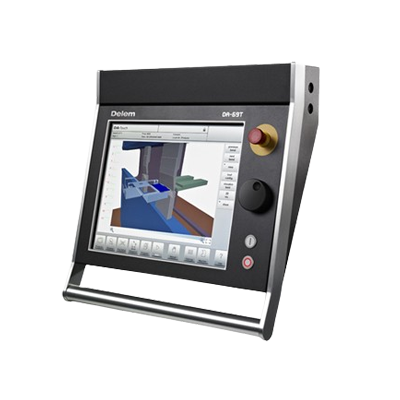
Obsolete controls that significantly restrict production
WILA's retrofit assessment similarly considers physical condition, machine functions, technology, capabilities, open height and ram repeatability before determining retrofit feasibility.
A €5,000–€10,000 clamping upgrade on the wrong machine is not a saving.
The goal is to extend the productive life of a good machine, not hide fundamental mechanical problems.
Before requesting a quotation, prepare:
Machine Information
Brand: AMADA / LVD / SAFAN / Others
Model and year
Tonnage
Bending length
Clamping Information
Full upper beam photo
Front and side clamp photos
Mounting dimensions
Bolt-hole dimensions
Tooling Information
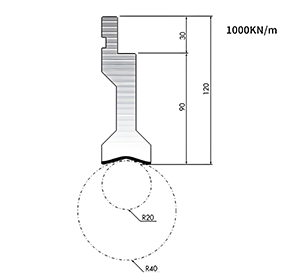
Existing punch cross-section
Punch height
Tang dimensions
Existing die configuration
Production Information
Tool changes per day
Typical material/thickness
Maximum bending load
Preferred tooling standard
IMAGE 3 — Retrofit Measurement Guide
Show upper beam + mounting holes + clamp + punch tang dimensions
Alt: press brake clamping retrofit measurement guide
An older press brake does not automatically mean outdated production.
If the machine still has good mechanical accuracy, modernizing the tooling interface can be much more economical than replacing the complete press brake.
The right solution may be as simple as an adapter or mechanical quick clamp, or as comprehensive as a pneumatic/hydraulic clamping and tooling retrofit.
The key is to evaluate the machine first and retrofit only what is limiting productivity.
Send Miharting:
Machine Model + Tonnage + Bending Length + Upper Beam Photos + Existing Tooling Profile + Tool Changes per Day
We can evaluate the interface and recommend an appropriate adapter, quick clamp, pneumatic/hydraulic clamping or press brake tooling conversion solution.

 What Special Requirements Do Titanium Alloys and Composite Materials Have for the Design of Bending Machine Molds?June 26, 2025Titanium Alloy:1. Due to the high hardness of titanium alloys, mold design needs to consider the use of specially designed structures and processes to adapt to its bending characteristics. The choice ...view
 Mark-Free Bending Solutions for Sheet MetalJuly 27, 2026Learn three mark-free bending solutions for sheet metal: roller lower dies, urethane lower dies, and folding lower dies, including their best applications.view
 Press Brake Tooling Maintenance: How to Extend Tool LifeJune 8, 2026Learn practical press brake tooling maintenance tips to extend tool life, reduce bending defects, improve accuracy, and lower tooling replacement costs.view
 Safety First: How Vertical Front-Loading Clamps Protect Operators and Press Brake ToolingSeptember 10, 2026Learn how vertical front-loading press brake clamps, Safety-Click and anti-drop safety pins help reduce tooling-change risks and support safer CE-oriented press brake operation.view
 2026 Guide: Amada Style Press Brake Tooling vs Trumpf & WilaMay 26, 2026In this guide, we will focus on analyzing the advantages of Amada press brake tooling and compare it with its competitors.view
 Press Brake Tooling Storage Cabinet Guide: Layout, Safety and ROI for Fabrication ShopsJuly 28, 2026Press brake tooling is precision production equipment, yet many factories store it as if it were ordinary steel stock. Punches are leaned against walls, short segments are mixed in open bins, dies are...view