EN
EN

The brake tooling industry plays an essential role in vehicle safety, with the proportional valve being a critical component in the braking system. Understanding how this device functions can offer insights into its fundamental role in maintaining vehicle stability and performance. This article will elucidate the various functions of a proportioning valve in brakes, exploring its role in balancing pressure, its impact on vehicle performance, symptoms of failure, and guidelines for replacement. For those with an interest in press brake tooling, or anyone considering exploring press brake dies for sale, this guide provides an in-depth look at one of the critical components in modern brake systems.
In a vehicle's brake system, the proportioning valve from professional proportional valve factory is vital for ensuring that the braking pressure is evenly distributed between the front and rear brakes. This balance is crucial because the weight distribution of most vehicles causes more load on the front brakes. By adjusting pressure, the valve prevents rear brakes from locking up and skidding, which enhances overall safety and performance. While tools such as press brake dies and custom metal stamping dies are crucial for industrial applications, in automotive engineering, the precise operation of a proportioning valve necessitates equal precision in pressure distribution.
The table below outlines components traditionally involved in the brake system:
Component | Function | Impact |
Master Cylinder | Converts pedal force into hydraulic pressure | Initial pressure generation |
Proportioning Valve | Modulates rear brake pressure | Prevents rear wheel lockup |
Disc Brake | Slows wheel rotation via hydraulic pressure | Efficient stopping |
Drum Brake | Uses pressure to push shoes against drum | Slower wear rate |
The proportional valve diagram helps illustrate the method by which these valves adjust pressure between the brake lines leading to the front and rear wheels. By constricting the flow of hydraulic fluid to the lighter rear brakes, the valve mitigates the risk of wheel lockup, allowing for safer, more controlled stopping. In contrast, industrial sheet metal bending tools such as amada press brake tooling focus more on precision forming, the brake system's balanced pressure management is about enhancing safety.
The proportioning valve's role doesn't differ much from industrial press brake tool functions, where precision in pressure application determines the success of either a bent metal sheet task or a smoothly stopped vehicle.
The proper functioning of the proportioning valve significantly impacts overall vehicle performance. A functioning valve ensures optimal braking efficiency and the driver's ability to maintain control during emergency stops, particularly on wet or slippery surfaces. In systems without a properly working valve, drivers might experience premature rear brake wear and increased stopping distances.
Just as press brake backing gauges help maintain the alignment and precision of metalforming processes, the proportioning valve from leading press brake tooling manufacturers ensures equilibrium in brake pressure, impacting not only the longevity of the brake components but also the safety of the vehicle occupants in various driving conditions.
Identifying the symptoms of a failing proportioning valve is crucial for maintaining brake system integrity. Common signs include uneven brake pad wear, a soft or spongy feel when applying brakes, and vehicle swerving under severe braking conditions. Any anomalies should trigger further inspection and potential replacement of the valve.
In the realm of industrial machining, recognizing faults in press brake dies ensures uninterrupted production. Similarly, swift identification and repair of brake system anomalies fortify vehicle safety.
Replacing a faulty proportioning valve should be done with precision and care, ideally by a certified mechanic. The process involves draining brake fluid and removing the old valve before installing a new one, a task that shares principles with correct installation procedures for press brake tooling to ensure efficient performance.
If you're exploring press brake dies for sale or delving into custom metal stamping dies, understanding the intricacies of brake components can provide additional insights into precise machining requirements.
Upon completing the replacement, proper bleeding of the brake lines is important to eliminate air, similar to the way airflow considerations are crucial in amada press brake tooling operations. Keeping the brake system healthy ensures the longevity of the vehicle, much like maintaining press tools guarantees production stability in manufacturing environments.
The proportional valve is a modest yet essential part of the braking system that promotes safety and efficiency through expert pressure distribution. Similar to the precision required in press brake tooling, understanding its operation and maintaining its condition can prevent vehicular malfunctions. Paying attention to the symptoms of a failing valve and adhering to replacement guidelines ensures the brake system remains reliable, paralleling maintenance practices in the wider tooling industry for optimal operational output.
For those inquiring about press brake dies for sale or considering the purchase of custom metal stamping dies, recognizing the symbiosis between automotive brake component functions and industrial precision can bolster both personal safety and manufacturing efficacy.
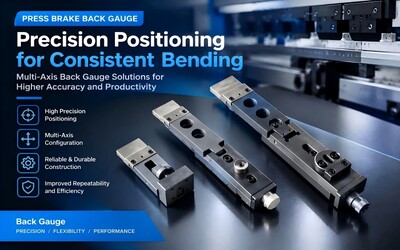 Press Brake Back Gauge Calibration: 7 Signs Your Positioning System Needs AdjustmentSeptember 18, 2026A press brake may produce the correct bend angle while still delivering inconsistent flange dimensions from one part to the next. In many cases, the problem is not the bending force or the tooling its...view
 How CNC Crowning Systems Work with Delem DA-66T & CybelecSeptember 21, 2026Learn how CNC press brake crowning systems integrate with Delem DA-66T and Cybelec controllers to automatically compensate machine deflection and improve bend angle accuracy.view
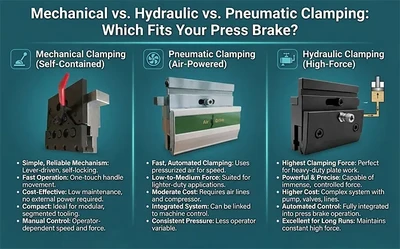 Mechanical vs. Hydraulic vs. Pneumatic Clamping: Which Fits Your Press Brake?September 8, 2026Choosing a press brake quick clamping system is not simply about finding the fastest option.Mechanical, pneumatic and hydraulic clamping systems each have different advantages.The right choice depends on your tooling, production volume, tool-change frequency and machine configuration.view
 How Press Brake Quick Clamping Systems Reduce Setup Time by 80%September 7, 2026For many sheet metal manufacturers, press brake setup is an overlooked source of production downtime.A faster clamping system can therefore reduce both labor time and machine downtime.view
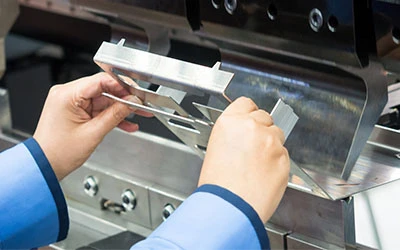 Press Brakes Don't Just Bend Metal - They Bend the RulesJuly 25, 2025The Basics and Trends of Sheet Metal Manufacturing IndustrySheet metal remains the backbone of countless industries, from automotive frames to aerospace components.view
 What Are the Differences in the Demand for Bending Machine Molds for New Energy Vehicles?June 26, 2025Compared with traditional vehicles, the demand for press brake toolings of new energy vehicles is significantly different, which is mainly reflected in the following aspects:1. Application of lightwei...view