EN
EN

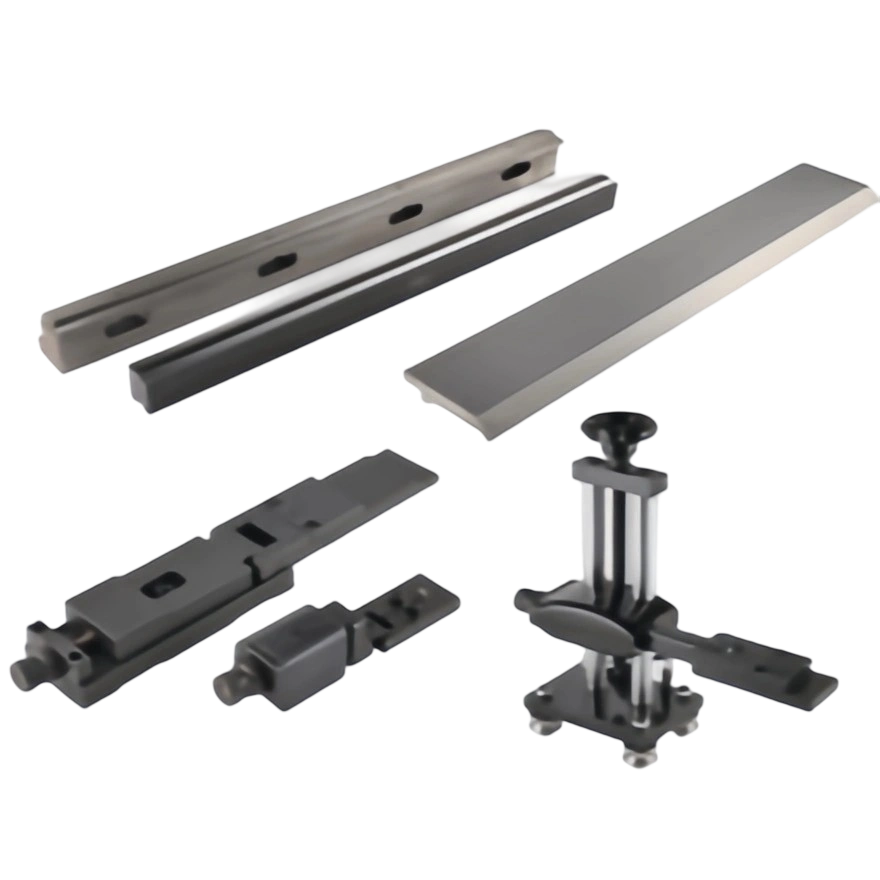
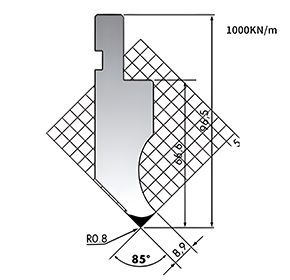
Compared with traditional vehicles, the demand for press brake toolings of new energy vehicles is significantly different, which is mainly reflected in the following aspects:
1. Application of lightweight materials
In order to reduce weight and improve energy efficiency, new energy vehicles use a large amount of lightweight materials such as aluminum alloys to replace traditional steel plates. The forming characteristics of these lightweight materials are different from those of steel plates, so the press brake toolings are required to have higher precision and adaptability to meet the bending needs of lightweight materials such as aluminum plates.
2. Increased complexity and customization requirements
The design of new energy vehicles is often more complex, and the shapes and specifications of the parts involved are more diverse. Therefore, the press brake toolings needs to have higher customization capabilities to meet the processing needs of parts of different shapes and specifications. In addition, with the continuous development of new energy vehicle technology, the complexity and precision requirements of molds are also increasing.
3. Efficiency and automation requirements
In order to improve production efficiency, the efficiency and automation requirements of press brake toolings in the manufacturing process of new energy vehicles are also increasing. This requires the bending machine mold to complete the processing tasks quickly and accurately, and to achieve seamless docking with the automated production line to improve overall production efficiency.
4. Sustainability and environmental protection requirements
As the world pays more attention to environmental protection, the new energy vehicle manufacturing industry has also continuously increased its requirements for the sustainability and environmental protection of press brake toolings. This requires tooling manufacturers to adopt more environmentally friendly materials and manufacturing processes to reduce resource consumption and waste emissions. At the same time, the design of the tooling also needs to consider its life cycle management to achieve a more energy-saving and environmentally friendly production method.
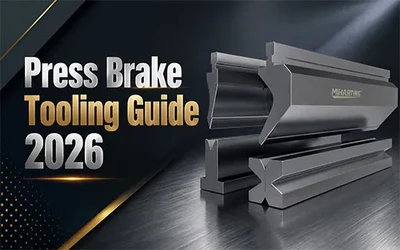 Press Brake Tooling Guide 2026: Types, Materials, Selection & Maintenance TipsAugust 10, 2026Press brake tooling plays a critical role in sheet metal bending performance. Although the press brake machine provides the bending force, the tooling determines the final bending accuracy, surface quality, production efficiency, and tool life.view
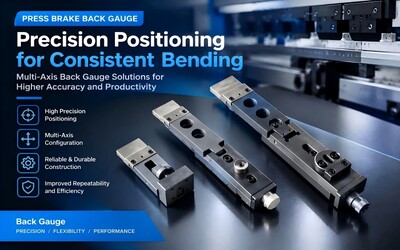 Press Brake Back Gauge Calibration: 7 Signs Your Positioning System Needs AdjustmentSeptember 18, 2026A press brake may produce the correct bend angle while still delivering inconsistent flange dimensions from one part to the next. In many cases, the problem is not the bending force or the tooling its...view
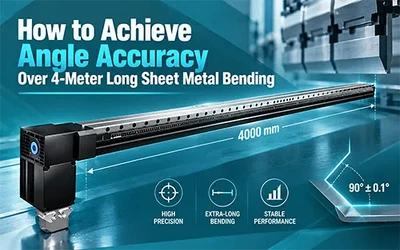 How to Achieve Angle Accuracy Over 4-Meter Long Sheet Metal BendingSeptember 15, 2026Learn why 4-meter sheet metal bends develop open angles in the center and how CNC mechanical crowning, precision tooling and correct setup improve full-length angle accuracyview
 Press Brake Tooling Maintenance: How to Extend Tool LifeJune 8, 2026Learn practical press brake tooling maintenance tips to extend tool life, reduce bending defects, improve accuracy, and lower tooling replacement costs.view
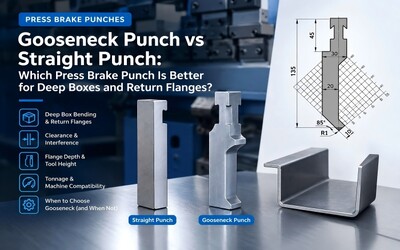 Gooseneck Punch Vs Straight Punch: Which Press Brake Punch Is Better for Deep Boxes and Return Flanges?September 18, 2026When a press brake part includes a deep box, tall return flange, or several bends close together, choosing a punch based only on angle and radius can lead to interference during forming. The critical ...view
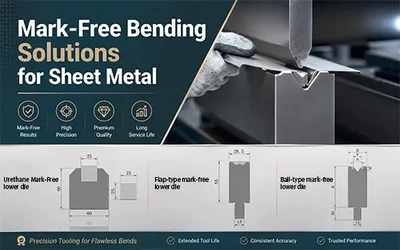 Mark-Free Bending Solutions for Sheet MetalJuly 27, 2026Learn three mark-free bending solutions for sheet metal: roller lower dies, urethane lower dies, and folding lower dies, including their best applications.view