EN
EN

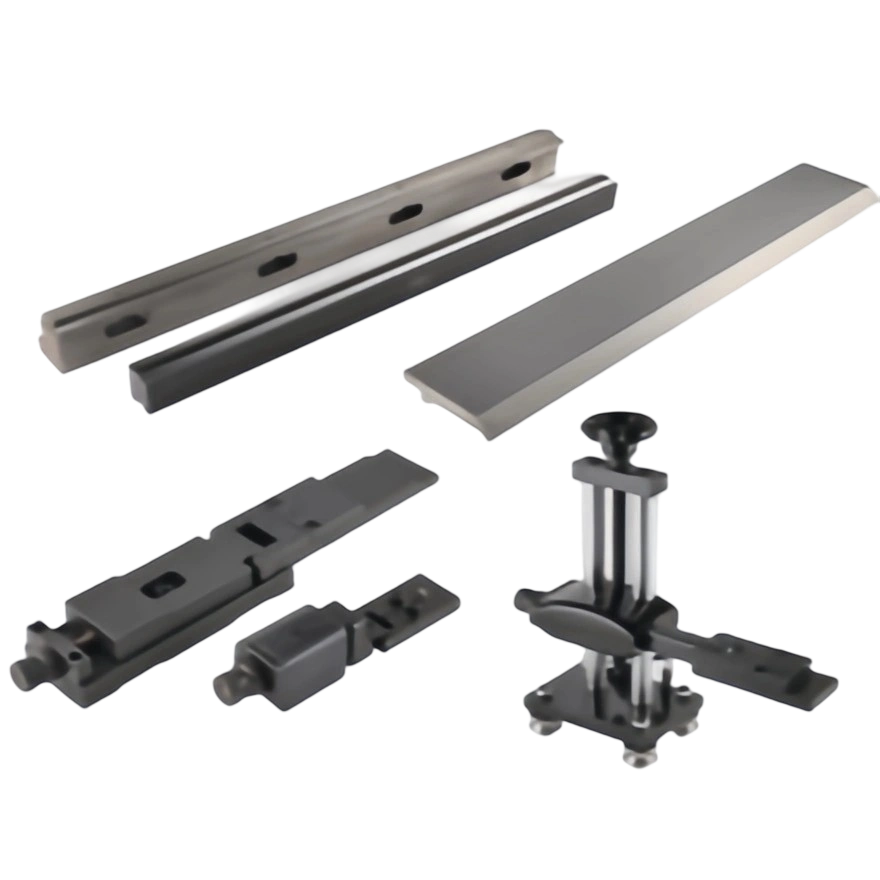
Press brake tooling plays a critical role in sheet metal bending performance. Although the press brake machine provides the bending force, the tooling determines the final bending accuracy, surface quality, production efficiency, and tool life.
For manufacturers working with different materials, thicknesses, and bending requirements, choosing the correct press brake tooling is essential.
This complete press brake tooling guide explains everything you need to know about:
Different types of press brake tooling
Tool steel materials and hardness
How to select the right punches and dies
Compatibility with major press brake brands
Tool maintenance methods to extend service life
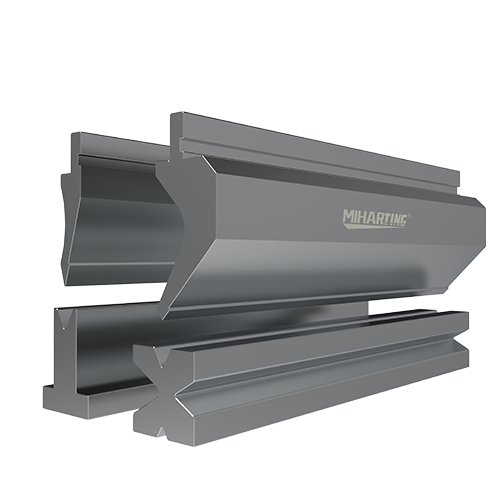
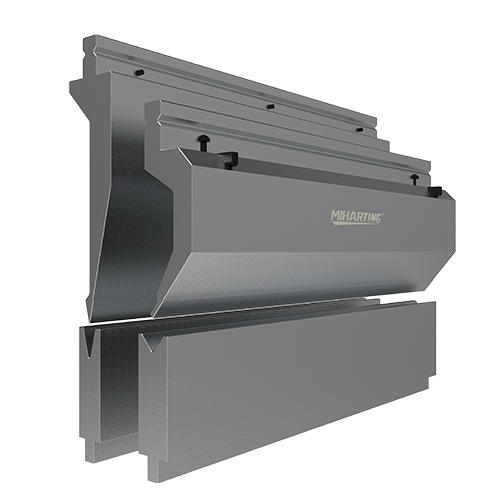
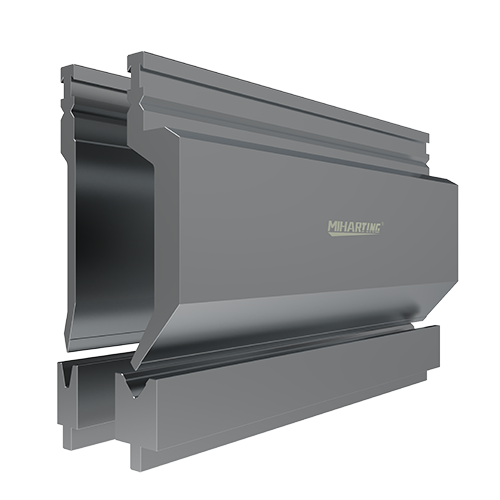
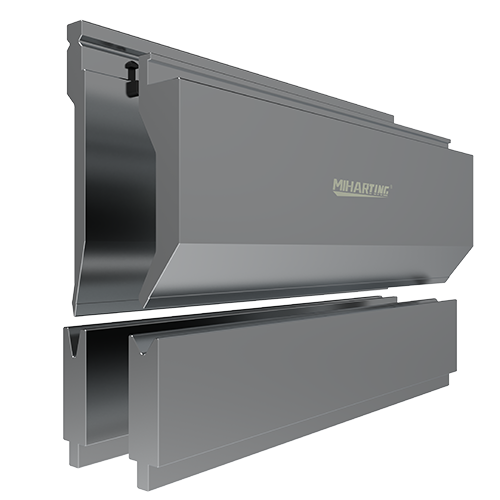
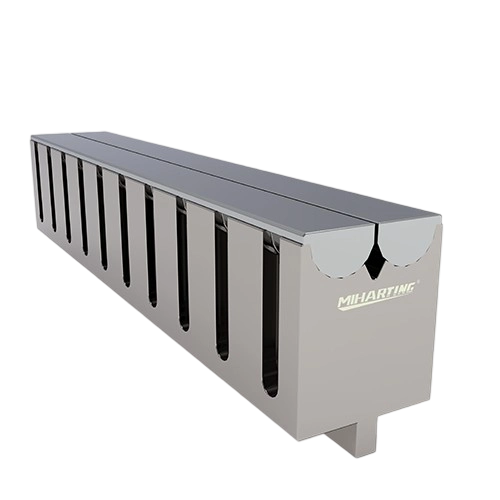
Press brake tooling refers to the upper and lower tools installed on a press brake machine to form sheet metal into specific angles and shapes.
The main components include:
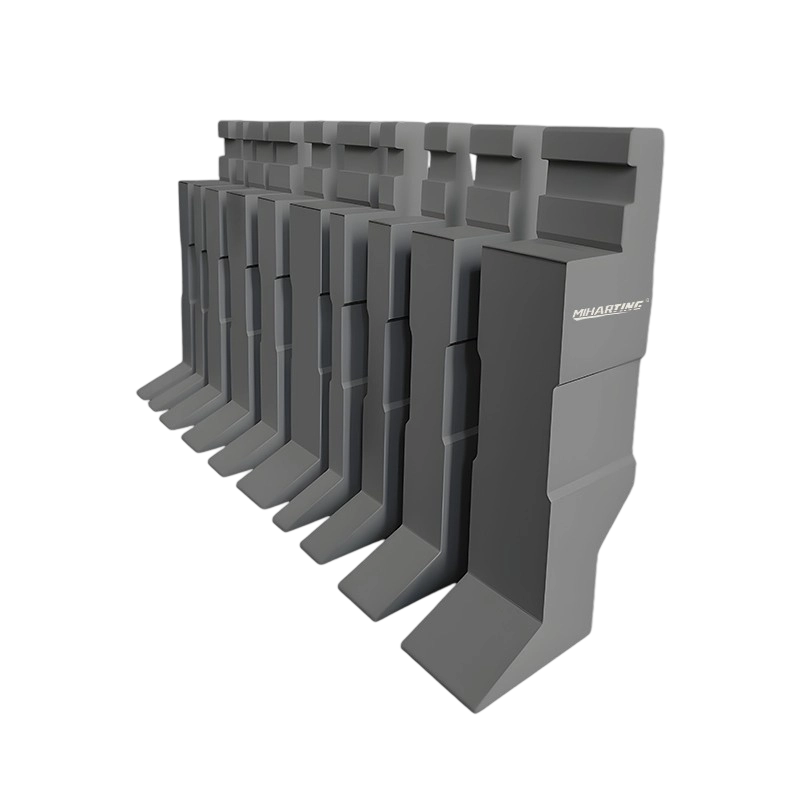
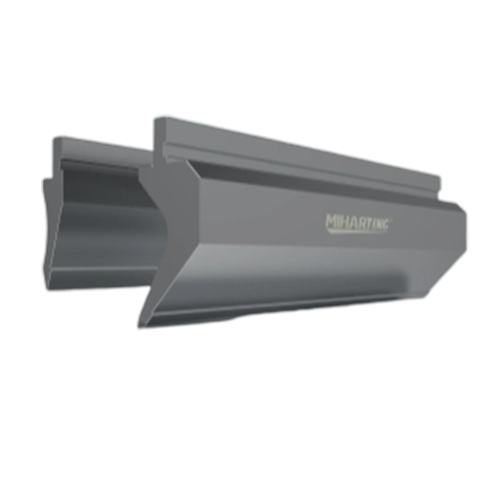
Press brake punches (upper tools)
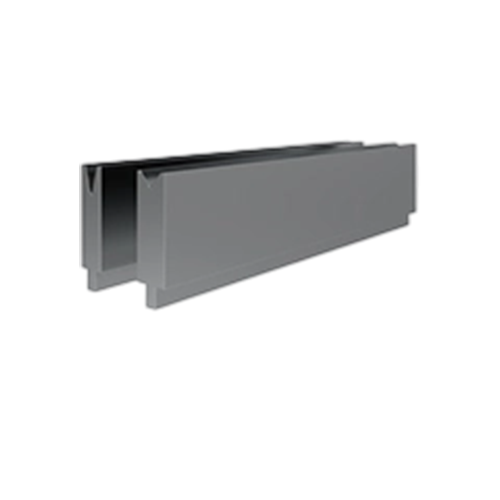
Press brake dies (lower tools)
V dies
Special forming tools
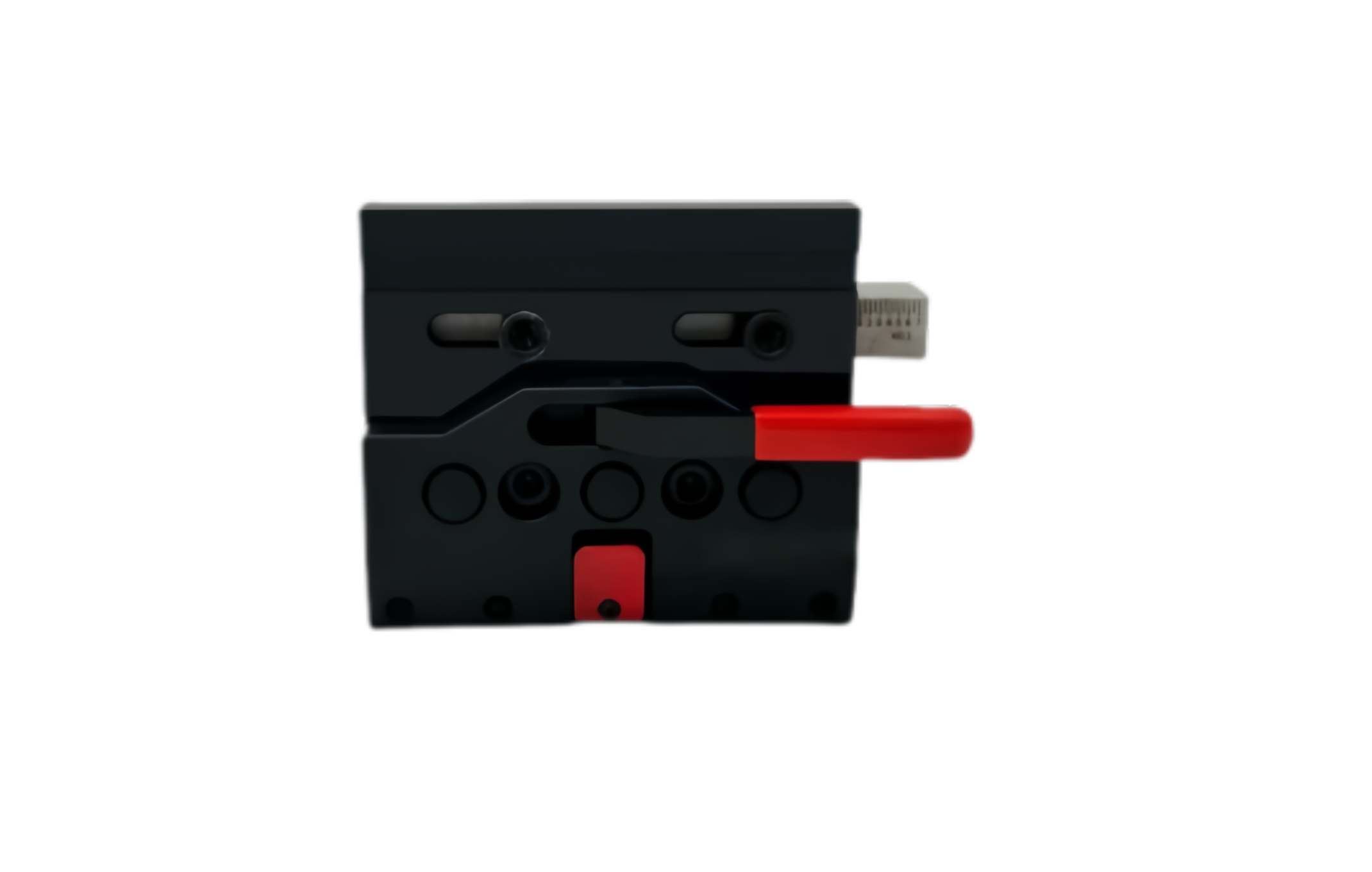
Quick clamping tooling systems
Unlike the press brake machine itself, tooling directly contacts the metal sheet. Therefore, tooling quality has a significant impact on:
Bending accuracy
Surface marks
Production efficiency
Tool replacement frequency
Choosing the right tooling type depends on bending method, material thickness, machine configuration, and production requirements.
Punch Type | Profile / Feature | Best For | Main Advantage |
Straight Punch | Straight body with standard tip | General 90° bending | Versatile and easy to use |
Gooseneck Punch | Recessed / offset body | Deep boxes, return flanges | Avoids interference with formed flanges |
Sash Punch | Narrow, offset profile | Window frames, channels, narrow profiles | Better clearance for complex profiles |
Acute Angle Punch | Sharp-angle tip, typically below 90° | Acute bends, pre-bending, hemming preparation | Suitable for small-angle and precision forming |
Radius Punch | Larger nose radius | Large-radius bending | Reduces concentrated stress and helps control bend radius |
Hemming Punch | Flat / specialized forming profile | Closed hems and reinforced edges | Creates safer, stronger finished edges |
Tip: The correct punch should be selected according to flange geometry, bend angle, inside radius, material thickness and available clearance—not simply by punch shape.
Used for standard 90-degree bending applications.
Advantages:
Simple structure
High versatility
Suitable for general fabrication
Designed with offset clearance.
Applications:
Deep box bending
Return flange bending
Advantages:
Avoids interference
Improves bending flexibility
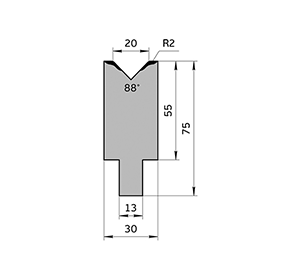
Used for sharp angle bending.
Applications:
Small angle bending
Precision sheet metal fabrication
Designed for flattening folded edges.
Applications:
Cabinets
Automotive parts
Electrical enclosures
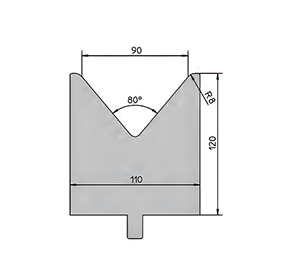
The most commonly used lower tooling.
Available options:
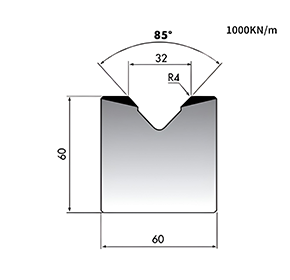
Single V Die
Double V Die
Four-way Die
Multi V Die
Advantages:
Flexible application
Easy replacement
Suitable for various thicknesses
A special die design using rollers instead of fixed surfaces.
Benefits:
Reduces bending marks
Protects stainless steel surfaces
Reduces required bending force
For special profiles:
Radius bending
Channel bending
Automotive parts
Special industrial components
The material determines tooling hardness, wear resistance, and service life.
Advantages:
High strength
Excellent toughness
Good impact resistance
Applications:
Thick plate bending
Heavy machinery
Advantages:
High hardness
Good wear resistance
Stable performance
Applications:
General press brake tooling
Advantages:
Excellent hardness
Long service life
High dimensional stability
Applications:
High precision bending
| Material | Hardness | Application |
|---|---|---|
| 42CrMo | HRC47-52 | Heavy bending |
| Cr12MoV | HRC58-62 | Standard tooling |
| SKD11 | HRC60+ | Precision tooling |
Selecting tooling requires considering several factors.
The thicker the sheet metal, the larger the required V opening.
Example:
Thin sheet:
1-3mm
↓
Small V opening
Medium plate:
3-8mm
↓
Medium V opening
Heavy plate:
Large V opening
Different materials require different tooling considerations.
Need:
Smooth surface
High hardness tooling
Need:
Lower marking risk
Need:
General durable tooling
Most common method.
Advantages:
Flexible
Lower tooling wear
Higher accuracy.
Requires:
Precise tooling matching
Requires:
High strength tooling
Before ordering tooling, confirm:
Machine brand
Tool holder type
Clamping system
Common systems:
Widely used in Asia and global markets.
Popular for high-end CNC press brakes.
Common in European machines.
Compatible with many CNC press brakes.
Standard tooling cannot always meet special bending requirements.
Custom tooling is recommended for:
Special radius bending
Extra-long bending
Unique profiles
Special materials
A professional tooling manufacturer should provide:
Drawing review
Material recommendation
CNC machining
Heat treatment
Accuracy inspection
High-quality tooling requires strict manufacturing control.
Select suitable tool steel according to application.
↓
Precision machining ensures dimensional accuracy.
↓
Improves hardness and wear resistance.
↓
Achieves smooth surface finish.
↓
Check:
Dimensions
Hardness
Straightness
Proper maintenance can significantly extend tooling life.
Remove:
Metal dust
Oil contamination
Rust
Inspect:
Edge damage
Surface scratches
Deformation
Avoid exceeding tooling capacity.
Recommended:
Dry environment
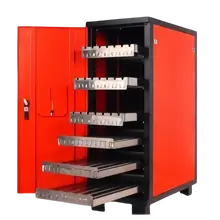
Tool cabinet storage
Anti-rust protection
Possible reasons:
Tool wear
Incorrect V opening
Machine calibration issue
Solutions:
Use Rolla V Die
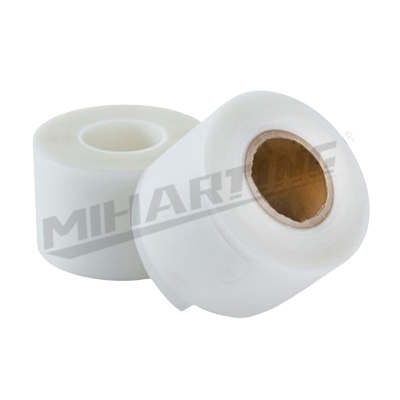
Use protective film
Improve tooling surface finish
Causes:
Wrong material selection
Excessive tonnage
Poor maintenance
A reliable manufacturer should provide:
High accuracy machining capability.
Professional steel selection.
Support drawings and special requirements.
Provide:
International packaging
Technical support
Global delivery
Choosing the right press brake tooling is essential for achieving accurate, efficient, and consistent sheet metal bending.
A good tooling solution should consider:
Tool type
Material thickness
Machine compatibility
Tool steel quality
Maintenance requirements
With proper selection and maintenance, high-quality press brake tooling can significantly improve bending performance and reduce production costs.
 How to Measure Press Brake Tooling Dimensions Before Ordering Replacement ToolingSeptember 18, 2026Ordering replacement tooling for an older press brake is rarely as simple as identifying the machine brand and sending a photograph of the existing punch. In many fabrication shops, the original tooli...view
 Bystronic Press Brake Tooling Catalogue: A Practical Selection and Compatibility GuideJuly 28, 2026A tooling catalogue is useful only when it helps an engineer move from a part drawing to a safe, repeatable bending setup. Buyers often start with a machine brand and a familiar tool description, but ...view
 Retrofitting Your Old Press Brake with Modern Quick-Change Clamping SolutionsSeptember 11, 2026Upgrade an older AMADA, LVD, SAFAN or European press brake with modern quick-change clamping. Compare adapters, mechanical, pneumatic and hydraulic retrofit solutions.view
 What Is Press Brake Tooling and How Does It Work?January 8, 2026In the world of metal fabrication, press brake tooling stands as a cornerstone of efficiency and precision, crucial for bending operations in various industries. Understanding the complex orchestratio...view
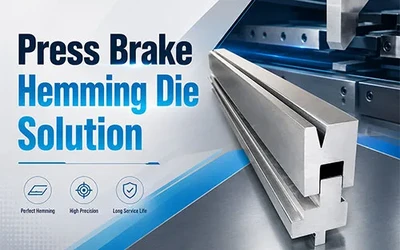 Press Brake Hemming Die Solution for Safer and Stronger Sheet Metal EdgesAugust 17, 2026A press brake hemming die, also known as a sheet metal hemming die or flattening die, is an effective tooling solution for this problem. By folding and flattening the edge of the sheet metal, the die helps create a smooth, safe, and reinforced edge. This process is widely used for electrical cabinets, machine covers, enclosures, doors, panels, trays, home appliance parts, elevator components, and other precision sheet metal products.view
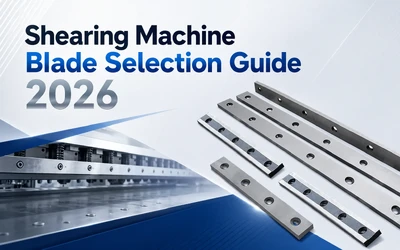 Shearing Machine Blade Selection Guide 2026: Heavy-Duty Shear Blades for High-Strength Steel and Stainless Steel CuttingJune 30, 2026In 2026, the sheet metal cutting landscape has shifted significantly. High-tensile steel, wear-resistant plate, duplex stainless steel, and thicker industrial sheet materials have moved from specialty...view