EN
EN

A press brake die is one of the most important components in the bending process. While the machine provides the bending force, the die determines how the sheet is supported and formed.
Choosing the right press brake die can affect bending accuracy, inside radius, surface quality, tooling life and production efficiency.
In this guide, we explain four common types of press brake dies and how to select the right one for different applications.
A press brake die is the lower tooling installed on the press brake table. It works together with the upper punch to form the sheet metal into the required angle and shape.
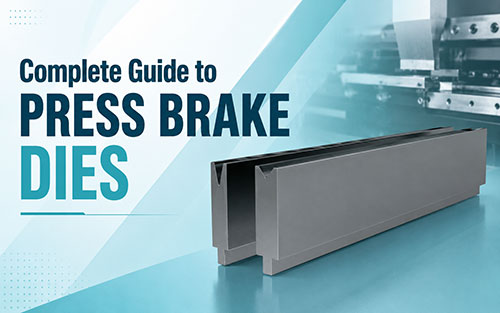
The main factors affected by the die include:
Bending angle
Inside bend radius
Required bending force
Surface marking
Tool life
Bending consistency
The most suitable die depends on the material, thickness, bending method and final part geometry.
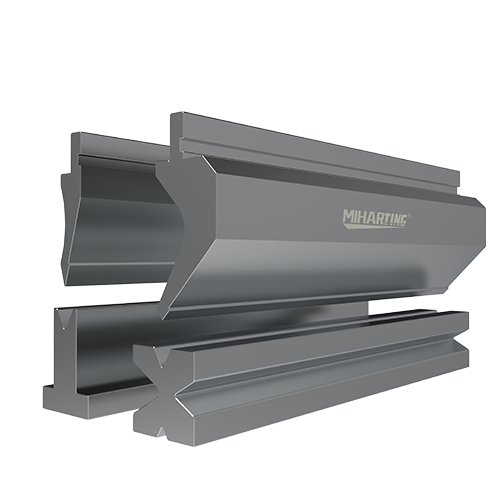
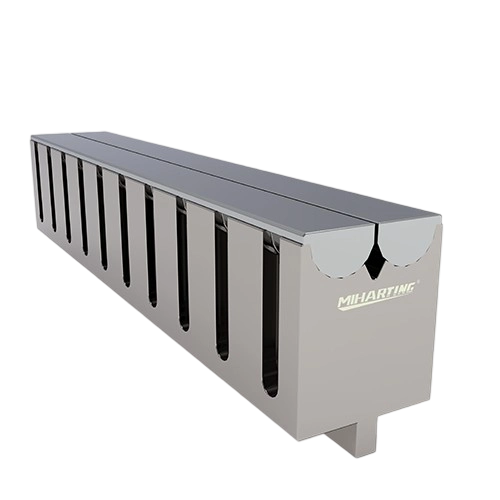
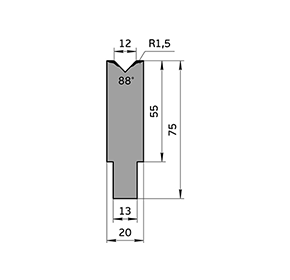
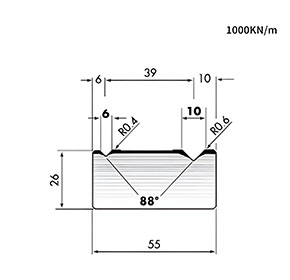
The V die is the most widely used lower tooling for press brakes. It is particularly common for air bending and general sheet metal fabrication.
Typical applications include:
Mild steel
Stainless steel
Aluminum
Electrical cabinets
HVAC components
Machine parts
General fabrication
The V opening is an important factor when selecting a die.
As a general starting point for air bending, the V opening is often around 6–8 times the material thickness. However, the actual selection also depends on material strength, inside radius, bending length and machine capacity.
A suitable V opening helps balance:
Bending force + bend radius + surface quality + tooling stability
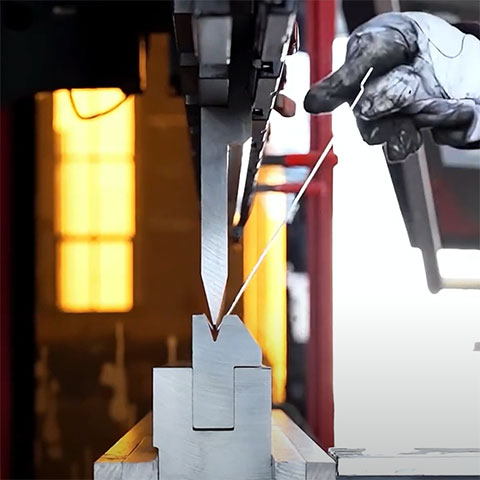
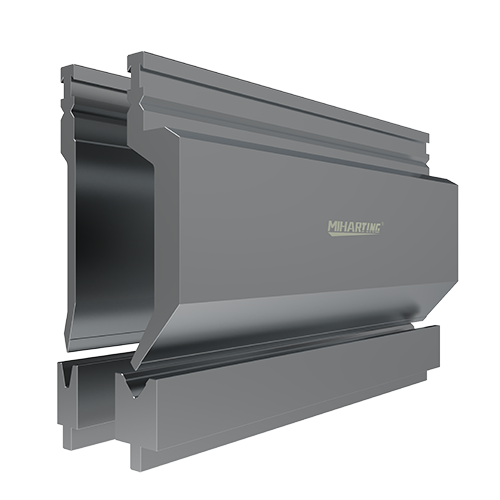
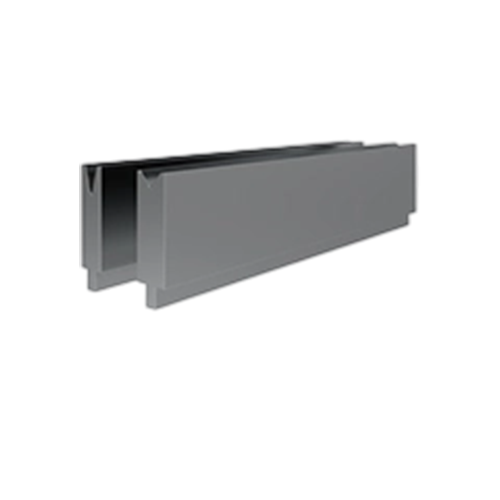
A U die uses a U-shaped or specially designed cavity instead of a conventional V opening.
It is generally used when a standard V die cannot provide the required forming geometry.
Typical applications include:
Channel-shaped parts
Deep forming
Special profiles
Customized bending applications
U dies are often designed according to the actual workpiece drawing, making them particularly useful for customized tooling projects.
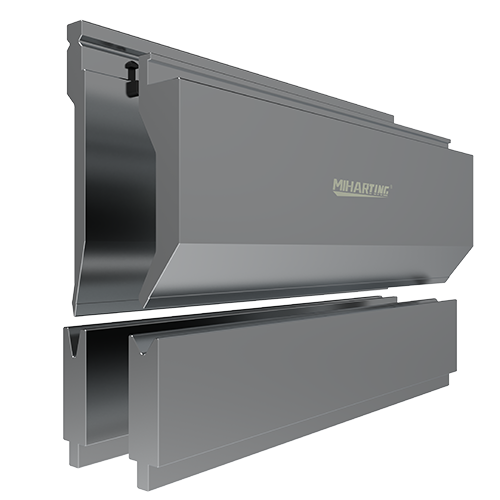
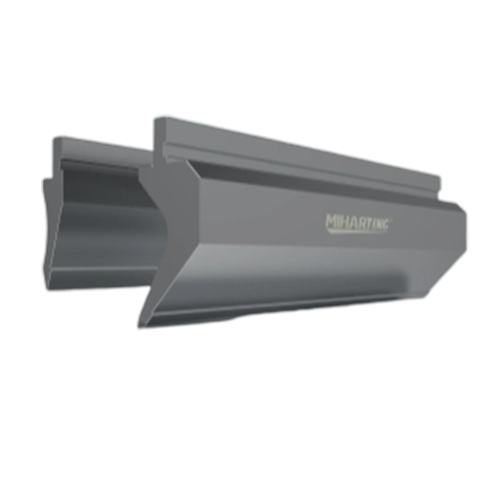
A radius die is designed for applications requiring a larger or specific inside bending radius.
It can be useful when standard V tooling cannot achieve the required bend profile efficiently.
Typical applications include:
Stainless steel parts
Aluminum components
Architectural panels
Automotive parts
Decorative sheet metal
A suitable radius die can improve radius consistency and reduce unwanted surface damage.
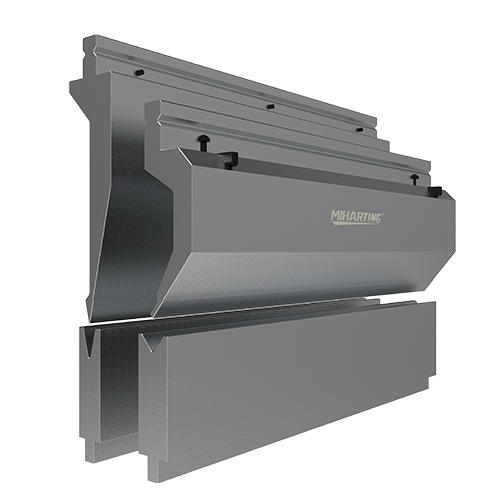
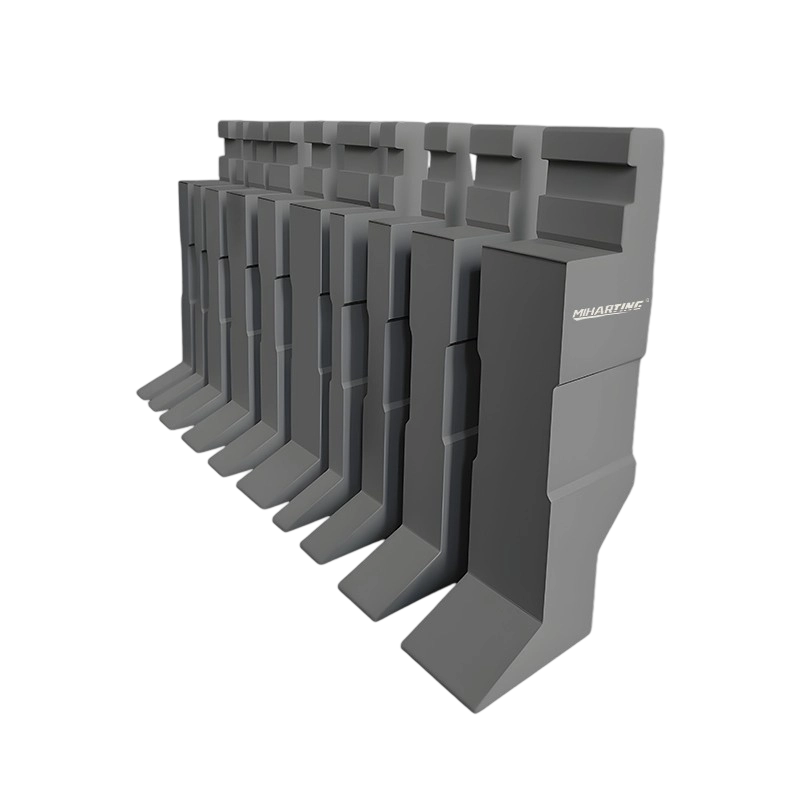
A hemming die is used to fold a sheet edge back onto itself.
Hemming normally involves two steps:
Pre-bending → Flattening
This creates a closed or reinforced edge.
Common applications include:
Automotive parts
Electrical enclosures
HVAC components
Metal furniture
Sheet metal housings
Hemming improves edge safety, rigidity and appearance.
Die Type | Main Purpose | Typical Applications |
V Die | General bending | Sheet metal fabrication |
U Die | Special forming | Channels and custom profiles |
Radius Die | Large or controlled radius | Stainless steel, aluminum, architectural parts |
Hemming Die | Edge folding and flattening | Automotive, cabinets, HVAC |
The four die types are designed for different forming requirements. Choosing the right one starts with the workpiece rather than simply the press brake model.
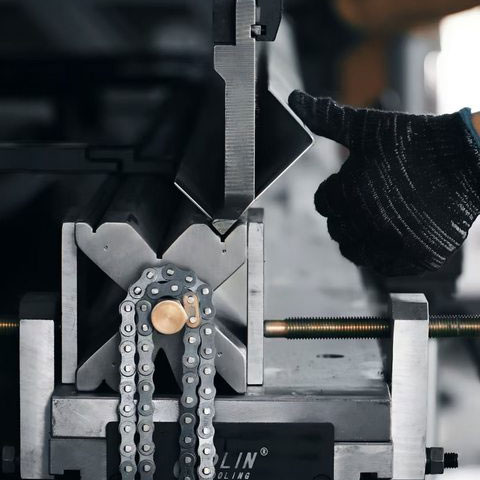
Before selecting a die, consider the following factors.
Thicker materials generally require a larger V opening and higher bending force.
Mild steel, stainless steel and aluminum have different bending characteristics and surface requirements.
The required radius determines whether a standard V die or specialized radius tooling is more suitable.
Air bending, bottom bending and coining may require different tooling configurations.
Check the:
Press brake model
Tooling interface
Die height
Die length
Clamping system
For stainless steel, aluminum and decorative parts, low-marking or radius tooling may be a better choice.
The material and heat treatment of a die directly affect its hardness, wear resistance and service life.
Known for good strength and toughness. It is suitable for heavy-duty and thick-plate bending applications.
A commonly used tool steel offering high hardness and good wear resistance for general press brake tooling.
A premium tool steel option with excellent hardness, wear resistance and dimensional stability for demanding applications.
The best material depends on the working conditions rather than simply choosing the hardest steel.
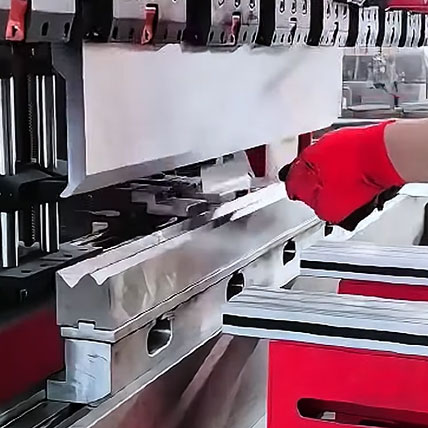
Standard dies are suitable for most common bending operations.
However, custom dies are recommended when you need:
Special bending radius
Deep channels
Narrow flanges
Special profiles
Long continuous bends
Reduced surface marking
When ordering custom tooling, provide the manufacturer with the part drawing, material, thickness, bending angle, inside radius and bending length.
This allows the tooling manufacturer to design the die around the actual application.
Proper maintenance helps extend tooling life and maintain bending accuracy.
Remove metal particles, oil and other contaminants.
Inspect the die shoulders for scratches, deformation, chipping and excessive wear.
Apply suitable anti-rust protection during long-term storage.
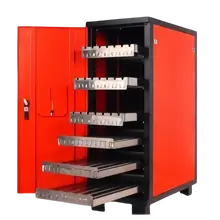
Keep tooling in a clean and dry environment and use a dedicated tooling rack where possible.
Incorrect installation can cause uneven loading and accelerate tooling wear.
A die should be replaced when wear starts to affect bending quality.
Common warning signs include:
Uneven bending angles
Visible damage
Excessive shoulder wear
Repeated surface marks
Dimensional inconsistency
Tool deformation
Replacing worn tooling at the right time can help prevent production defects and unnecessary downtime.
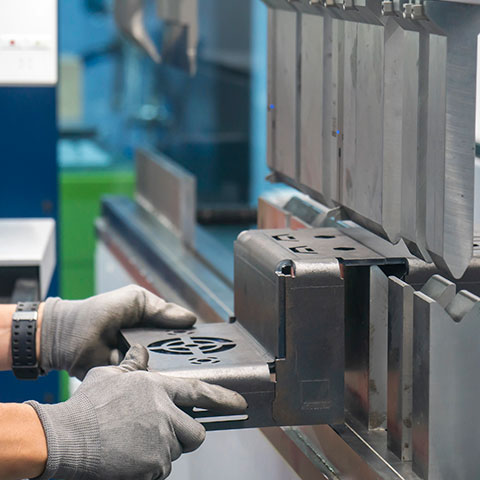
Choosing the right press brake die is essential for accurate and consistent sheet metal bending.
For general bending, the V die is the most versatile option. For special profiles, a U die may be more suitable. A radius die is designed for controlled large-radius bending, while a hemming die is used for folding and flattening sheet edges.
The best tooling choice should always consider:
Material + Thickness + Bend Radius + Bending Method + Machine Compatibility
With the right die material, accurate manufacturing and proper maintenance, press brake tooling can provide reliable performance and a longer service life.
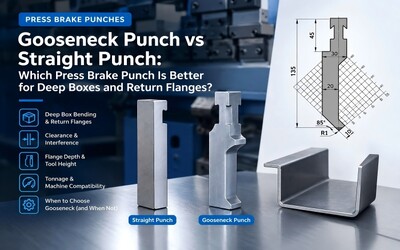 Gooseneck Punch Vs Straight Punch: Which Press Brake Punch Is Better for Deep Boxes and Return Flanges?September 18, 2026When a press brake part includes a deep box, tall return flange, or several bends close together, choosing a punch based only on angle and radius can lead to interference during forming. The critical ...view
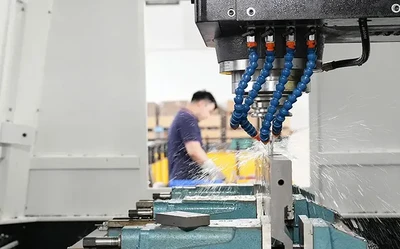 7 FAQs to Help You Quickly Choose Press Brake ToolingJune 4, 2026Unsure how to choose press brake tooling and lower die V-grooves? This article provides a detailed guide to key selection criteria for press brake dies, covering aspects such as die plate thickness, V-grooves, die segmentation, material composition, hardness, causes of die collision, and heat treatment.view
 China Press Brake Tooling Manufacturer vs European SuppliersSeptember 4, 2026Compare China press brake tooling manufacturers with European suppliers in quality, compatibility, customization, lead time, service and total cost.view
 What Special Requirements Do Titanium Alloys and Composite Materials Have for the Design of Bending Machine Molds?June 26, 2025Titanium Alloy:1. Due to the high hardness of titanium alloys, mold design needs to consider the use of specially designed structures and processes to adapt to its bending characteristics. The choice ...view
 How Do Aerospace Press Brake Machine Molds Cope with High Temperature and High Pressure Environments?June 25, 2025The coping strategies for aerospace press brake machine molds in high temperature and high pressure environments mainly include the following aspects:1. Select high temperature and high pressure resis...view
 Functions of a Proportioning Valve in BrakesJanuary 8, 2026The brake tooling industry plays an essential role in vehicle safety, with the proportional valve being a critical component in the braking system. Understanding how this device functions can offer in...view