EN
EN

In small-batch and multi-variety sheet metal fabrication, do you often face problems such as long lower die changeover time and an increasing number of dies in stock? Compared with flexible tooling solutions, traditional single V dies can greatly reduce production efficiency.
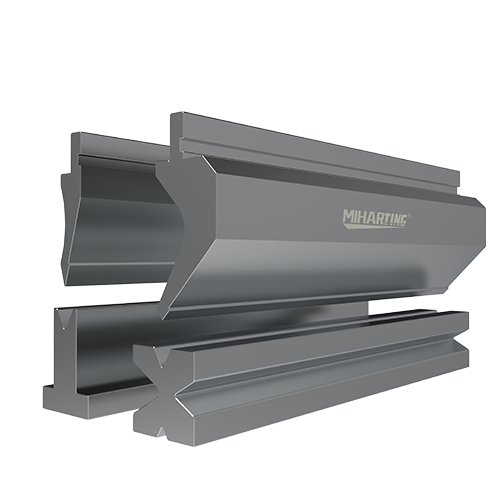
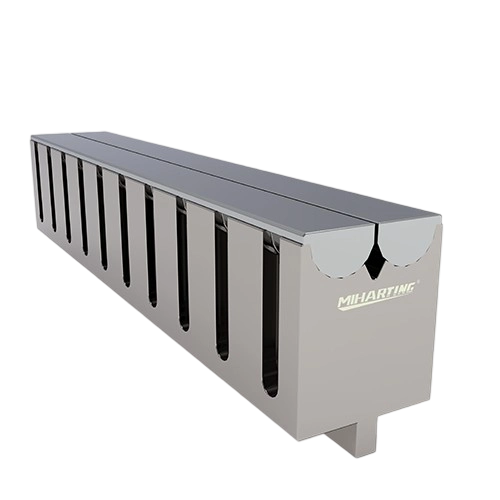
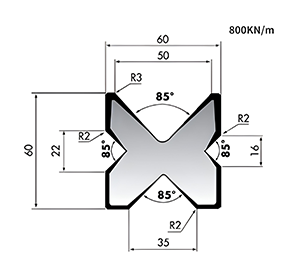
A 4 way press brake die, also known as a 4 way die, four-sided die, or multi V lower die, integrates multiple V openings into one die body. It can effectively reduce die changeover time, lower tooling costs, and improve bending flexibility.
In this article, we will introduce the comparison between single V dies and 4 way dies, the key advantages of 4 way press brake dies, and practical application solutions for different customers.
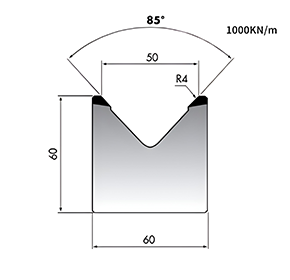
A traditional single V die usually has only one V opening. When processing different material thicknesses or bending requirements, operators often need to replace the lower die frequently.
Common problems include:
Long die changeover time, affecting production efficiency
More die inventory, taking up workshop space
Less flexible bending solutions
Unstable bending quality and higher scrap rate
A 4 way press brake die provides multiple V openings on one die. Operators can switch to different V grooves simply by rotating the die.
Main benefits include:
Different V openings can be switched by rotating the die, reducing changeover time
Multiple V grooves are integrated into one die, reducing repeated purchases
Various V groove sizes provide more flexible bending solutions
Precision machining and heat treatment improve bending consistency and reduce rework
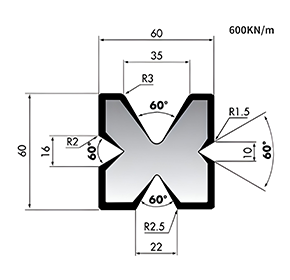
The biggest advantage of a 4 way press brake die is that it integrates multiple V grooves. Customers can select the proper opening according to material thickness, material type, bending radius, and angle requirements, reducing the need for frequent die changes.
Material Type | Application |
Carbon Steel | Frames, brackets, structural parts |
Stainless Steel | Kitchenware, elevators, decorative parts |
Aluminum | Machine enclosures, advertising panels, lightweight components |
Galvanized Steel | Electrical cabinets, ventilation ducts, sheet metal housings |
A 4 way press brake die helps workshops complete process switching faster and improves continuous machine operation efficiency.
It is especially recommended for:
Small-batch and multi-variety sheet metal factories
Fabrication centers handling complex orders
Manufacturers requiring fast delivery
Workshops that frequently process different material thicknesses
Compared with purchasing multiple single V lower dies, a 4 way die can cover more bending requirements with fewer tools. For customers configuring a press brake for the first time, choosing the right 4 way press brake die can help establish basic bending capability more quickly and economically.
The structure of a 4 way die is simple, and the switching method is intuitive. Operators only need to rotate the die to the required V groove, complete positioning, and start production.
For customers who want to reduce operation complexity and improve workshop standardization, this is a practical and efficient choice.
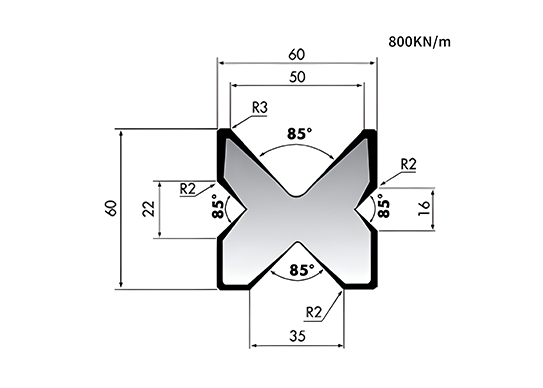
If customers mainly process common sheet metal from around 0.5 mm to 6 mm, they can choose a 4 way lower die with small and medium V openings.
This solution is suitable for:
Machine enclosures
Cabinets
Brackets
Electrical housings
Advantages: wide application range, fewer die changes, and high cost performance.
Stainless steel has high strength and obvious springback, so it requires higher die hardness and better surface finishing.
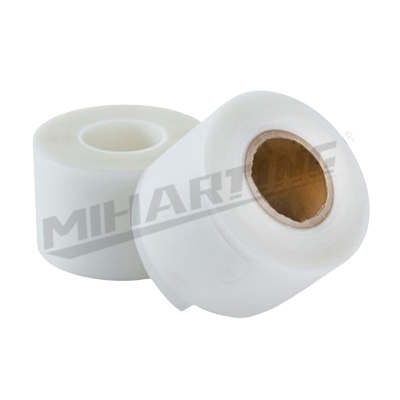
For stainless steel bending, it is recommended to choose a high-hardness, precision-ground 4 way press brake die. If necessary, it can also be used together with protective film or anti-mark tooling.
Advantages: reduces surface scratches and improves the quality of finished appearance parts.
For thicker plates, larger V openings and higher load capacity are required. The correct die specification should be selected according to press brake tonnage, material strength, and bending length.
This helps avoid insufficient tonnage or die damage caused by using a V groove that is too small.
Advantages: improves safety and ensures stable forming of thick plates.
If customer orders change frequently and the workshop often switches between different materials and thicknesses, a 4 way die can be used as a basic core lower die configuration.
It helps build a more flexible production rhythm.
Advantages: shorter preparation time and better delivery capability.
When purchasing a 4 way press brake die, customers should not only focus on price. The following factors are also important:
Whether the V groove sizes match commonly used material thicknesses
Whether the die material and heat treatment are reliable
Whether the die accuracy is stable
Whether it matches the existing press brake system
Whether the supplier supports customization
If your production involves different material thicknesses, multiple material types, or frequent order changes, 4 way press brake die is a highly recommended lower die solution.
The value of a 4 way die is not only reducing the number of dies. More importantly, it improves production efficiency and bending flexibility. It helps solve common problems such as excessive tooling inventory, unstable bending quality, and slow die changeover.
For sheet metal fabrication workshops looking for a practical, efficient, and cost-effective bending solution, the 4 way press brake die is an excellent choice.
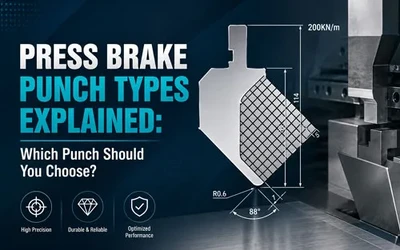 Press Brake Punch Types Explained: Which Punch Should You Choose?August 19, 2026This guide introduces four common press brake punch types: straight punch, gooseneck punch, acute punch, and offset punch.view
 Press Brakes Don't Just Bend Metal - They Bend the RulesJuly 25, 2025The Basics and Trends of Sheet Metal Manufacturing IndustrySheet metal remains the backbone of countless industries, from automotive frames to aerospace components.view
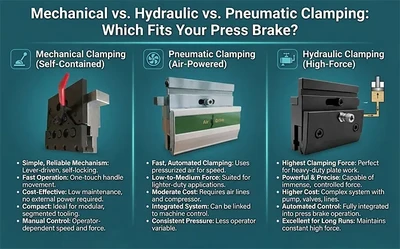 Mechanical vs. Hydraulic vs. Pneumatic Clamping: Which Fits Your Press Brake?September 8, 2026Choosing a press brake quick clamping system is not simply about finding the fastest option.Mechanical, pneumatic and hydraulic clamping systems each have different advantages.The right choice depends on your tooling, production volume, tool-change frequency and machine configuration.view
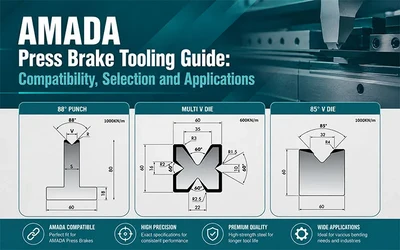 AMADA Press Brake Tooling Guide: Compatibility, Selection and ApplicationsAugust 31, 2026This guide looks at AMADA press brake tooling from a practical production perspective: how to identify the right tooling, how to select it for different applications, and when standard tooling should be replaced by a specialized solution.view
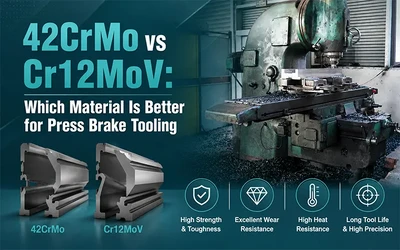 42CrMo vs Cr12MoV: Which Material Is Better for Press Brake Tooling?September 2, 2026For press brake punches and dies, the right material needs to balance hardness, toughness, wear resistance and application requirements. A material that performs well in high-volume production may be unnecessary for a general sheet metal workshop.view
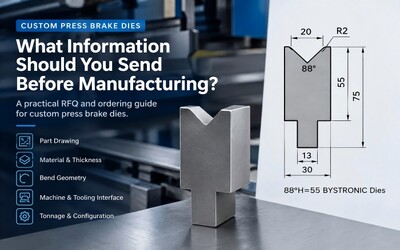 Custom Press Brake Dies: What Information Should You Send Before Manufacturing?September 18, 2026Custom Press Brake Dies: What Information Should You Send Before Manufacturing? | MIHARTINGOrdering a custom press brake die often starts with a straightforward request: a customer has a part that can...view