EN
EN

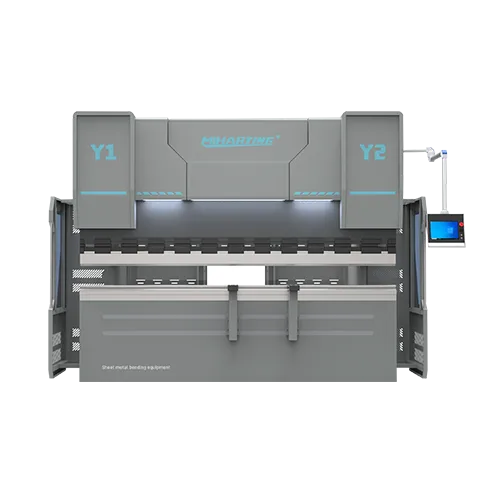
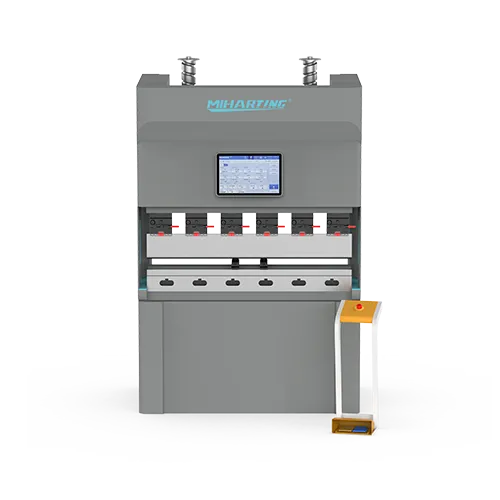
When processing long workpieces on a bending machine, a common issue arises where the bending angles at the ends of the sheet are correct, but the angle in the middle is too large; this is where a crowning system is required. Common options include mechanical compensation, hydraulic crowning, and high-precision WILA crowning systems. Since these systems differ in terms of budget, precision requirements, and production scenarios, let’s examine them in detail to help you choose the right crowning system for your bending machine.
The crowning system—also known as a press brake deflection compensation system—primarily functions by making minute adjustments to the position of the worktable or lower die during the bending process, ensuring more uniform force distribution along the entire bend line.
When bending long plates, the middle section of a press brake is prone to "sagging" due to deformation under load. Without compensation, the bend angle in the center would differ from that at the ends. Crowning systems use mechanical wedges, hydraulic cylinders, or electromechanical mechanisms to appropriately "push up" the center of the worktable, thereby ensuring a more consistent bend angle.
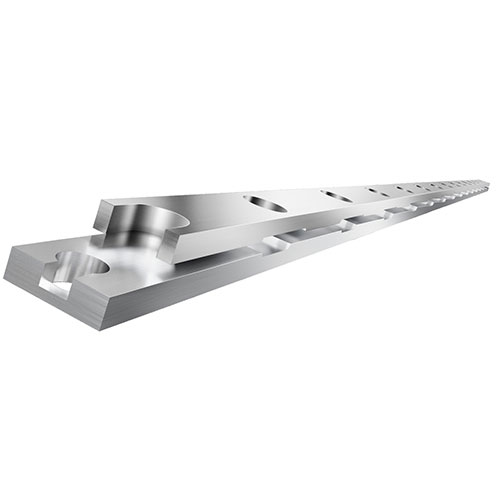
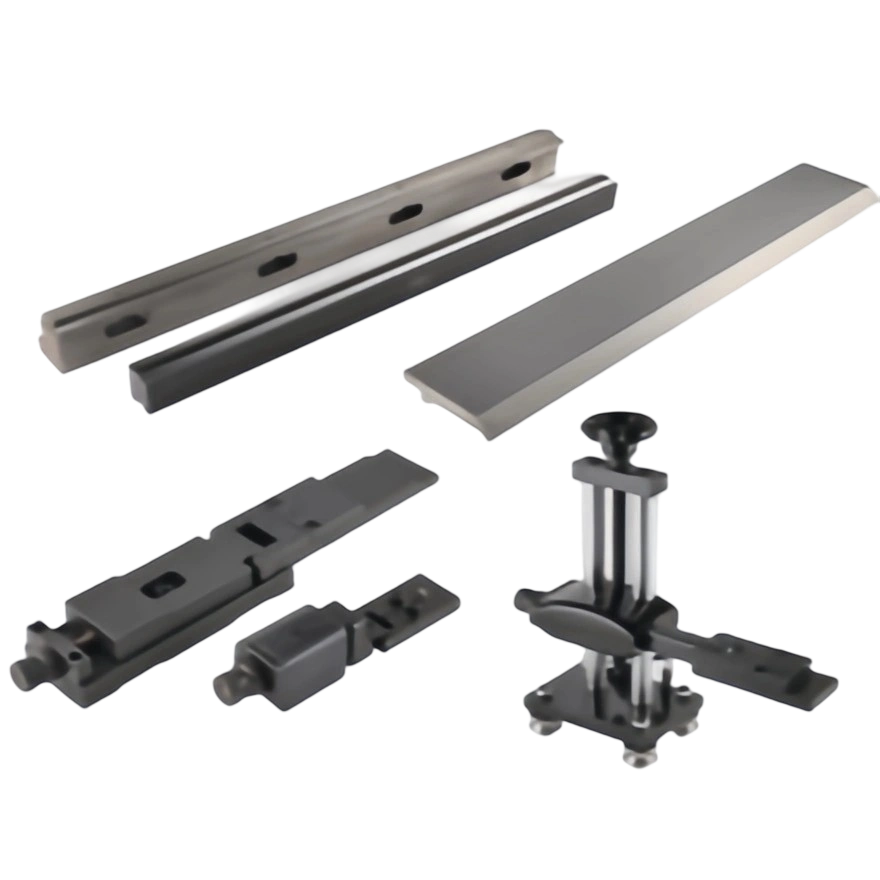
Mechanical compensation systems typically employ a wedge-based design. The system utilizes multiple wedge mechanisms to create a compensation curve along the length of the worktable, counteracting the deflection that occurs during the bending process.
● Stable structure and low maintenance costs
● Does not rely on complex hydraulic systems, resulting in a relatively low failure rate
● Suitable for small-to-medium-sized press brakes and standard sheet metal processing
● Offers excellent repeatability, making it ideal for batch production
● Generally lower in cost than high-end hydraulic or imported crowning systems
Target Audience: This is the ideal choice for customers with limited budgets who still wish to improve precision. If you primarily process standard materials—such as carbon steel, stainless steel, or aluminum—and do not frequently vary plate thicknesses or bending lengths, mechanical compensation offers excellent cost-effectiveness.
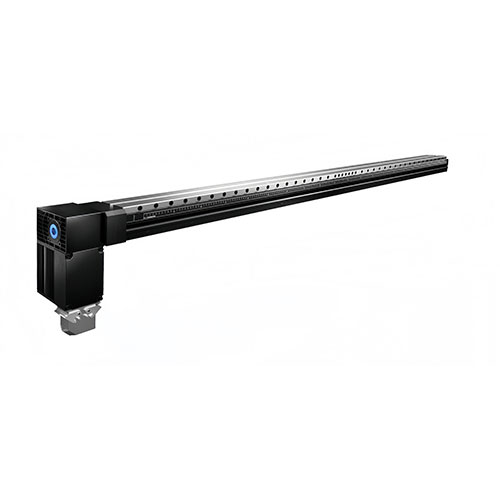
Hydraulic crowning system is typically achieved through multiple hydraulic compensation cylinders installed beneath the worktable. The CNC system controls these cylinders to generate varying degrees of compensation based on parameters such as plate thickness, length, die opening, and bending force.
● High compensation force; suitable for high-tonnage press brakes and those with long worktables
● Automatically adjusts based on processing parameters
● Better suited for bending thick or long plates
● Ideal for industries such as heavy-duty sheet metal fabrication, construction machinery, steel structures, and electrical cabinets
● More complex system structure
● Higher maintenance requirements for hydraulic seals, oil circuits, and valve assemblies
● Requires monitoring of oil temperature, leakage, and pressure stability during long-term operation
● Maintenance costs are generally higher than those of mechanical compensation
Target Users: Hydraulic compensation is more suitable for processing thick or long plates, or for operations that frequently utilize high-tonnage press brakes.
| Comparison items | Mechanical Compensation | Hydraulic Crowning |
|---|---|---|
| Working Principle | Wedge-type worktable adjustment curve | The hydraulic cylinder generates compensating pressure. |
| Compatible Models | Small-to-medium-sized, standard-tonnage bending machines | High-tonnage, long-bed press brake |
| Maintenance costs | Lower | Relatively high |
| System complexity | Simple and stable | Relatively complex |
| Compensatory response | Stable, suitable for mass production | It can automatically adapt to different operating conditions |
| Procurement costs | Usually lower | Usually higher |
| Refer a client | Standard sheet metal work; budget-conscious clients | Customers requiring processing of thick plates, long plates, and high-pressure components |
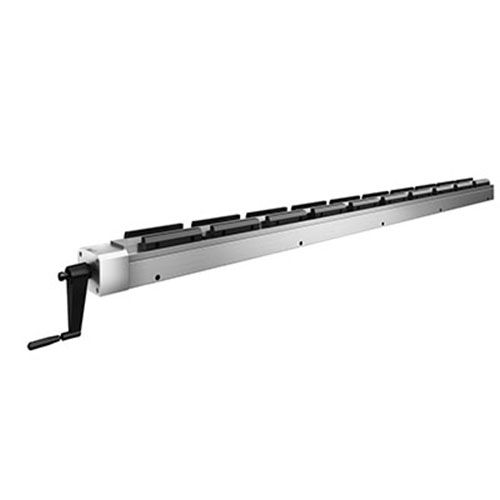
Electric compensation can be viewed as an upgraded version of mechanical compensation. While it still relies on mechanical wedges, the compensation amount is automatically adjusted via a motor, a reduction mechanism, and a CNC system.
● Greater operational convenience; eliminates the need for repetitive manual adjustments.
● The CNC system automatically calculates compensation values based on processing parameters.
● High repeatability, making it ideal for multi-variety, small-batch production.
● Cleaner operation and simpler maintenance compared to hydraulic compensation.
● Higher efficiency when switching products, materials, or molds.
For modern sheet metal factories, electric compensation is a solution well worth considering. It combines the stability of a mechanical structure with the convenience of a CNC system, making it particularly suitable for customers who prioritize efficiency, precision, and ease of operation.
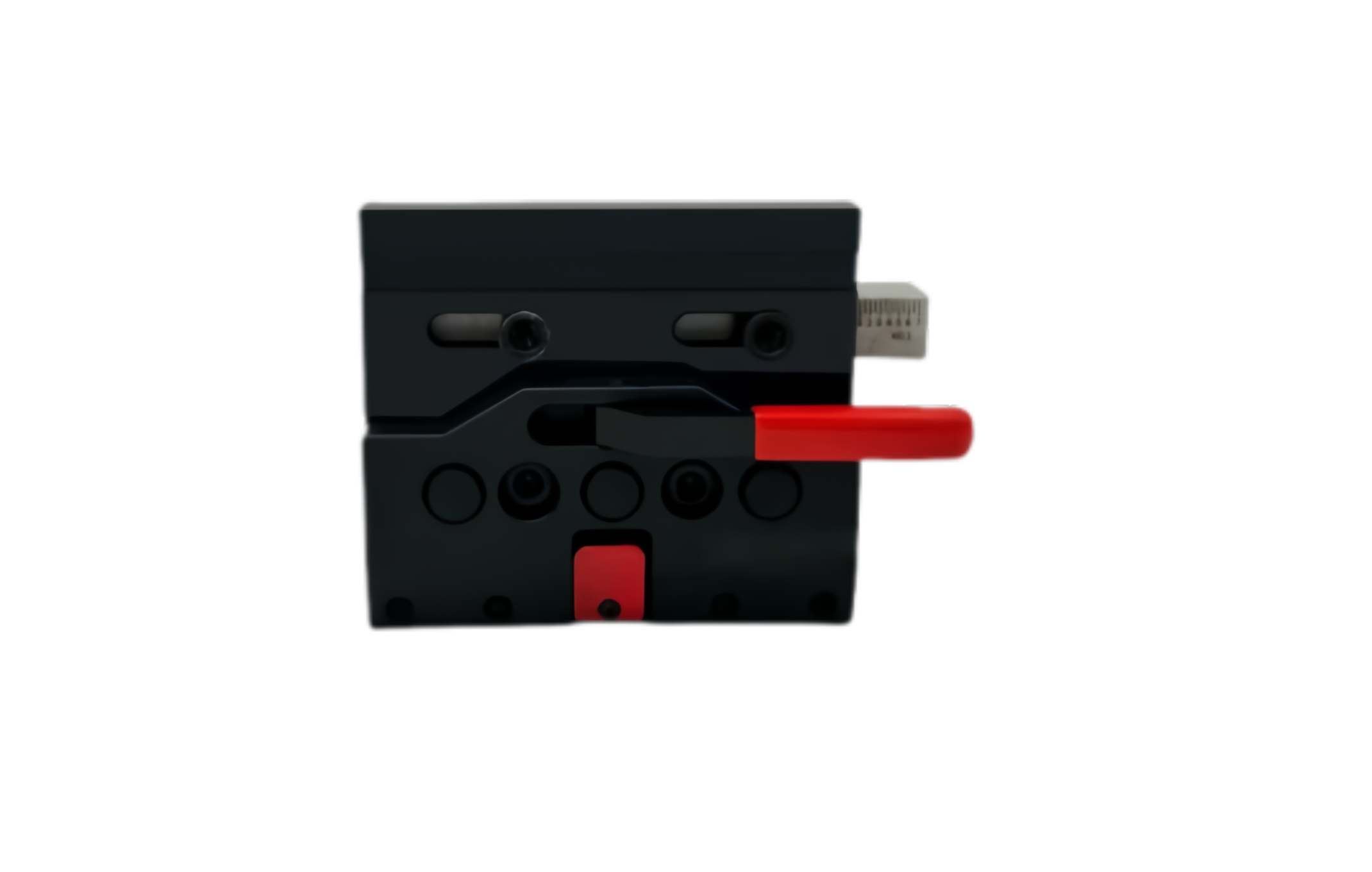
WILA is an internationally renowned brand specializing in press brake tooling and clamping systems; its crowning systems are typically employed in high-precision bending applications. Compared to standard crowning mechanisms, WILA’s solutions place greater emphasis on tooling positioning accuracy, clamping efficiency, and long-term stability.
● High crowning precision, suitable for demanding sheet metal components
● Excellent compatibility with high-precision tooling and quick-clamping systems
● High efficiency in tool changes, reducing machine setup time
● Superior repeatability, ensuring consistent quality in batch production
● Better integration with high-end press brakes and automated production lines
For customers manufacturing products that require high angular consistency—such as chassis and cabinets, precision enclosures, elevator components, automotive parts, and housings for new energy equipment—WILA crowning systems deliver more stable bending quality.
When selecting a crowning system, you should look beyond the price and consider your actual processing requirements.
√ If you primarily process standard sheet metal parts and have a limited budget, a mechanical crowning system is recommended; it offers a reliable structure, simple maintenance, and excellent cost-effectiveness.
√ If you frequently process thick or long plates, or operate high-tonnage press brakes, a hydraulic crowning system is the better choice; it provides superior compensation capabilities and is well-suited for heavy-duty applications.
√ If you aim to increase automation and reduce manual setup time, consider an electric crowning system; it is ideal for factories that handle diverse products and frequent job changes.
√ If you prioritize high precision, high efficiency, and a premium bending experience, consider the WILA crowning system—especially when paired with high-precision tooling and quick-clamping systems.
Many customers discover after purchasing a press brake that the real challenge lies not in whether the machine *can* bend, but in whether it can perform stable, continuous, and batch bending operations.
Inaccurate bending angles in the middle section of long workpieces
The need for test bends whenever the material is changed
Inconsistent product quality due to varying operator experience levels
Angle drift occurring after the first part passes inspection during batch production
Suboptimal product consistency despite high-precision tooling and machinery
These issues are directly related to the crowning system, tooling precision, and equipment setup. A suitable crowning system can reduce the need for test bends, improve the yield rate, lower manual adjustment costs, and ensure greater stability in the bending process.
It is not strictly necessary for short workpieces or low-precision applications. However, a crowning system is crucial when processing long or thick plates or when consistent bending angles are required.
There is no absolute "better" option—only the one best suited to your needs. Mechanical crowning is ideal for standard operations and cost-effective solutions, while hydraulic crowning is better suited for high-tonnage and heavy-duty applications.
If your facility handles a wide variety of orders and requires frequent setup changes, electric crowning can significantly reduce setup time and boost production efficiency.
WILA systems are best suited for high-precision, high-efficiency, and high-end bending applications. If the budget is limited, standard mechanical or electric crowning systems can still meet the requirements of many routine operations.
As outlined above, each type of compensation system offers distinct advantages. When selecting a compensation system for your press brake, key factors to consider include processing length, material thickness, precision requirements, budget, and long-term maintenance capabilities.
Mechanical compensation is an economical and practical choice for standard sheet metal processing, while hydraulic compensation offers superior performance for thick or long plates. Electric compensation is recommended for operations prioritizing automation and production efficiency, whereas the WILA compensation system is the ideal choice for applications demanding high precision.
Selecting the right compensation system enhances bending accuracy, reduces scrap rates, and minimizes setup time. Miharting provides one-stop solutions to help you achieve consistent, high-quality production.
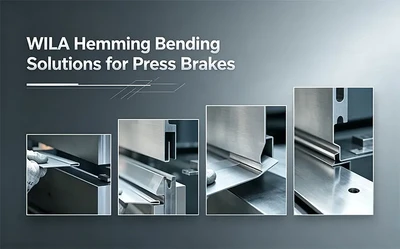 WILA Hemming Bending Solutions for Press BrakesJuly 22, 2026Explore four WILA hemming bending solutions for press brakes, including flat hemming tools, U-shape hemming dies, spring-loaded hemming tools, and hydraulic hemming tables. Learn how to choose the right solution by material, thickness, and production frequency.view
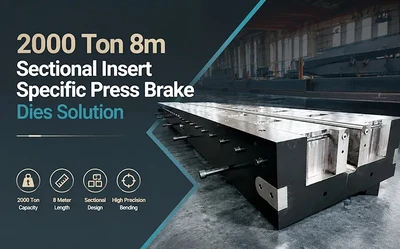 2000 Ton 8m Sectional Insert Specific Press Brake Dies SolutionJuly 20, 2026High-performance 2000 ton 8m sectional insert specific press brake dies for bending max 50mm thick 8m metal sheets. Manual & electric adjustable lower dies with 42CrMo material, low friction rotary round bar, fast V-opening adjustment for mass heavy plate processing.view
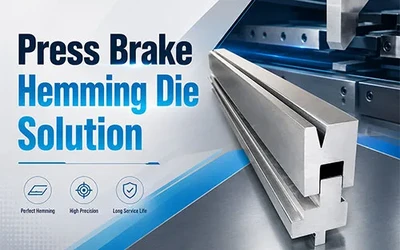 Press Brake Hemming Die Solution for Safer and Stronger Sheet Metal EdgesAugust 17, 2026A press brake hemming die, also known as a sheet metal hemming die or flattening die, is an effective tooling solution for this problem. By folding and flattening the edge of the sheet metal, the die helps create a smooth, safe, and reinforced edge. This process is widely used for electrical cabinets, machine covers, enclosures, doors, panels, trays, home appliance parts, elevator components, and other precision sheet metal products.view
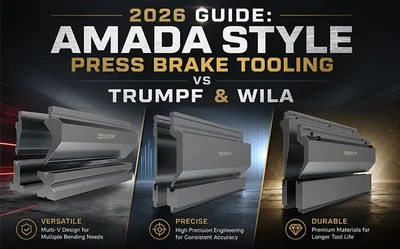 2026 Guide: Amada Style Press Brake Tooling vs Trumpf & WilaMay 26, 2026In this guide, we will focus on analyzing the advantages of Amada press brake tooling and compare it with its competitors.view
 Press Brake Tooling Guide 2026: Types, Materials, Selection & Maintenance TipsAugust 10, 2026Press brake tooling plays a critical role in sheet metal bending performance. Although the press brake machine provides the bending force, the tooling determines the final bending accuracy, surface quality, production efficiency, and tool life.view
 Press Brake Tooling Maintenance: How to Extend Tool LifeJune 8, 2026Learn practical press brake tooling maintenance tips to extend tool life, reduce bending defects, improve accuracy, and lower tooling replacement costs.view