EN
EN

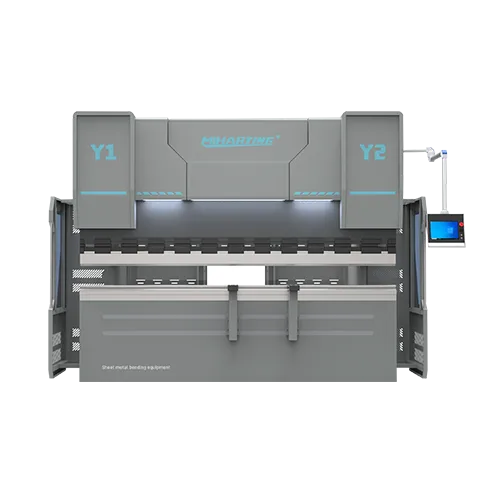
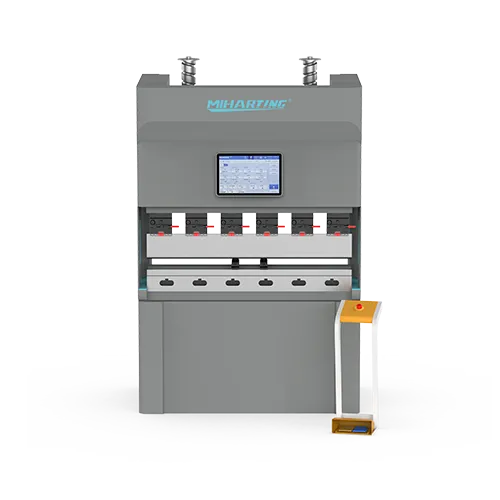
A press brake can generate hundreds of tons of bending force only a short distance from the operator's hands.
For European sheet-metal manufacturers, machine safety is therefore not simply an optional configuration—it is an essential part of press brake selection.
EN 12622:2009+A1:2013 specifies technical safety requirements and protective measures for hydraulic press brakes intended primarily for cold working of metal. Its scope also includes integral ancillary equipment such as backgauges and adjustable front sheet supports.
But what does this actually mean when purchasing a press brake?
The answer is much more than finding a CE mark on the machine.
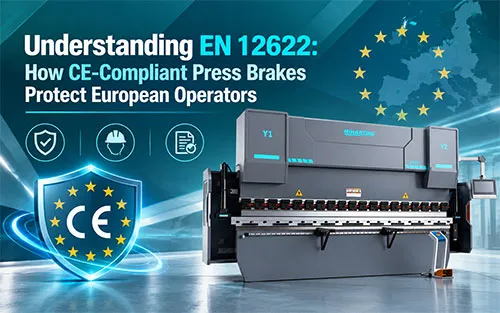
EN 12622 was developed specifically around the hazards associated with hydraulic press brakes.
It addresses safety considerations throughout machine design, manufacture and supply, including risks associated with operation and foreseeable machine use.
For a press brake buyer, the practical objective is simple:
Identify the hazard → Reduce the risk through machine design → Add protective measures where necessary → Verify the safety functions
This is why a European-market press brake normally needs several layers of protection rather than one safety device.
The most obvious hazardous area is between the upper punch and lower die.
During bending, the ram moves toward the workpiece while the operator may need to position or support the sheet.
This creates potential crushing and trapping hazards.
A modern safety concept therefore needs to control access to the dangerous closing area while still allowing productive bending.
Operator → Protective Device → Controlled Ram Movement → Punch & Die
The objective is not simply to stop the machine after an accident.
It is to help prevent hazardous movement from reaching the operator in the first place.
Modern CNC press brakes commonly use laser-based protective devices close to the upper tooling.
The protective field travels with the ram and monitors the area near the punch.
If an intrusion is detected under conditions requiring protection, the safety system can initiate the required protective response.
This approach helps combine:
Operator Protection + Close Workpiece Handling + Productive Bending
The exact device, installation, safety distance, stopping performance and control architecture must be evaluated for the specific machine.
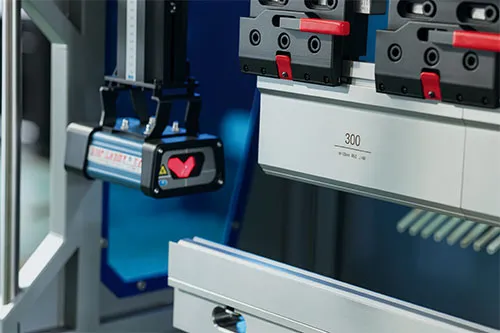
The front of the machine is not the only hazardous area.
Operators or other personnel may also access:
Rear backgauge movement
Moving mechanical components
Side areas around the tooling
Automated axes
This is why a complete press brake safety concept commonly incorporates appropriate side and rear access protection.
Depending on machine design, this can include physical guards, interlocked doors or other protective devices.
A machine should not be evaluated only from the operator's front position.
Emergency-stop devices provide operators with a clearly accessible means of initiating an emergency stop when a dangerous situation occurs.
They are commonly positioned where they can be reached quickly from operating positions.
However:
An emergency stop is a complementary protective measure—not a replacement for guarding or safeguarding.
A good safety design aims to prevent or control hazards before emergency intervention becomes necessary.
Physical guards alone are not enough.
A modern press brake relies on its safety-related control system to process signals from protective devices and control hazardous machine movement.
For example:
Safety Device Detects Hazard
↓
Safety Control Processes Signal
↓
Hazardous Movement Is Controlled / Stopped
This interaction between sensors, control logic and actuators is one reason CE compliance must be considered at complete machine level, rather than judging individual components independently.
Safety does not end when the ram stops.
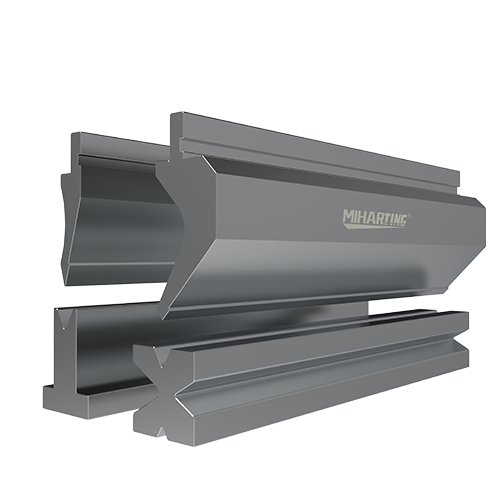
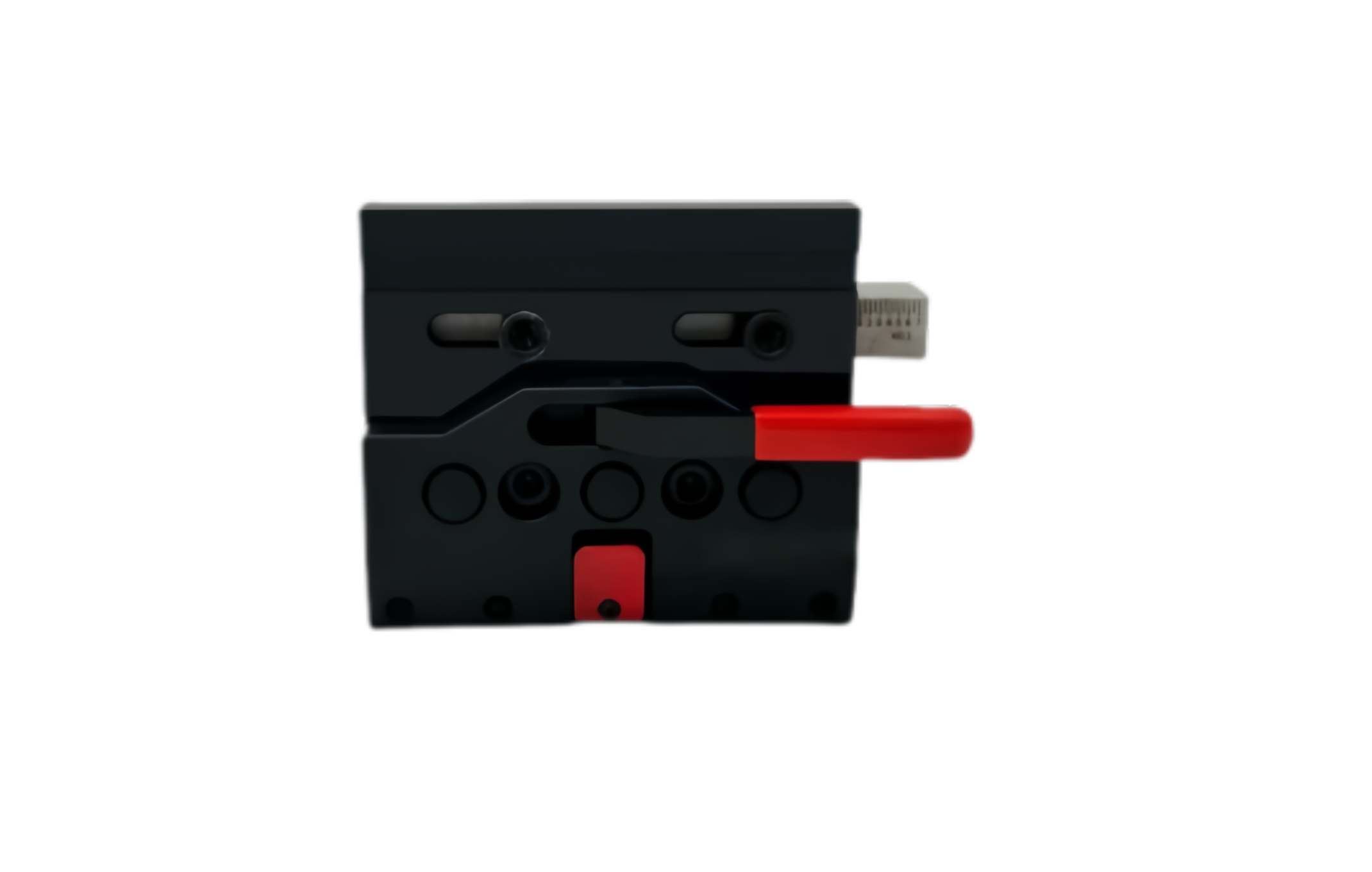
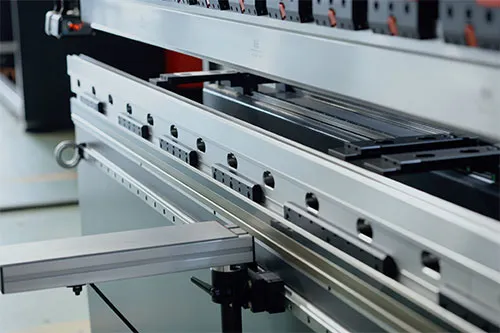
Tool changes can expose operators to another risk: heavy punches falling during loading or unloading.
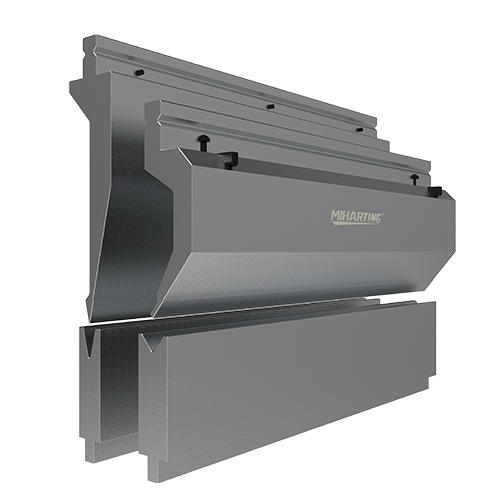
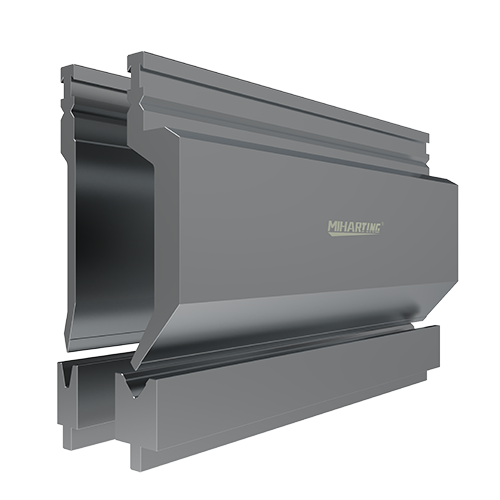
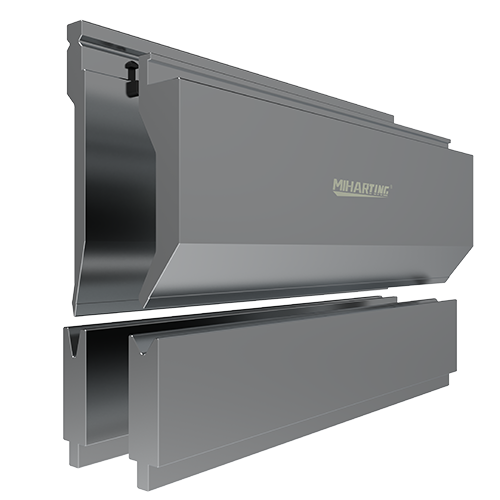
Modern quick-clamping systems can incorporate anti-drop retention mechanisms for compatible tooling.
Vertical front-loading solutions can also reduce the need to slide suitable segmented tools along the entire upper beam.
For European factories with frequent tool changes, this can improve both:
Setup Efficiency + Operator Handling Safety
This is an excellent place to internally link your previous article Safety First: How Vertical Front-Loading Clamps Protect Operators and Tooling.
This distinction is very important for your article.
A technical safety standard addressing hydraulic press brake hazards and protective measures. BSI lists BS EN 12622:2009+A1:2013 as identical to EN 12622:2009+A1:2013.
CE marking relates to the manufacturer's demonstration that the complete machine meets the applicable European legal requirements.
Therefore:
Using CE-marked components ≠ Automatically CE-compliant machine
and:
Installing a safety laser ≠ Automatically CE-compliant machine
The complete machine and its safety functions must be considered.
Instead of simply asking:
“Does this press brake have CE?”
European buyers should ask more detailed questions.
Check | Why It Matters |
Applicable EU requirements | Confirms regulatory basis |
Safety risk assessment | Identifies machine hazards |
Front protective device | Protects bending zone |
Side/rear protection | Restricts hazardous access |
Emergency stop | Emergency intervention |
Safety-related controls | Controls hazardous movements |
Tooling retention | Reduces tool-change risks |
Technical documentation | Supports conformity assessment |
Declaration of Conformity | Formal manufacturer declaration |
Operating instructions | Supports safe installation/use |
This turns “CE” from a logo into an actual machine safety evaluation.
A common purchasing mistake is to compare two machines like this:
Machine A: CE
Machine B: CE
and assume they have identical safety configurations.
They may not.
European buyers should compare the actual safety architecture:
Front Protection + Rear/Side Protection + Safety Control + Emergency Stop + Tooling Safety + Documentation
This is particularly important when comparing press brakes from different manufacturers or purchasing equipment from outside the EU.
This section is worth adding because it makes your article much more current than competitors' generic “EN 12622 Guide” content.
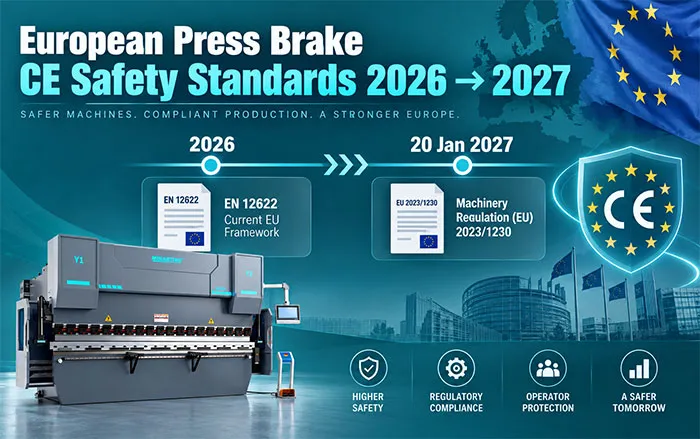
The EU's Machinery Regulation (EU) 2023/1230 will apply from 20 January 2027, replacing Machinery Directive 2006/42/EC from that date.
There is also movement at the technical-standard level. ISO 6909:2026, Machine tools — Safety — Press brakes, was published in May 2026 and specifically addresses press brake safety requirements.
Therefore, buyers purchasing machines for delivery or commissioning around 2026–2027 should confirm the applicable requirements and standards for the specific date and destination market rather than relying on an old specification sheet.
A well-designed press brake safety system should not force a factory to choose between operator protection and production efficiency.
Modern solutions such as laser safeguarding, controlled machine movement, quick clamping and safer tooling retention can help create a production environment where operators can work efficiently while reducing exposure to hazards.
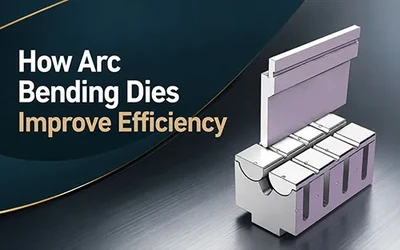 How Arc Bending Dies Improve EfficiencyJuly 29, 2026Arc bending dies can meet a wide range of bending radius requirements by simply changing the die head. This article explains the arc bending solution, die structure, advantages, and selection tips for efficient sheet metal forming.view
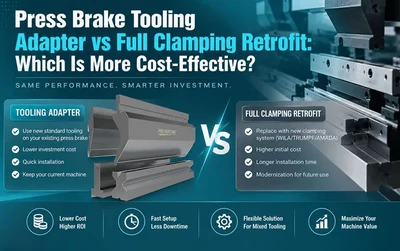 Press Brake Tooling Adapter vs Full Clamping Retrofit: Which Is More Cost-Effective?September 9, 2026Your press brake may still bend accurately after 10 or 15 years, but its tooling system can become a production bottleneck.This is common in European fabrication shops operating older machines with traditional European/Promecam or manufacturer-specific tooling interfaces.view
 How Press Brake Quick Clamping Systems Reduce Setup Time by 80%September 7, 2026For many sheet metal manufacturers, press brake setup is an overlooked source of production downtime.A faster clamping system can therefore reduce both labor time and machine downtime.view
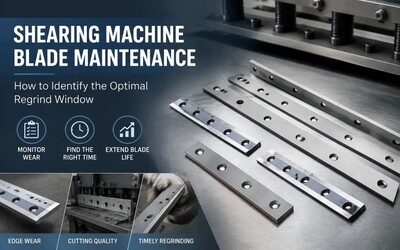 Shearing Machine Blade Maintenance: How to Identify the Optimal Regrind WindowSeptember 14, 2026The optimal regrind window for a shearing machine blade is the point where wear has started to reduce cutting performance but the blade still has enough material remaining for effective restoration. R...view
 7 FAQs to Help You Quickly Choose Press Brake ToolingJune 4, 2026Unsure how to choose press brake tooling and lower die V-grooves? This article provides a detailed guide to key selection criteria for press brake dies, covering aspects such as die plate thickness, V-grooves, die segmentation, material composition, hardness, causes of die collision, and heat treatment.view
 Why an Amada Press Brake Tooling Cabinet is an Investment in Tool Longevity (Not Just Storage)April 22, 2026Many shops spend $50,000 on high-precision Amada or European tooling, only to store them on wooden pallets or steel racks where the ground surfaces rub against each other. A single 0.05mm nick on a pu...view