EN
EN

For many sheet metal manufacturers, press brake setup is an overlooked source of production downtime.
With traditional bolt clamping, operators may need to:
Loosen bolts → remove tooling → position tools → align → tighten bolts → test bend
When a press brake changes tooling several times a day, these minutes quickly become expensive.
This is especially important in Europe, where manufacturing labor costs are relatively high. According to Eurostat, average hourly labor costs in the EU reached €34.90 in 2025. Actual costs vary by country and industry.
A faster clamping system can therefore reduce both labor time and machine downtime.
Clamping Method | Typical Setup Time* | Operator Effort | Best For |
Bolt clamping | 15–25 min | High | Infrequent changes |
Manual quick clamp | 8–12 min | Medium | Small workshops |
Pneumatic quick clamp | 4–7 min | Low | Frequent changes |
Hydraulic quick clamp | 2–5 min | Very low | High-frequency production |
*These are illustrative ranges, not guaranteed results. Actual time depends on tooling quantity, segmentation, machine configuration and operator experience.
For example, if traditional clamping takes 20 minutes and hydraulic quick clamping takes 4 minutes:
20 − 4 = 16 minutes saved
16 ÷ 20 = 80% setup-time reduction
This is how an 80% saving can be achieved in a suitable production scenario.
Consider a European fabrication shop with:
Labor cost: €35/hour
Tool changes: 4/day
Traditional setup: 20 min
Quick-clamp setup: 4 min
Working days: 250/year
16 min × 4 × 250 = 16,000 min
= 266.7 hours/year
266.7 × €35 = approximately €9,335/year
If the quick-clamping investment is €5,000:
€5,000 ÷ €9,335 ≈ 0.54 year
That means the theoretical payback is approximately:
This calculation does not include the additional value of increased machine utilization.
A press brake generates no parts while the operator is changing tooling.
Reducing setup time means more available production time for:
Bending parts
Small-batch orders
High-mix production
Urgent jobs
Additional shifts
Therefore:
Quick clamping converts non-productive setup time into productive bending time.
For factories with frequent tool changes, this can be more valuable than the direct labor saving.
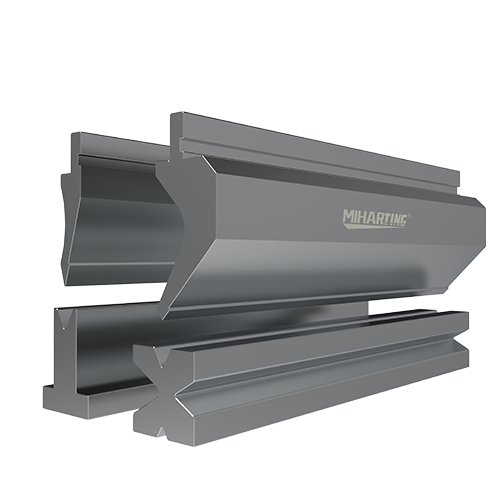
A cost-effective upgrade for workshops with moderate tooling changes.
Best for:
Small and medium fabrication shops, standard production and lower investment requirements.
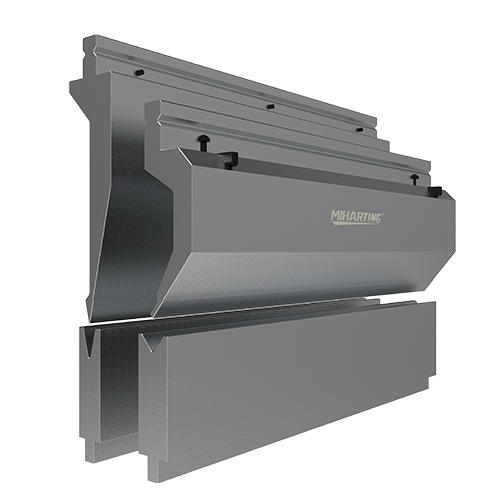
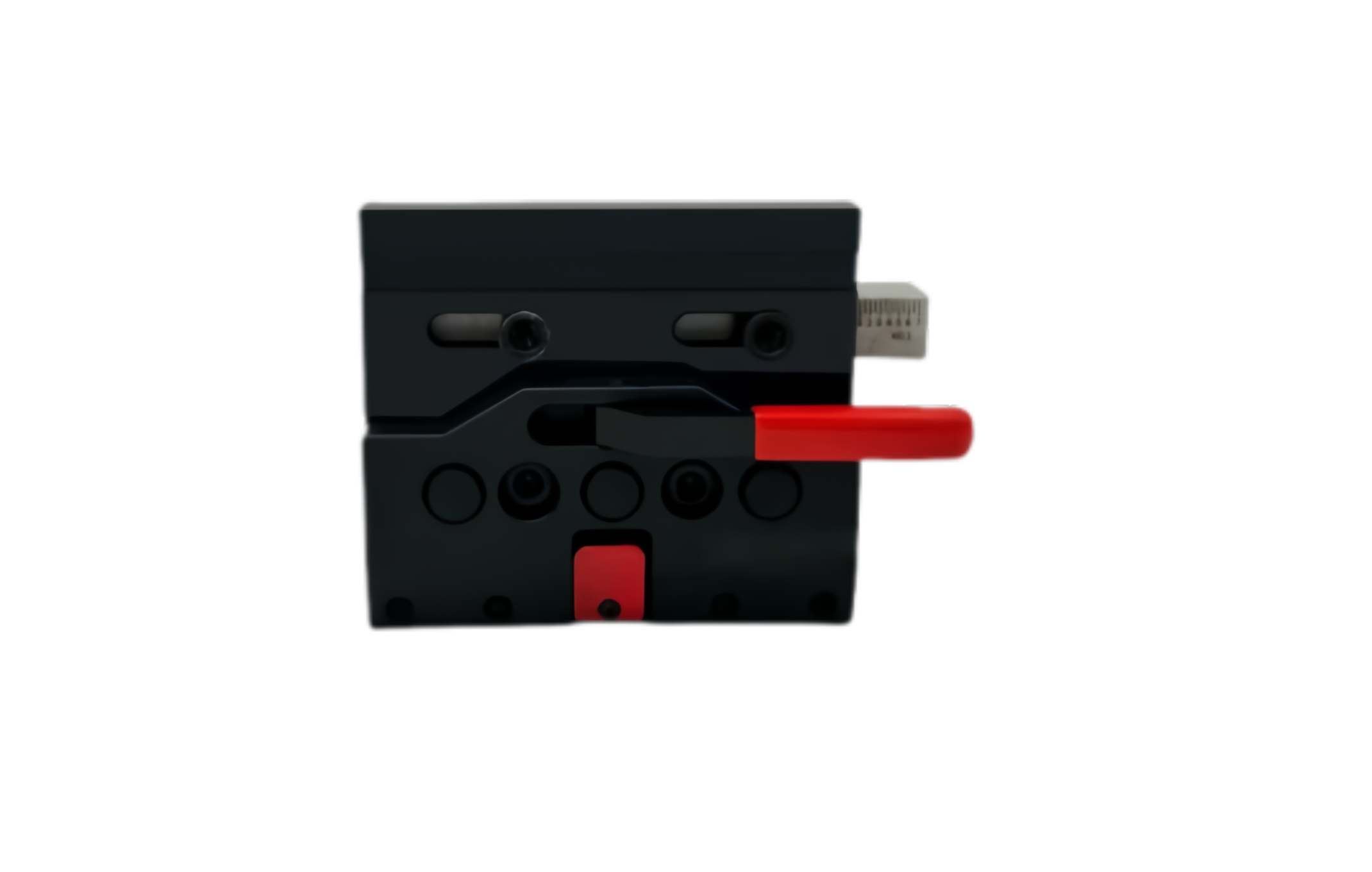
Uses compressed air to release and secure tooling, reducing manual operations.
Best for:
High-mix production and press brakes that change tooling frequently.
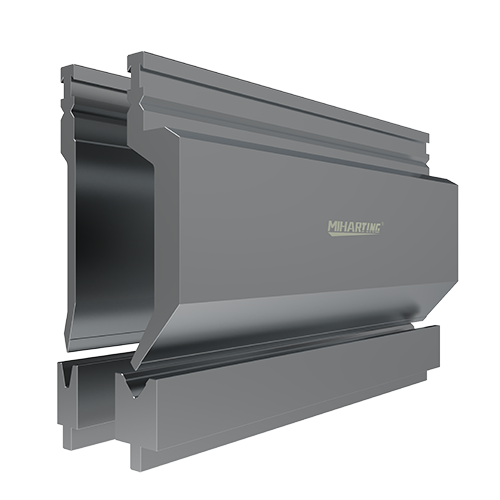
Provides fast and controlled tool locking with minimal operator effort.
Best for:
High-production environments, long press brakes, frequent setups and automated bending.
The right choice depends on tool change frequency, not simply machine size.
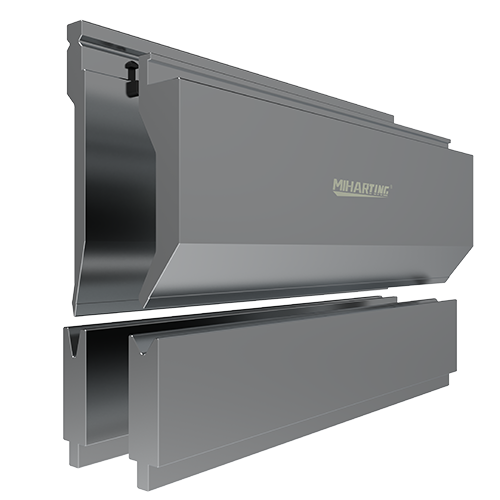
Quick clamping becomes even more effective when combined with segmented tooling.
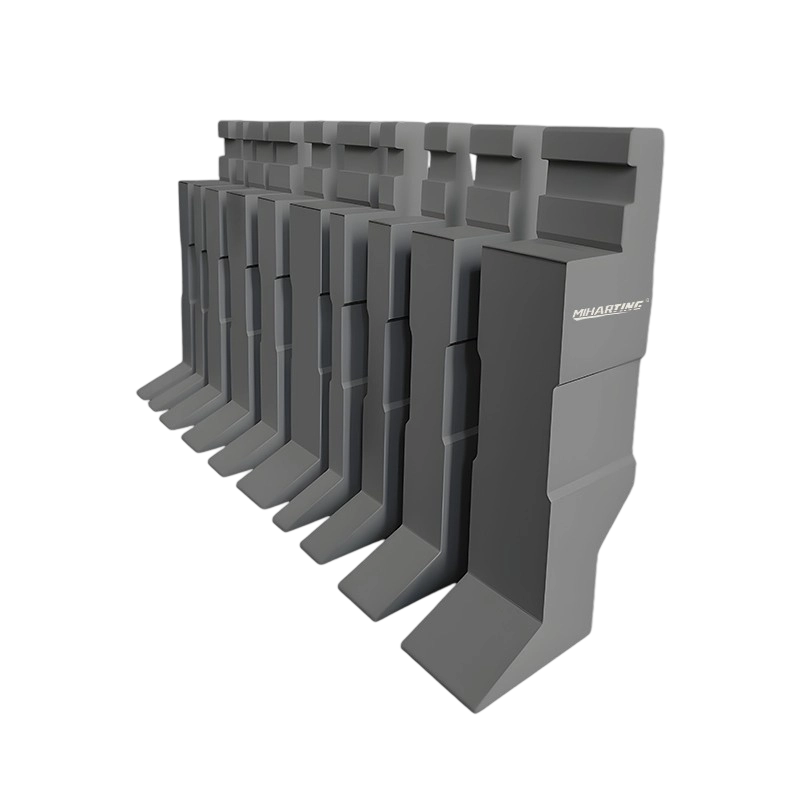
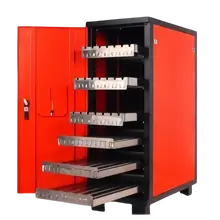
Instead of removing a long one-piece punch, operators can quickly configure the required sections for different parts.
This is especially useful for:
Electrical cabinets
Enclosures
Box bending
Small flanges
Stainless steel panels
High-mix production
The combination is simple:
Segmented Tooling + Quick Clamping = Faster Tool Change
Use these three formulas:
(Old Setup Time − New Setup Time) × Tool Changes/Day × Working Days
Annual Time Saved × Labor Cost/Hour
Quick-Clamping Investment ÷ Annual Saving
For a complete ROI calculation, also consider:
Additional machine utilization
Reduced overtime
Reduced operator fatigue
Faster order turnaround
Lower downtime
Quick clamping is particularly suitable when your press brake:
Changes tooling several times per day
Produces many different parts
Handles small batches
Has high labor costs
Experiences frequent setup delays
Uses segmented tooling
Requires frequent punch changes
If tooling is changed only occasionally, traditional clamping may still be sufficient.
Press brake quick clamping is not simply a convenience feature. For European manufacturers with frequent tool changes, it can become a measurable productivity and ROI improvement.
A reduction from 20 minutes to 4 minutes per setup represents an 80% saving in that example. With four setups per day, this could save more than 260 labor hours per year.
The key is to calculate your own numbers:
Setup Frequency × Time Saved × Labor Cost = Real ROI
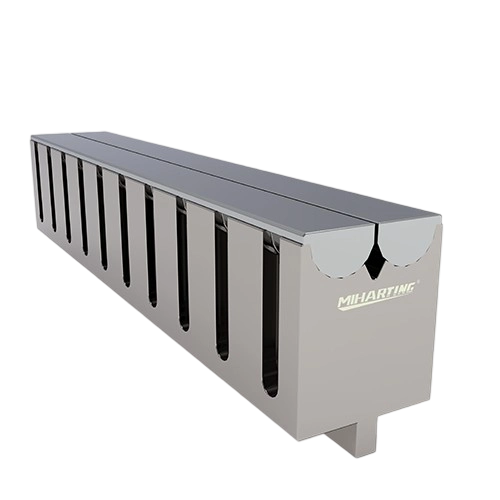
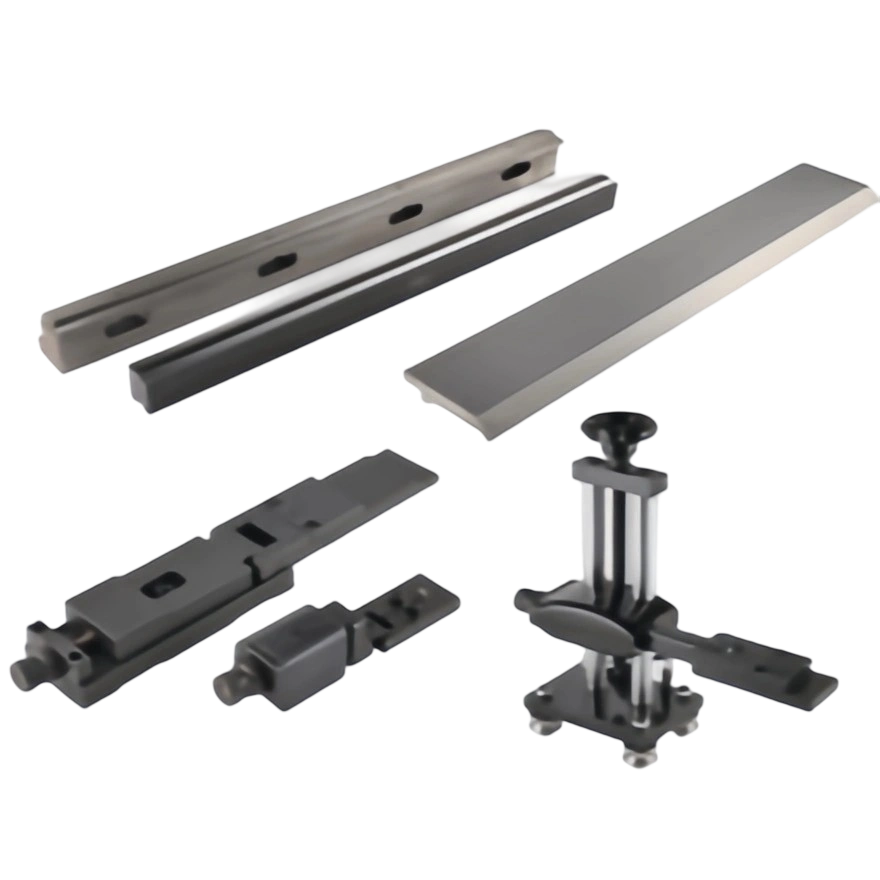
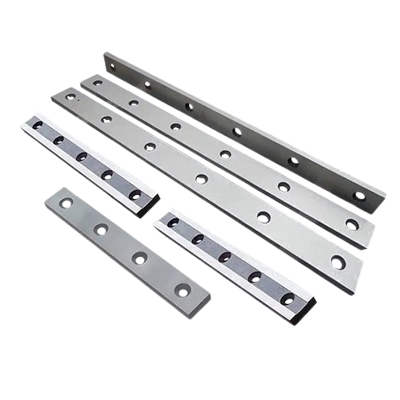
Miharting supplies manual, pneumatic and hydraulic press brake quick clamping systems, including solutions compatible with different European-style tooling configurations.
Send us your press brake model, bending length and existing tooling photos to get a suitable quick-clamping solution.
[Request a Quick-Clamping Solution →]
 China Press Brake Tooling Manufacturer vs European SuppliersSeptember 4, 2026Compare China press brake tooling manufacturers with European suppliers in quality, compatibility, customization, lead time, service and total cost.view
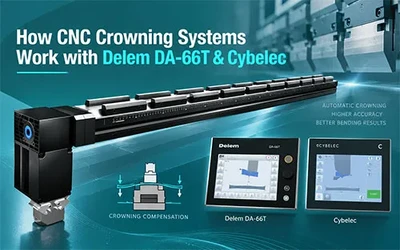 How CNC Crowning Systems Work with Delem DA-66T & CybelecSeptember 21, 2026Learn how CNC press brake crowning systems integrate with Delem DA-66T and Cybelec controllers to automatically compensate machine deflection and improve bend angle accuracy.view
 What Are the Differences in the Demand for Bending Machine Molds for New Energy Vehicles?June 26, 2025Compared with traditional vehicles, the demand for press brake toolings of new energy vehicles is significantly different, which is mainly reflected in the following aspects:1. Application of lightwei...view
 How Do Aerospace Press Brake Machine Molds Cope with High Temperature and High Pressure Environments?June 25, 2025The coping strategies for aerospace press brake machine molds in high temperature and high pressure environments mainly include the following aspects:1. Select high temperature and high pressure resis...view
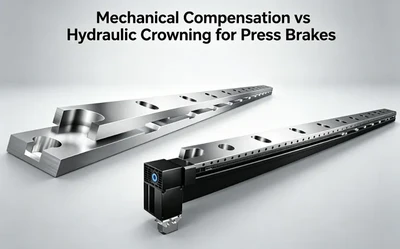 Mechanical Compensation vs Hydraulic Crowning for Press BrakesJune 11, 2026This article provides a detailed comparison of the differences, advantages, and application scenarios of mechanical, hydraulic, electric, and WILA crowning systems for press brakes, helping customers select the right system for their needs.view
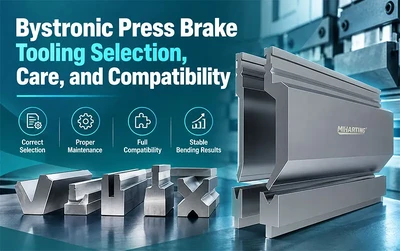 Bystronic Press Brake Tooling Selection, Care, and CompatibilitySeptember 24, 2026Buying Bystronic press brake tooling requires more than matching the machine brand. You need the correct interface, tooling geometry, load capacity, and bending specifications for reliable production.view