EN
EN

Flattening bending is a common bending operation performed on press brakes, typically used to bend the edge of a workpiece into a parallel or rounded form. The purpose of this process is to eliminate sharp edges, increase the workpiece's strength, and enhance its aesthetic appeal.
However, hemming can also create problems if the wrong tooling is used: slow setup, limited material thickness, unstable quality, excessive side force, low tool utilization, and frequent tool changes. This is why choosing the right WILA hemming bending solution is important for efficient press brake production.
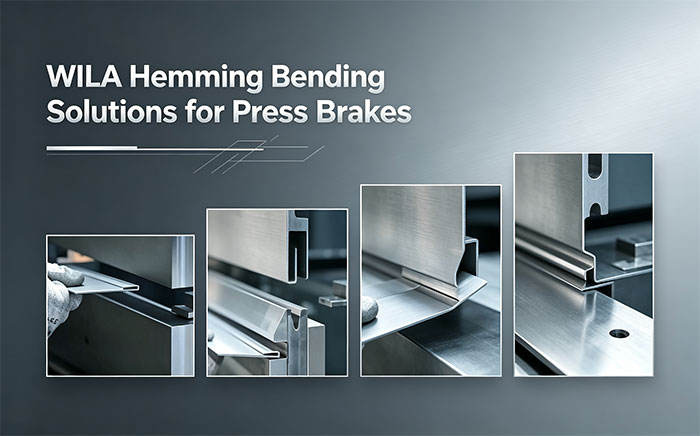
A standard hemming process usually includes two steps:
Step 1: Pre-bending
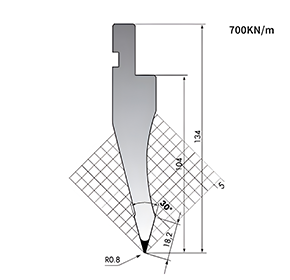
The sheet metal edge is first bent to around 30 degrees.
Step 2: Flattening / hemming
The pre-bent edge is then pressed flat to form a closed hem or rounded hem.
Although the process looks simple, the best tooling choice depends on several production factors, including material type, sheet thickness, hemming frequency, flange size, and whether the tooling also needs to support normal air bending.
Before selecting a hemming solution, manufacturers should consider three key questions:
What material will be hemmed?
Mild steel, stainless steel, aluminum, and other materials may require different force and tooling configurations.
What is the material thickness?
Thicker sheets need stronger tooling support and better force control.
How often will hemming be used?
Occasional hemming may only require a cost-effective tooling set, while frequent hemming may justify a faster and more advanced solution.
Another important consideration is tooling flexibility. In many workshops, the best hemming tool is not only used for flattening, but can also perform regular air bending when hemming is not required. This improves tool utilization and reduces investment waste.
WILA offers four different hemming bending solutions for different production needs:
Flat hemming tool
U-shape hemming tool
Spring-loaded hemming tool
Hydraulic hemming table
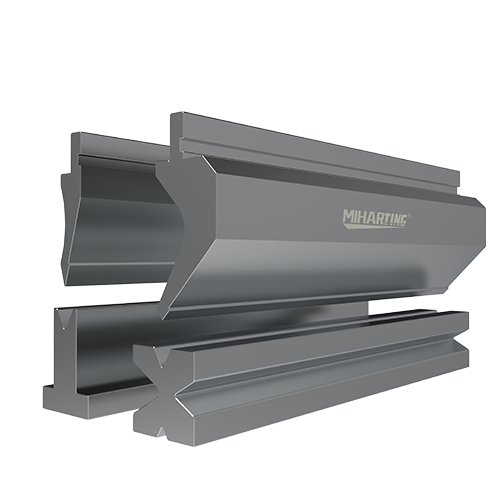
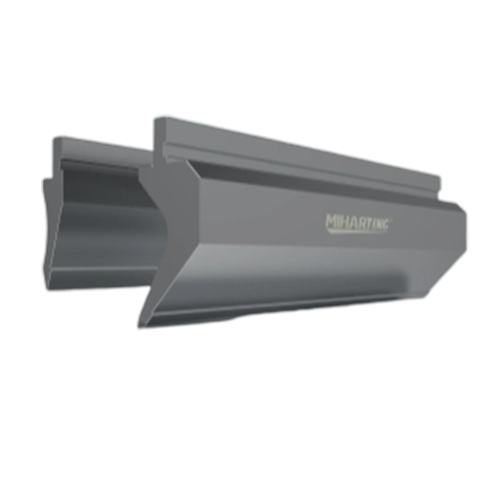
The flat hemming tool uses two tooling sets to complete the hemming process. First, a standard punch and die are used to pre-bend the workpiece to around 30 degrees. Then, a flat hemming punch and die are used to press the pre-bent edge flat.
This solution is simple, reliable, and cost-effective, making it suitable for workshops where hemming is not required every day.
The main limitation is that side force may occur during the flattening process. For standard flat hemming tooling, the maximum hemming capacity for mild steel is generally around 2 mm.
To solve the thickness limitation, WILA also offers an innovative movable flat lower die with ball support. This design helps reduce friction and improves the hemming capability. With this solution, the maximum hemming thickness for mild steel or stainless steel can reach up to 4 mm, depending on the application.
Best for:
Occasional hemming, simple production, cost-sensitive workshops, and manufacturers looking for an economical hemming solution.
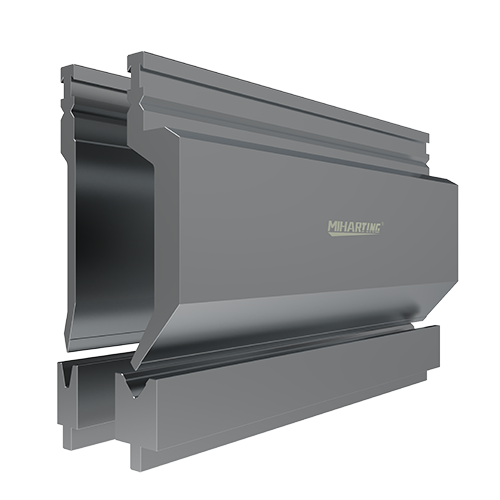
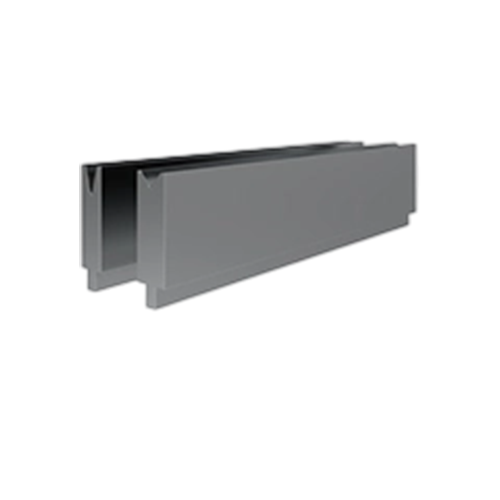
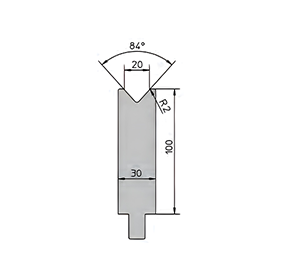
The U-shape hemming tool can complete both pre-bending and hemming with one tooling set. This makes the process more convenient and reduces the need to switch between different tools.
One of the biggest advantages of the U-shape hemming die is flexibility. When it is not used for hemming, it can also be used for regular air bending. This makes it a practical choice for workshops that need high tooling utilization.
The U-shape hemming tool is suitable for lighter hemming applications. Its typical hemming capacity is:
Mild steel: up to 1.5 mm
Stainless steel: up to 1 mm
Minimum flange size: around 14 mm
Because it combines hemming and normal bending functions, this solution offers a strong balance between cost, efficiency, and flexibility.
Best for:
Workshops that need both hemming and air bending, light-gauge sheet metal parts, and flexible production environments.
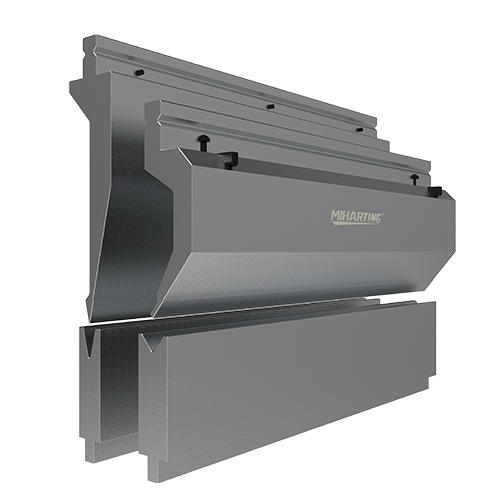
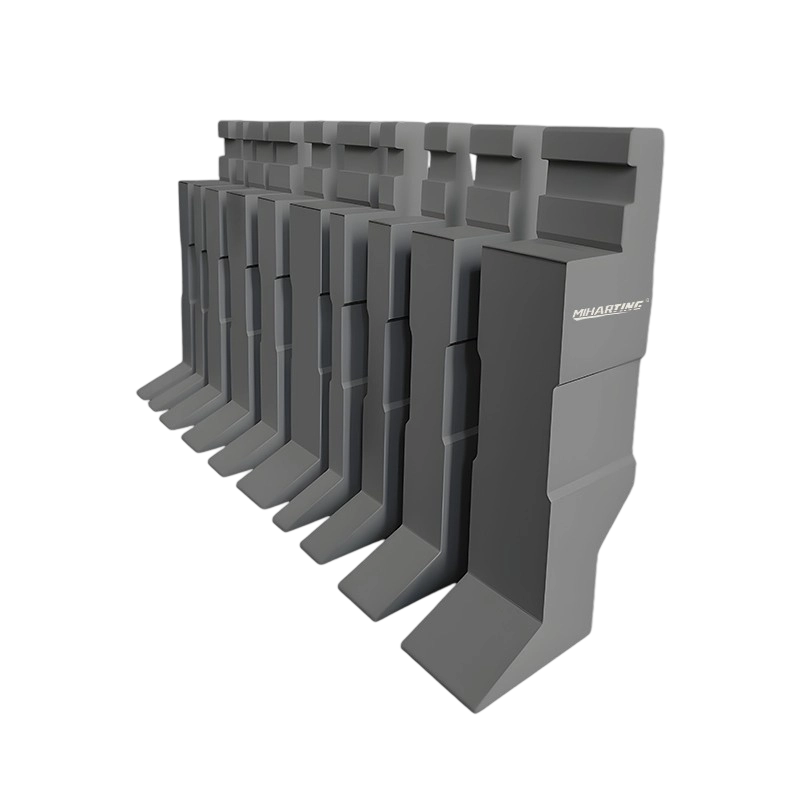
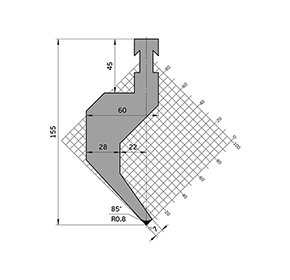
The spring-loaded hemming tool usually consists of a 28-degree standard punch and a 30-degree hemming lower die. The hemming insert inside the lower die is supported by springs.
During the hemming process, the pre-bent workpiece is placed between the hemming insert and the guide insert. As the punch moves downward, the hemming insert is pressed down, flattening the pre-bent edge.
This solution provides a more controlled hemming process and is suitable for repeated hemming work. Like the U-shape hemming tool, the spring-loaded hemming tool can also be used for normal air bending when hemming is not required.
The maximum hemming capacity for mild steel is generally around 2 mm.
Best for:
Medium-frequency hemming, workshops requiring better process stability, and applications where one tooling system should support both hemming and air bending.
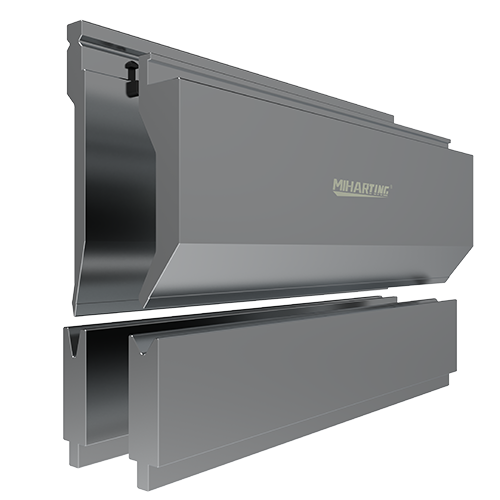
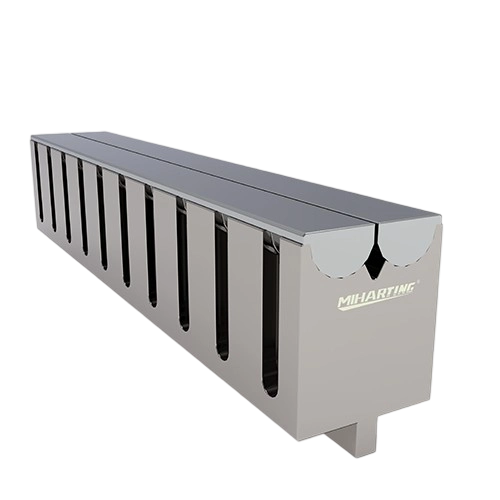
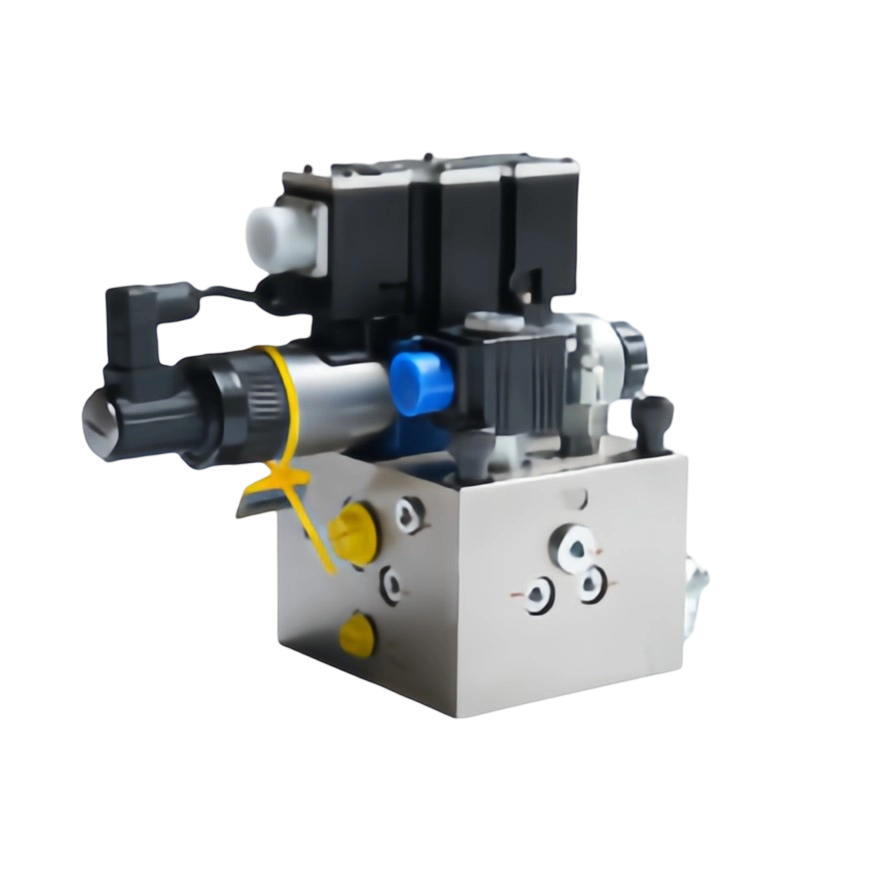
The hydraulic hemming table is one of WILA’s most advanced hemming solutions. Its working principle is similar to the spring-loaded hemming tool, but instead of springs, it uses hydraulic cylinders to control the movement of the hemming insert.
With hydraulic pressure, usually around 100 bar, the system can handle thicker and heavier workpieces with greater stability. For improved service life, hardened hemming inserts can also be added.
A major benefit of the hydraulic hemming table is flexibility. Standard lower dies can be placed on the table, and the V opening can be selected according to the bending requirement, with options up to V=40 mm. The lower die can be clamped manually or automatically, helping improve tool change efficiency.
The hydraulic hemming table can hem mild steel up to around 3 mm.
It can be clamped on WILA standard lower clamping systems or mechanical crowning tables. It can also be installed directly on the lower beam of the press brake, which provides greater open height and more production flexibility.
Best for:
Frequent hemming, heavier workpieces, higher productivity requirements, faster tool changes, and manufacturers looking for a professional hemming production solution.
Solution | Main Advantage | Typical Application |
Flat hemming tool | Economical and simple | Occasional hemming |
U-shape hemming tool | Pre-bending and hemming in one tool | Light-gauge parts and flexible bending |
Spring-loaded hemming tool | Stable hemming and air bending capability | Medium-frequency hemming |
Hydraulic hemming table | High efficiency and stronger capacity | Frequent hemming and heavier parts |
If hemming is only needed occasionally, the flat hemming tool is a practical and cost-effective choice.
If you want one tool that can handle both hemming and regular air bending, the U-shape hemming tool offers excellent flexibility for lighter materials.
If your production requires more stable hemming performance and regular use, the spring-loaded hemming tool is a strong option.
If hemming is a key process in your production line, the hydraulic hemming table provides the highest efficiency, better handling of heavier workpieces, and greater flexibility for professional sheet metal manufacturing.
The hydraulic flattening table represents WILA’s most advanced and efficient solution for flattening and bending. However, each of the four distinct flattening and bending solutions offers unique advantages, allowing for the selection of the most suitable option based on specific application requirements.
 Selecting the Right Shearing Machine Blade: A Guide to Material Grades and Blade Gap OptimizationApril 22, 2026The shear is the “entry point” of the fabrication shop. If the initial cut is burred, twisted, or bowed, every subsequent process—from CNC punching to bending—will be inaccurate. MIHARTING shearin...view
 2026 Guide: Amada Style Press Brake Tooling vs Trumpf & WilaMay 26, 2026In this guide, we will focus on analyzing the advantages of Amada press brake tooling and compare it with its competitors.view
 China Press Brake Tooling Manufacturer vs European SuppliersSeptember 4, 2026Compare China press brake tooling manufacturers with European suppliers in quality, compatibility, customization, lead time, service and total cost.view
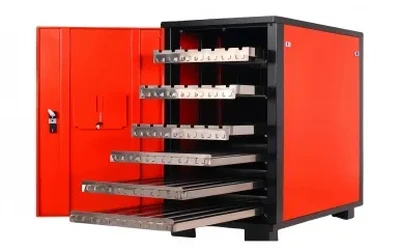 Why an Amada Press Brake Tooling Cabinet is an Investment in Tool Longevity (Not Just Storage)April 22, 2026Many shops spend $50,000 on high-precision Amada or European tooling, only to store them on wooden pallets or steel racks where the ground surfaces rub against each other. A single 0.05mm nick on a pu...view
 Press Brake Tooling Guide 2026: Types, Materials, Selection & Maintenance TipsAugust 10, 2026Press brake tooling plays a critical role in sheet metal bending performance. Although the press brake machine provides the bending force, the tooling determines the final bending accuracy, surface quality, production efficiency, and tool life.view
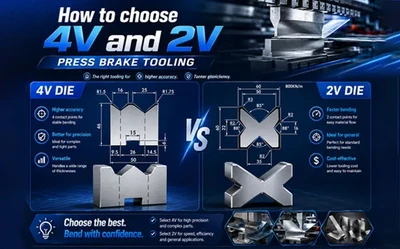 How to choose 4V and 2V press brake tooling?May 27, 2026How to choose 4V and 2V press brake tooling?What are their specific advantages,and for which applications are they best suited?This choice is a critical factor in determining your operational efficiency.We hope the following article will assist you in selecting the die best suited to your needs,thereby enhancing your production efficiency.view